How To Add Privacy To Your Patio Without Ruining Its Look
Introduction
There is nothing quite as frustrating as having a beautiful patio that you never actually use — not because it’s uncomfortable, not because the furniture is wrong, but because every time you sit outside you feel like you’re being watched. Neighbours can see in. Passers-by glance over. The upstairs window of the house next door has a direct sightline to your favourite chair. What should be a relaxing outdoor retreat becomes a self-conscious performance.
I lived with exactly this problem for two summers before doing something about it — and the moment I added proper screening, the patio went from an occasional space to somewhere I used every single day. These 10 ideas cover every approach from permanent planted solutions to renter-friendly flexible ones, so you can find what works for your specific situation and get back outside where you belong.
1. Tall Potted Plants — Flexible and Beautiful
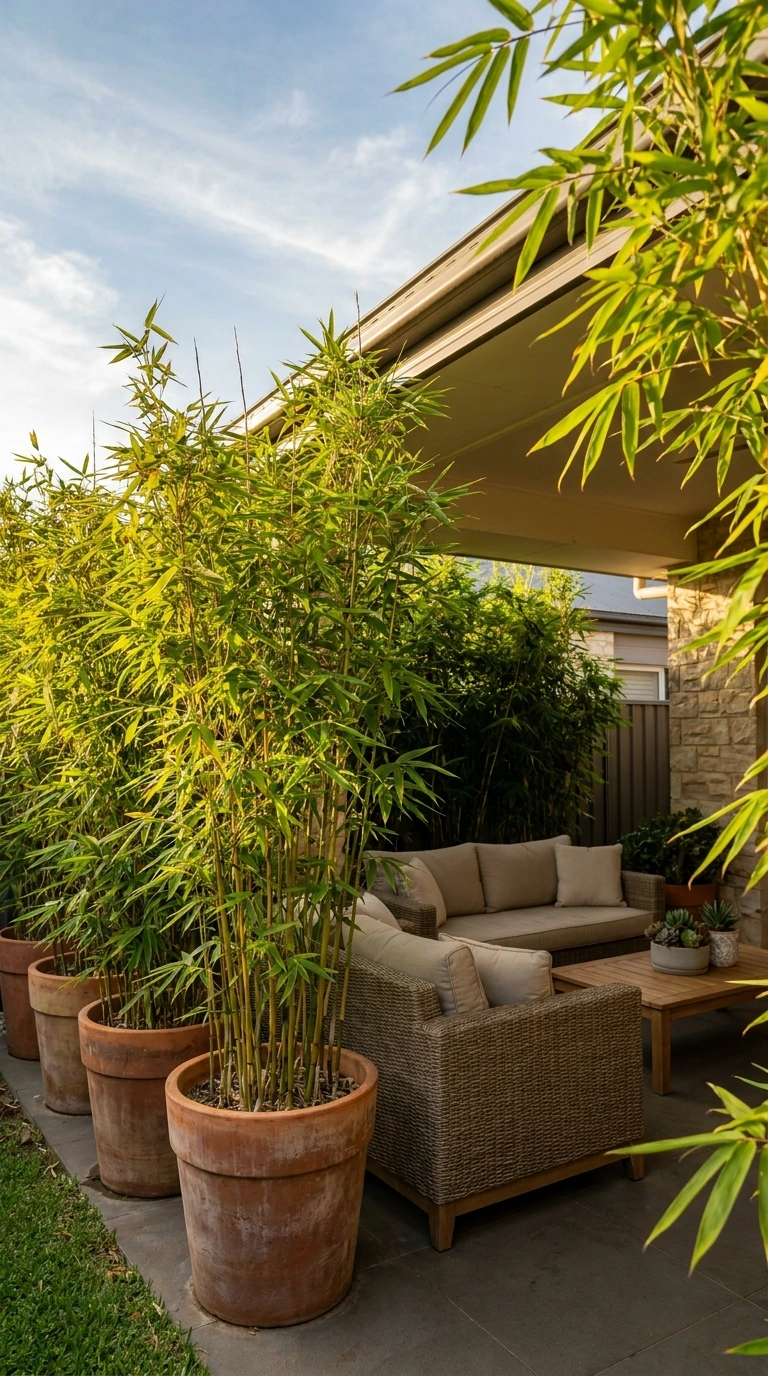
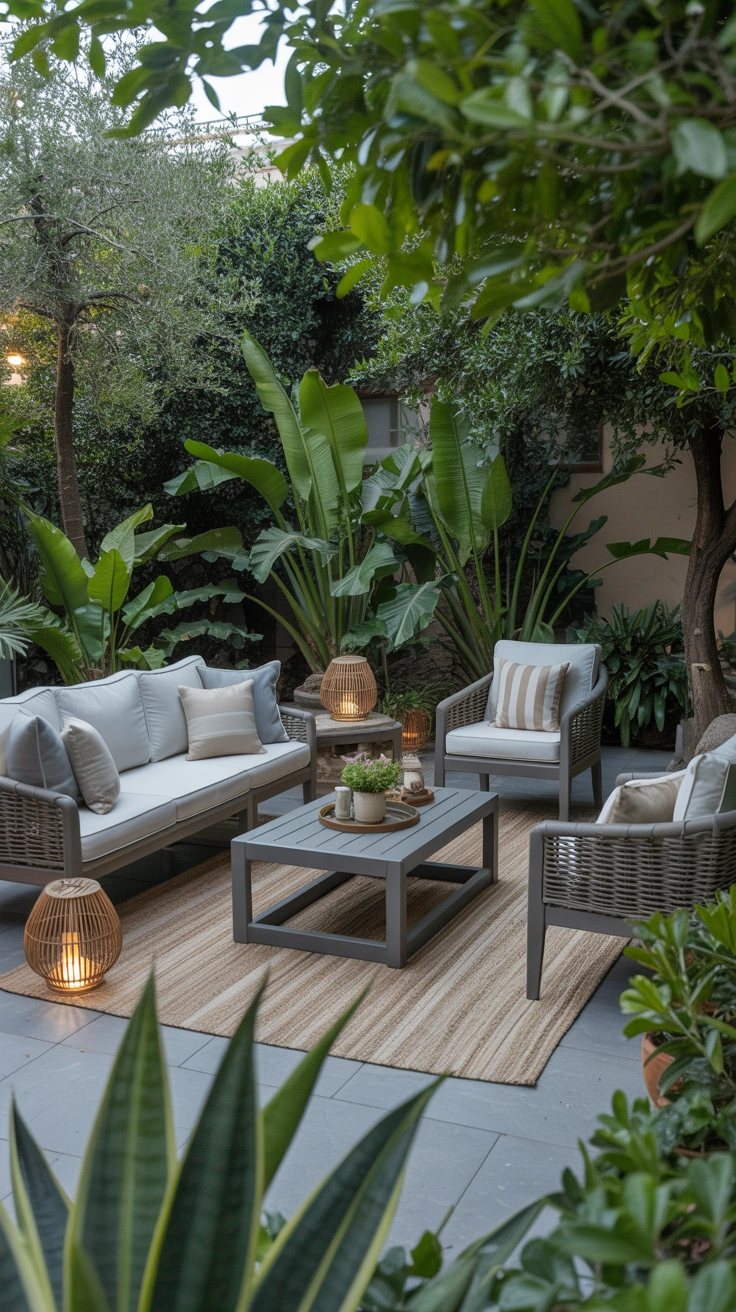
Tall plants in large containers are the most immediately deployable and most visually beautiful privacy solution available — requiring no structural work, no planning permission, and no permanent commitment. A well-positioned row of containers along the exposed edge of a patio creates a living screen that looks genuinely designed rather than defensive.
Bamboo is the gold standard for container privacy screening — growing densely, maintaining year-round coverage, and creating that signature sound of leaves in the breeze that makes a patio feel genuinely private and enclosed. Other excellent options include standard olive trees, columnar hornbeam, tall ornamental grasses, and Phormium, each bringing a different aesthetic character to the screening solution.
Position containers 60-90cm apart along the exposed edge for effective coverage, and choose containers large enough to support the root system of the plant at its mature size.
2. Lattice Trellis With Climbing Plants
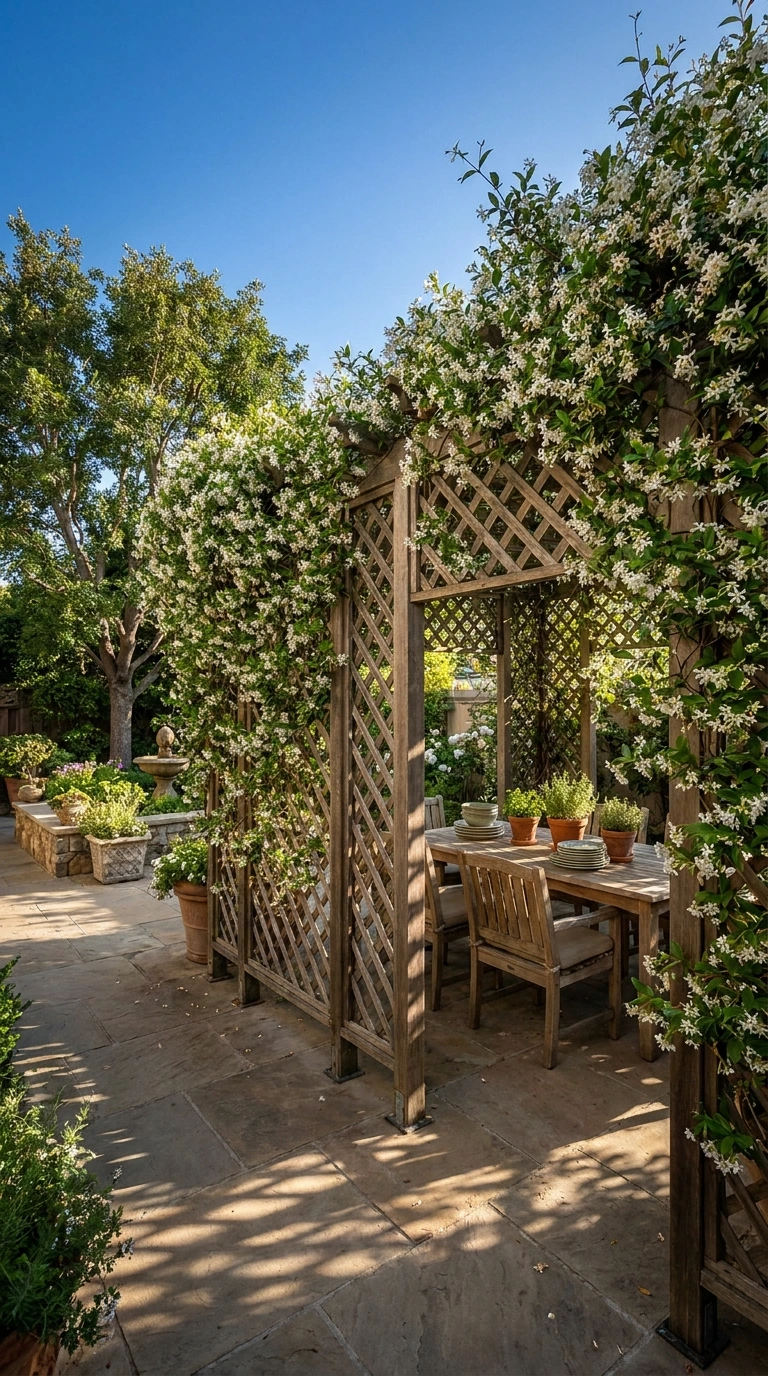
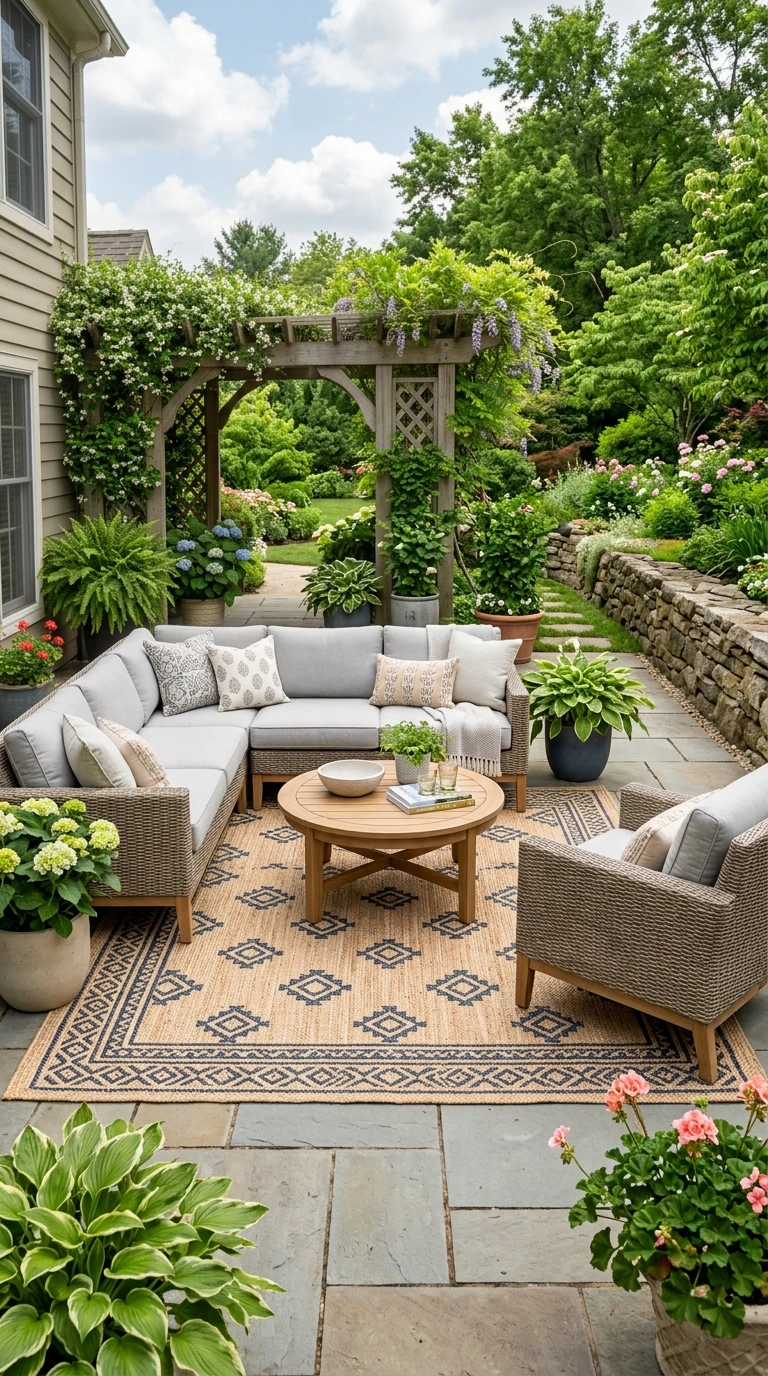
A lattice trellis panel fixed to an existing fence or mounted on freestanding posts creates an instant structure for climbing plants that builds into a dense, beautiful privacy screen over a single growing season. The combination of the trellis structure and the plants together creates something that looks genuinely architectural rather than simply functional.
Climbing roses, jasmine, clematis, and star jasmine all establish quickly and provide fragrance alongside screening — so the privacy solution becomes a sensory feature of the patio rather than simply a visual barrier. Evergreen climbers including climbing hydrangea and Trachelospermum jasminoides provide year-round cover, which matters significantly if the patio is used outside the summer months.
FYI — fixing the trellis 15-20cm away from the existing fence rather than directly against it creates space for air circulation that keeps the climbing plant healthier and prevents the fence behind from deteriorating through moisture retention.
3. Freestanding Privacy Screens
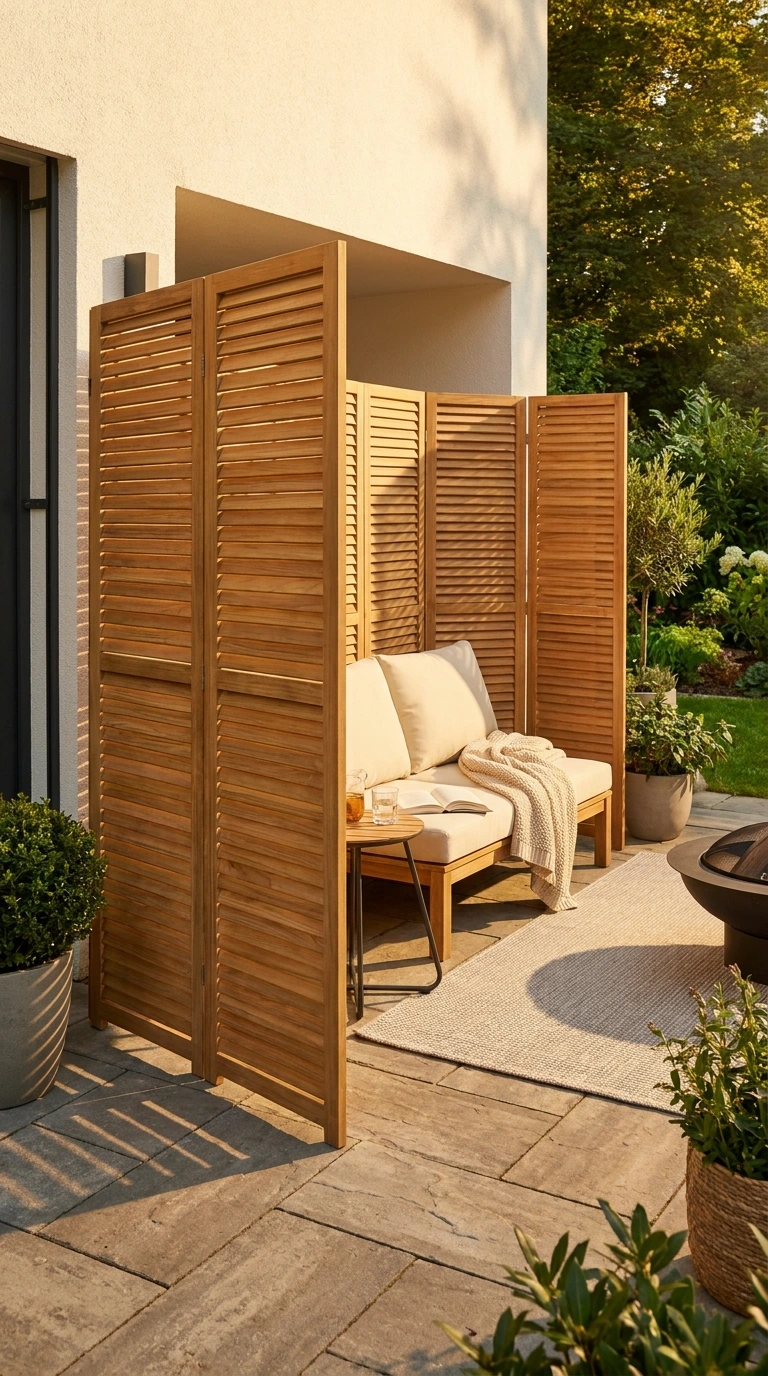
For renters, or for anyone who wants immediate privacy without any installation, freestanding folding screens are the most accessible solution available. A quality outdoor screen can be positioned, repositioned, and stored as needs change — providing maximum flexibility alongside a genuine privacy solution.
The most effective freestanding screens for patio privacy are at least 1.8m tall (the height at which a standing adult loses sightline over the top) and positioned specifically at the angle of the most problematic overlooking view rather than simply parallel to the nearest fence. Materials range from natural bamboo and slatted teak through to powder-coated steel in decorative laser-cut patterns — each creating a different aesthetic character alongside the same functional result.
4. Pergola With Side Curtains
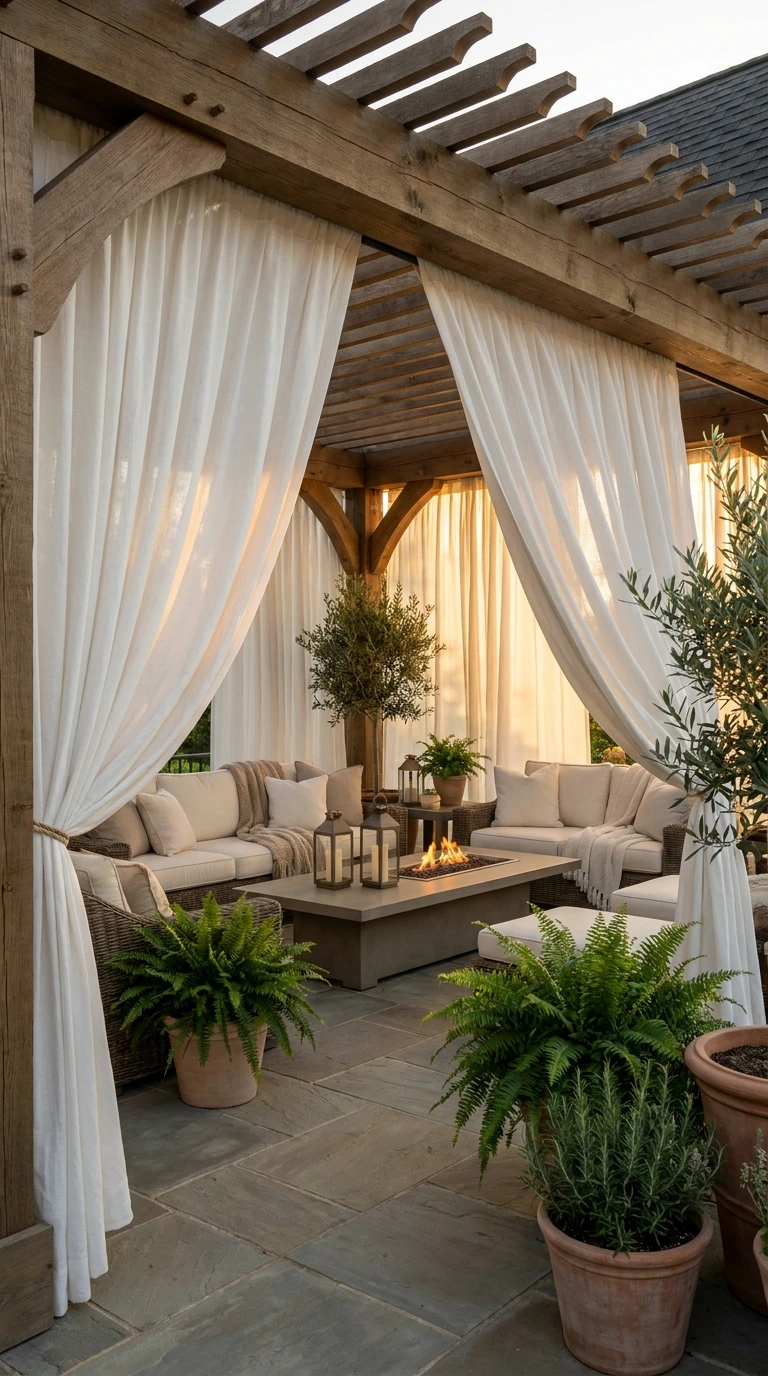
A pergola structure with weather-resistant curtains creates the most complete privacy solution available — combining overhead shade with adjustable side enclosure to create a genuinely room-like outdoor space. When the curtains are drawn, the patio becomes its own contained environment. When they’re open, the structure still defines the space without enclosing it.
Outdoor curtains in HDPE or solution-dyed acrylic fabric tolerate full weather exposure indefinitely without fading, mildew, or deterioration. Mount them on stainless steel wire or outdoor curtain track fixed between pergola posts. Choose a fabric weight and colour that filters light rather than blocking it completely — this creates the specific quality of soft, diffused outdoor light that makes a pergola with curtains feel genuinely atmospheric rather than simply enclosed.
5. Slatted Timber Privacy Panels
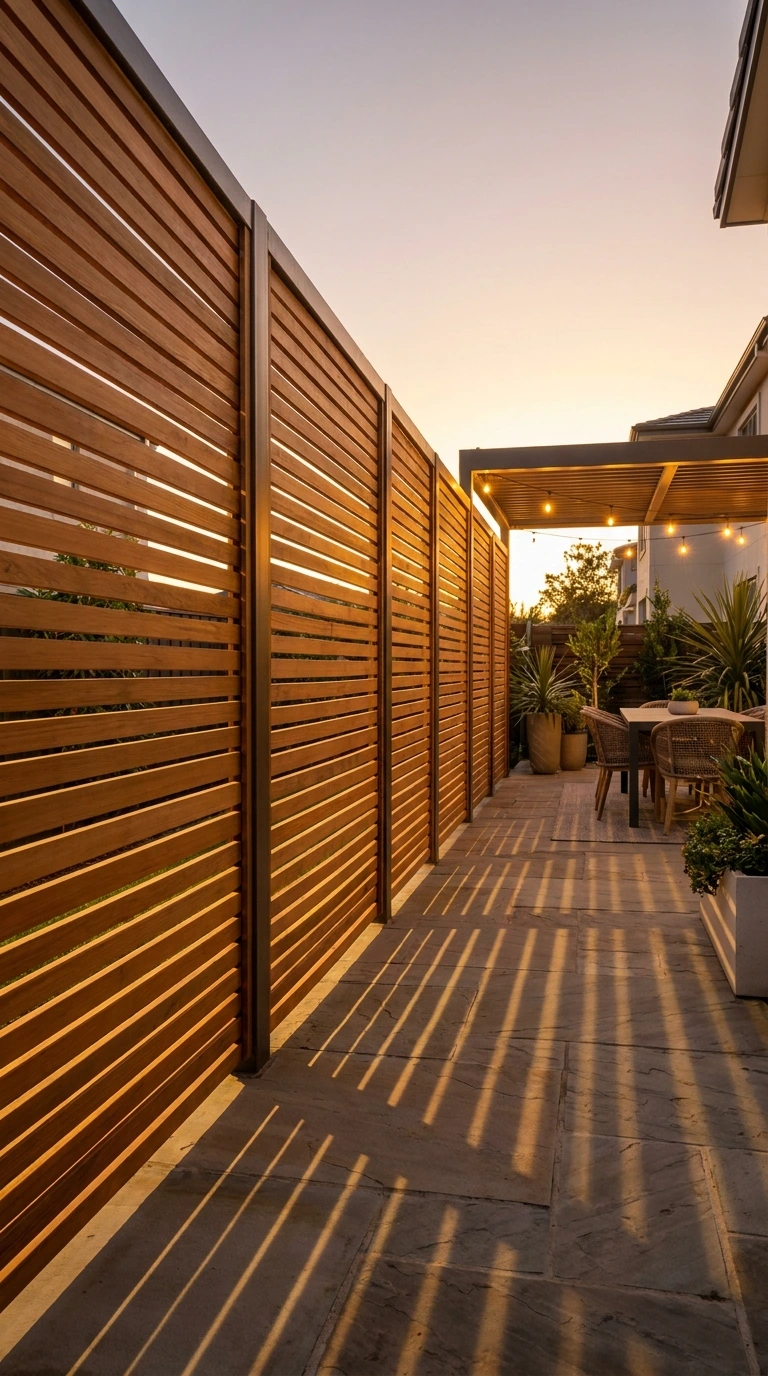
Slatted timber panels — horizontal boards with consistent gaps creating a louvre-like profile — are the most architectural and most design-forward structural privacy solution for any patio. They block sightlines while allowing air movement and filtered light through the gaps, and they look genuinely beautiful as a design element in their own right.
The gap-to-board ratio determines the balance between privacy and light/air flow. A 1:1 ratio (equal board width and gap width) provides partial screening with good light and ventilation. A 2:1 ratio (board twice the width of the gap) provides near-complete privacy with reduced but adequate air movement. Hardwood options — cedar, iroko, or accoya — weather to a beautiful silver-grey patina and last decades without treatment.
| Panel Style | Privacy Level | Light Through | Air Flow | Best For |
|---|---|---|---|---|
| Slatted 1:1 ratio | Partial | Good | Good | Side-on views |
| Slatted 2:1 ratio | High | Moderate | Moderate | Direct overlooking |
| Solid board | Complete | None | None | Maximum privacy |
| Louvre (angled) | High | Adjustable | Good | Variable conditions |
6. Raised Planters as a Privacy Border
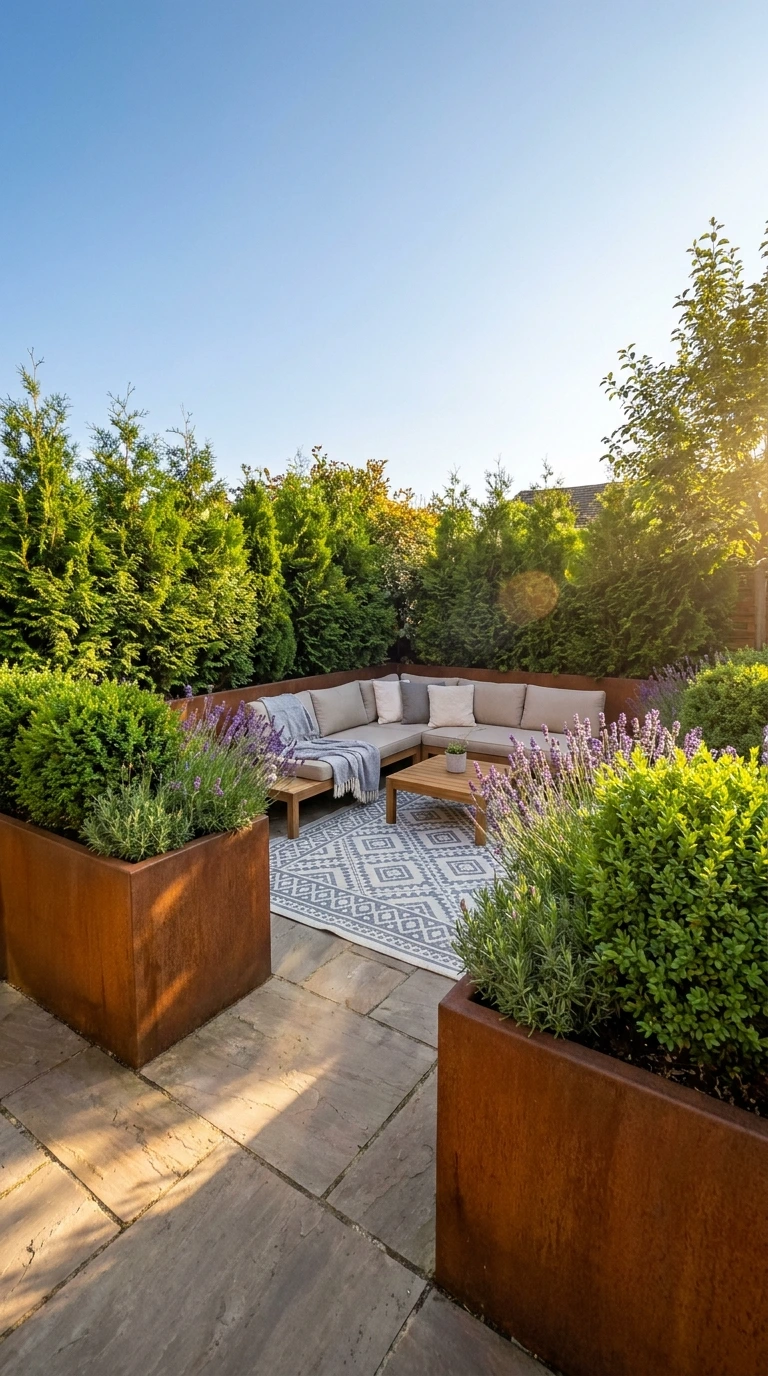
Raised planting beds along the patio’s perimeter add height, depth, and structure that standard ground-level planting doesn’t achieve — because the raised bed lifts the base of the planting by 45-60cm before the plants even begin, meaning a 1.2m plant in a raised bed provides the same effective screening height as a 1.8m plant in the ground.
Timber, Corten steel, or rendered concrete raised beds built along the patio’s boundary create both a privacy structure and a beautiful planting opportunity. Fill them with a combination of evergreen shrubs for year-round structure and seasonal flowering plants for colour and interest at different times of year. The raised bed approach is particularly effective in paved or decked patios where ground-level planting isn’t possible.
7. Shade Sails for Overhead Privacy
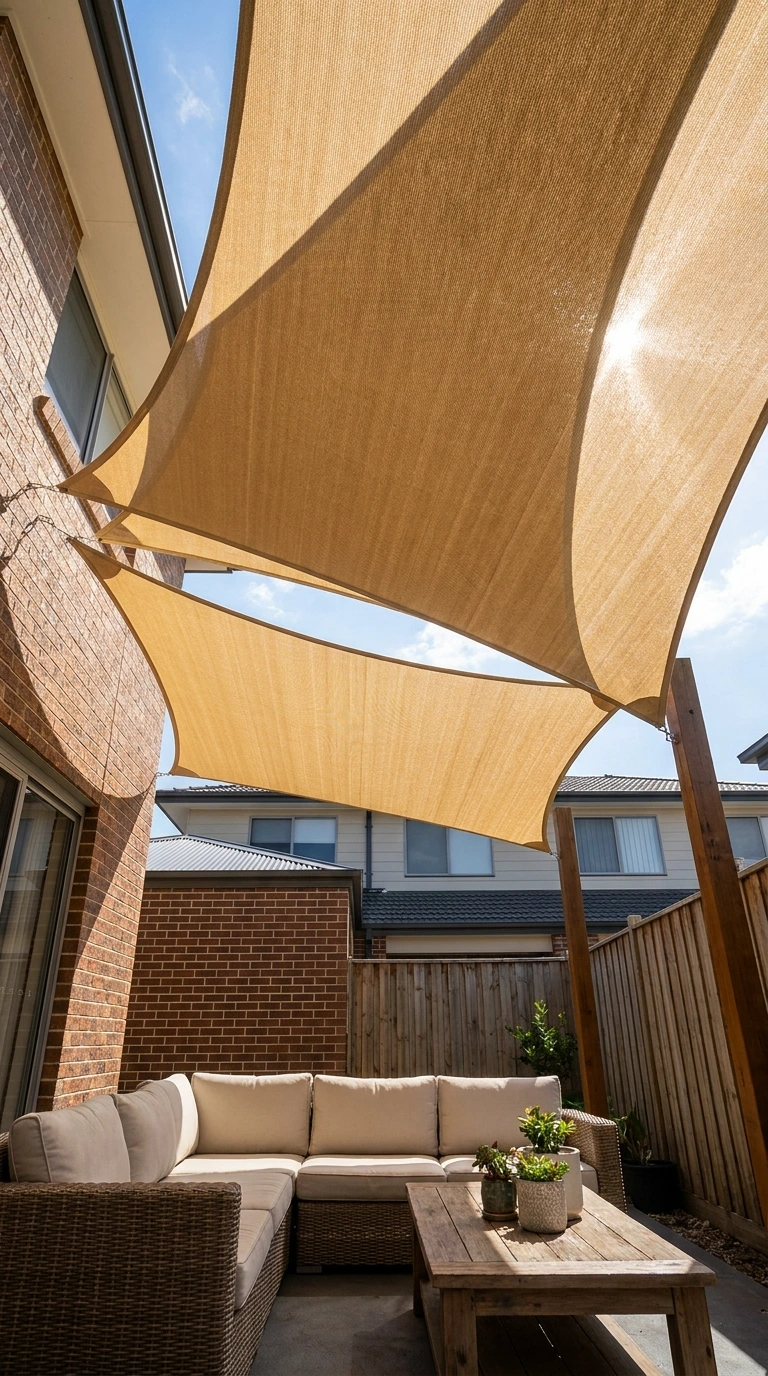
For patios overlooked from upper floors — a common problem in urban terraced housing — horizontal privacy solutions address the wrong problem entirely. The specific challenge of overhead overlooking requires an overhead solution, and shade sails stretched above the patio are the most accessible and most aesthetically appealing one available.
High-density shade cloth in a HDPE weave with 90%+ shade factor creates effective visual screening from above while maintaining air movement and allowing rainfall to pass through. Position the sail to block the specific angle of the most problematic upper-floor window rather than simply covering the maximum area. Multiple overlapping sails at slightly different heights create more complete coverage than a single large sail.
8. Living Willow or Hazel Structures
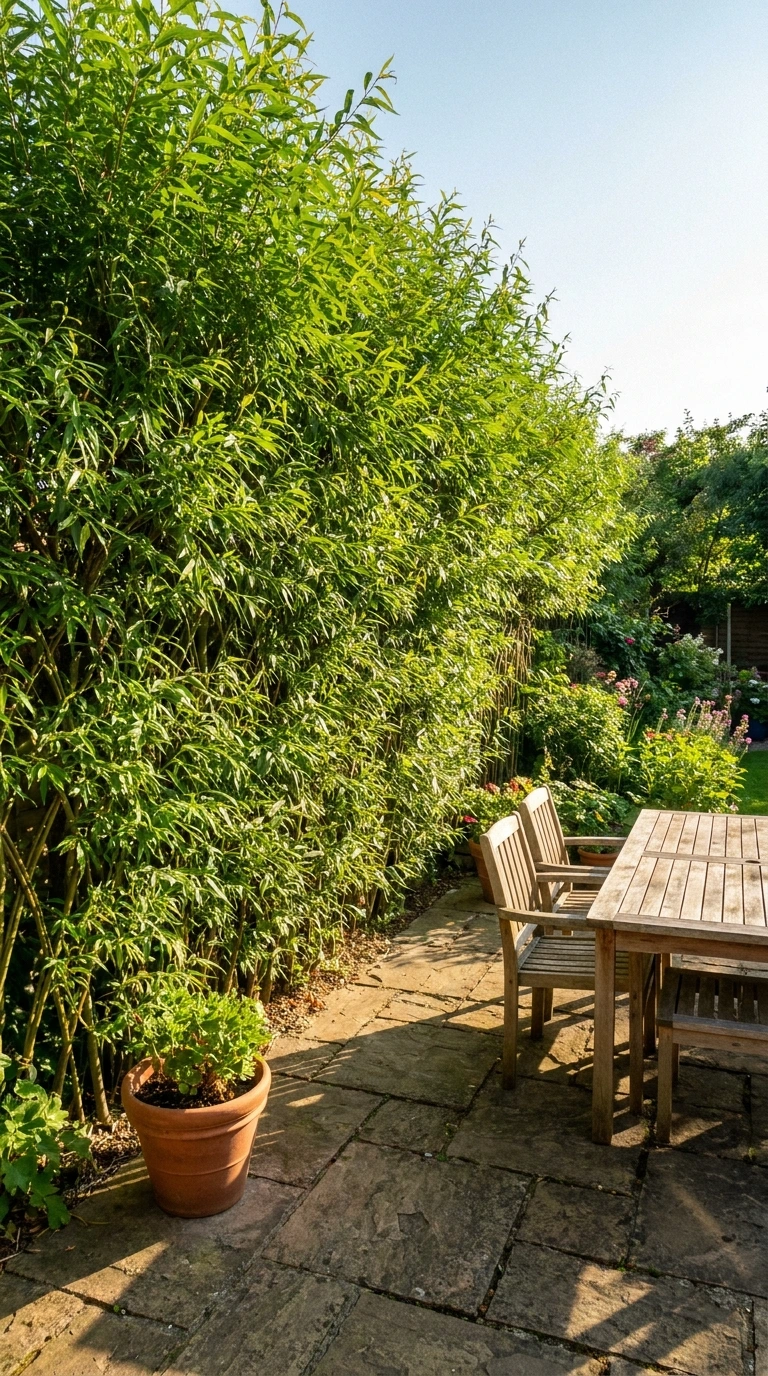
Woven living willow or hazel structures — screens, arches, and domes made from whittled stems that root and leaf when correctly installed — are the most extraordinary and most genuinely organic privacy solutions available in any garden context. They create privacy through living plant material that improves every season as it fills in.
Living willow screens are installed from late winter to early spring while the stems are dormant. Push stems 30cm into the ground at 30-45cm intervals, weave them into the desired pattern, and water well. By mid-summer, the structure will be in full leaf and providing dense green coverage. By the following summer, an established living willow screen is genuinely extraordinary — a living architectural element that is unlike any manufactured alternative.
9. Audio Privacy Through Water Features
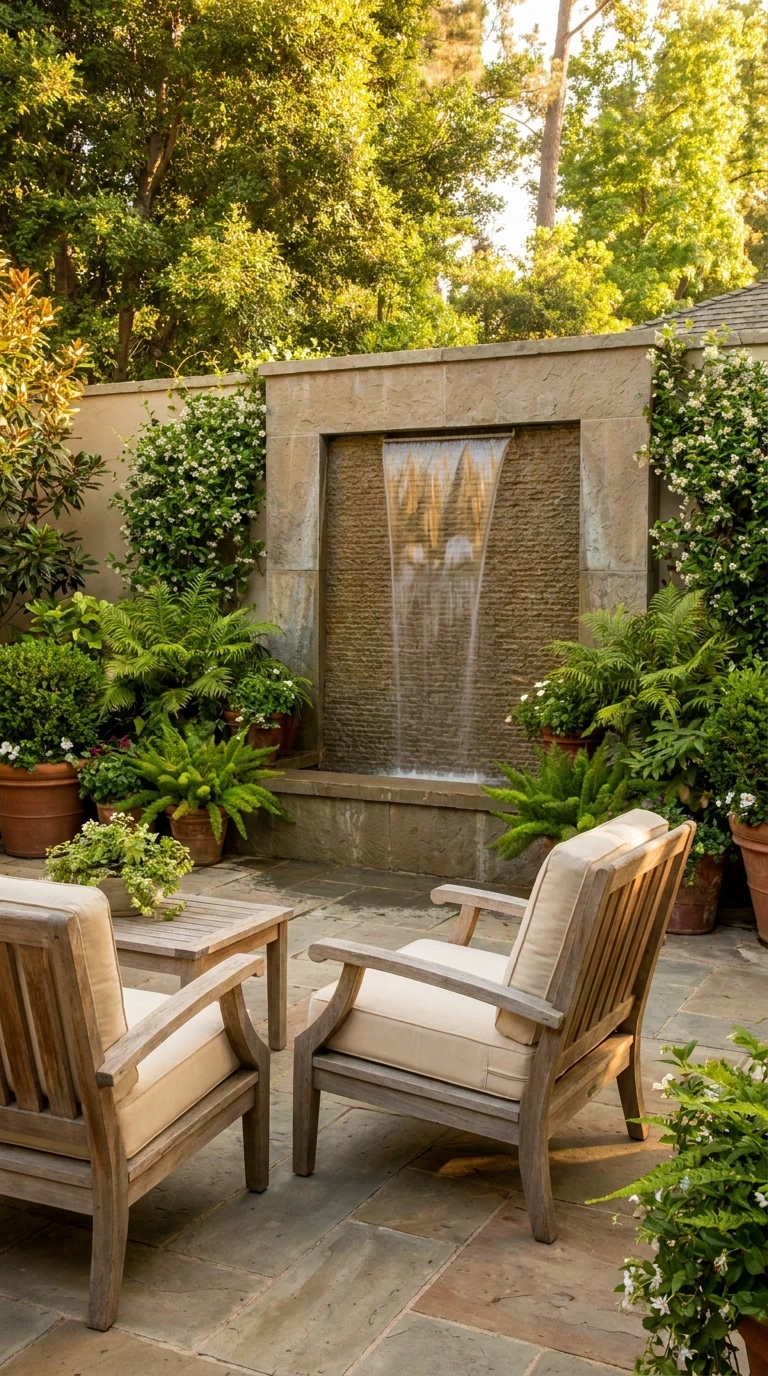
This is the privacy solution that most people don’t immediately think of — and that addresses the specific challenge that visual screening alone doesn’t solve. Even with complete visual privacy, a patio can feel uncomfortably intimate when outdoor conversations are clearly audible to neighbours and vice versa. Moving water masks ambient sound and creates a genuine acoustic separation between the patio and its surroundings.
A wall-mounted water feature on the screen facing the most problematic direction creates both a visual focal point and audio privacy simultaneously. A recirculating fountain at ground level within the patio fills the space with ambient sound that raises the acoustic threshold for conversation. The combination of visual screening and audio masking through a water feature creates the most complete patio privacy experience available — addressing both the visibility and the auditory intimacy that make exposed patios uncomfortable.
10. Strategic Lighting for Evening Privacy
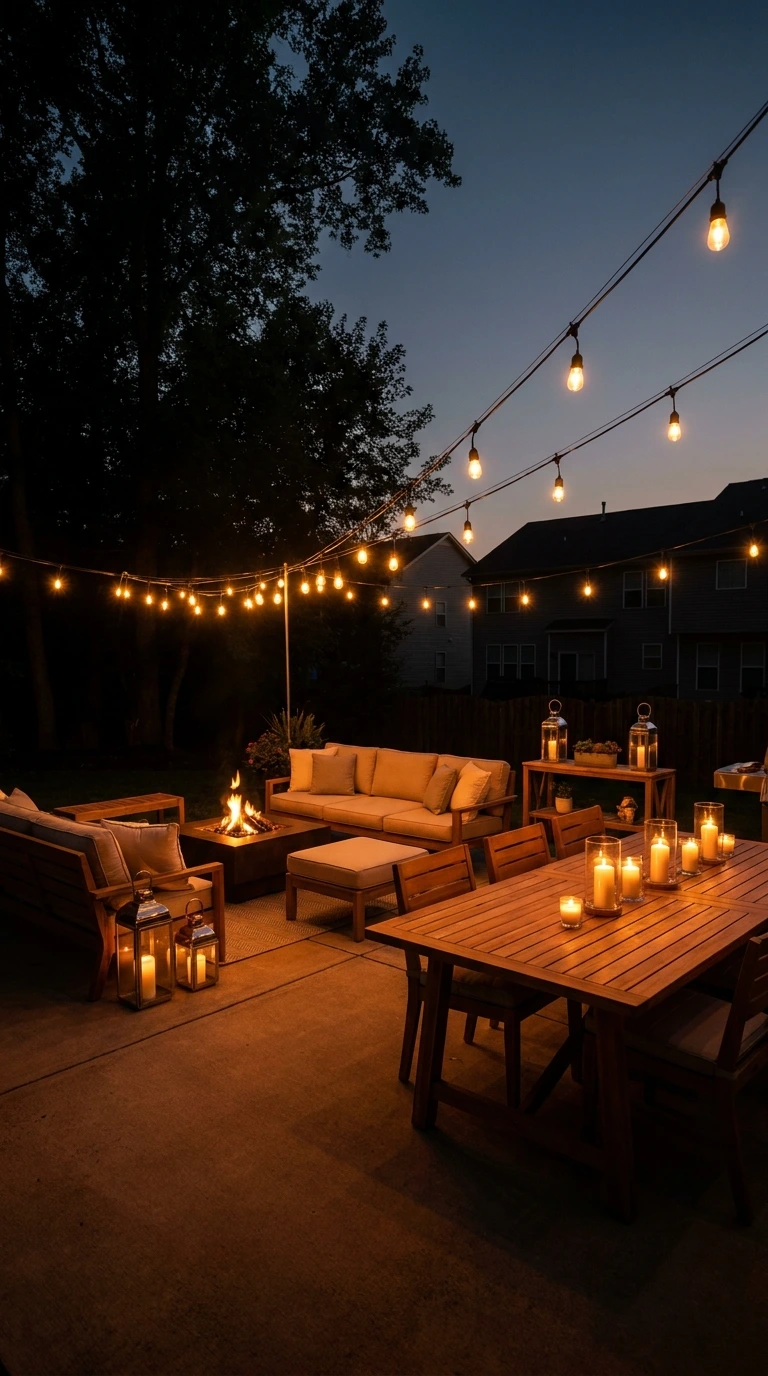
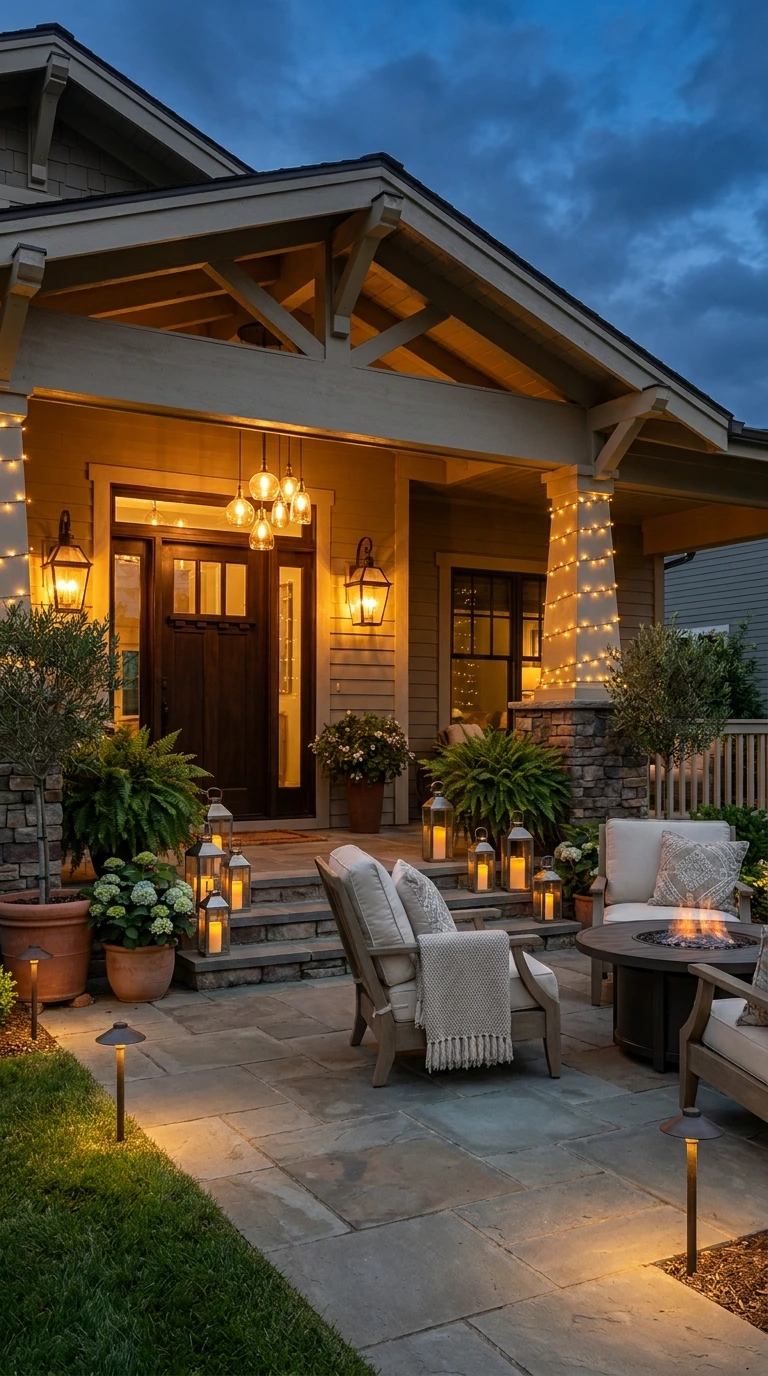
Evening is when many patios become their most uncomfortably visible — as interior lights illuminate neighbouring houses and darkness outside makes patio occupants appear as silhouettes visible from every lighted window nearby. The solution is counterintuitive: more light, not less.
A well-lit patio in which the occupants are at the same light level as their surrounding environment is far less visible from neighbouring properties than a dark patio where figures are silhouetted against bright interior windows. String lights overhead, lanterns at multiple heights, and candles on surfaces collectively create the warm, self-contained atmosphere of an illuminated outdoor room — one that reclaims the evening hours that visual-only privacy solutions leave vulnerable.
IMO, the combination of a structural daytime privacy solution (plants, panels, or pergola curtains) with a warm, generous evening lighting scheme addresses every privacy challenge a patio faces across the full range of daily use.
Frequently Asked Questions
1. What is the cheapest way to add privacy to a patio?
Tall plants in large containers are the most affordable entry point — bamboo or ornamental grasses in budget containers can create effective screening for less than the cost of a single timber panel. Freestanding folding screens are the second most accessible option for immediate results.
2. How do I add privacy to a patio without blocking light?
Slatted timber panels with a 1:1 gap-to-board ratio, shade sails in light-coloured open-weave fabric, and open-structure trellis with climbing plants all provide significant privacy while maintaining good light transmission and air movement through the screen.
3. How tall should a privacy screen be for a patio?
A minimum of 1.8m height is required to block sightlines at standing height. For seated privacy only, 1.5m is generally sufficient. For complete privacy from upper-floor overlooking, overhead solutions like shade sails or pergola covers are required in addition to vertical screening.
4. Can I add privacy to a rented patio?
Yes — freestanding screens, container plants, and free-standing trellis frames that don’t attach to existing fences all create effective privacy without permanent modification. Always check with your landlord before making any fixed structural changes.
5. What plants grow fastest for patio privacy?
Bamboo (clumping varieties), tall ornamental grasses, and annual climbers like black-eyed Susan vine establish the fastest. Among permanent screening plants, photinia, Portuguese laurel, and fast-growing evergreen grasses provide good density within one to two growing seasons.
6. How do I add privacy to a patio that is overlooked from above?
Horizontal privacy solutions (vertical panels, plants) don’t address overhead overlooking. Shade sails, a pergola with a solid or slatted roof, or a combination of overhead sails at different angles are the correct solutions for patios overlooked from upper-floor windows.
Conclusion
Ten solutions that address patio privacy from every angle — container plants for flexible organic screening, trellis with climbers for beauty that builds over time, freestanding screens for immediate flexibility, pergola curtains for adjustable enclosure, slatted panels for architectural character, raised planters for elevated screening, shade sails for overhead challenges, living willow structures for extraordinary organic architecture, water features for audio privacy, and strategic lighting that reclaims the evening hours.
Privacy is the foundation of genuine outdoor enjoyment. No furniture arrangement, no lighting scheme, and no planting design fully compensates for the specific discomfort of feeling watched every time you sit outside. Solving this problem once, properly, transforms the entire character of how a home is used.
Identify your specific overlooking problem — the direction, the height, the time of day it’s worst. Then choose the solution designed for exactly that challenge. Your patio has been waiting long enough.