How To Arrange Outdoor Furniture for a Patio That Feels Like a Luxury Resort
Introduction
Walk into the outdoor area of a genuinely great hotel and something registers immediately — before you’ve consciously identified what’s creating it. The furniture is arranged with intention. There’s a clear place to sit, a clear place to dine, a clear place to relax by the water. Nothing is pushed against walls. Nothing is crammed. Every chair faces something worth looking at, every table is within comfortable reach of every seat, and the whole arrangement communicates that this space was designed for the human beings who would inhabit it rather than simply filled with furniture.
Creating that feeling at home is entirely possible — and it has almost nothing to do with the cost of the furniture and almost everything to do with understanding a set of specific arrangement principles. I redesigned my own patio layout twice before finally understanding what those principles were — and the difference between the before and after was genuinely striking. These ideas cover every step from planning to finishing touches.
1. Sketch the Space Before Moving Anything
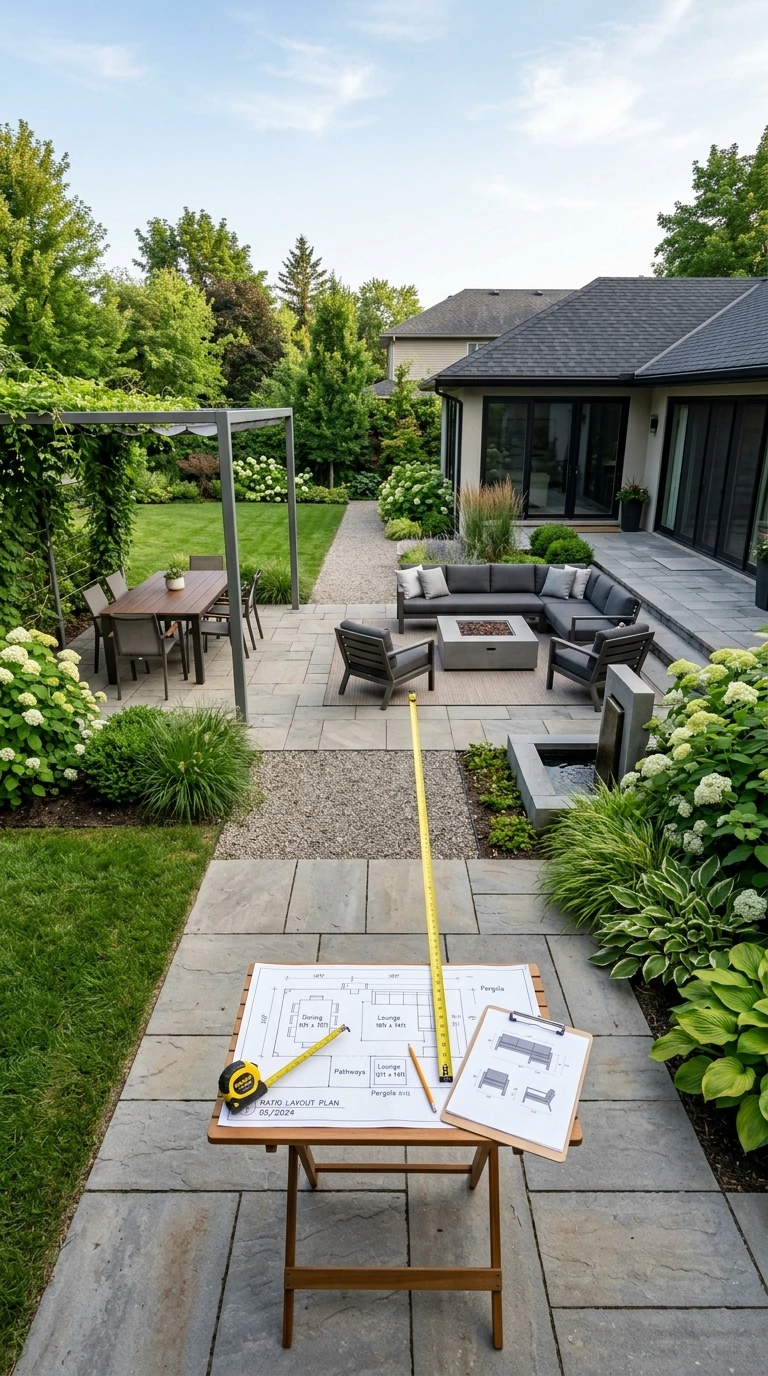
The single most valuable investment you can make in any patio furniture arrangement project costs nothing and takes twenty minutes: drawing a rough sketch of the space on paper before moving a single piece of furniture. Every professional outdoor designer works this way, and for good reason.
Measure the patio and note the dimensions on the sketch. Mark fixed elements — doors, steps, built-in grills, outdoor kitchen, existing plantings. Note where the sun falls at different times of day and where shade appears naturally. Mark the location of the best views from the space. This sketch becomes the planning tool that reveals whether your intended arrangement will actually work in the space — including whether traffic lanes, zone separations, and furniture proportions are genuinely feasible — before any physical effort is expended.
2. Choose a Focal Point First
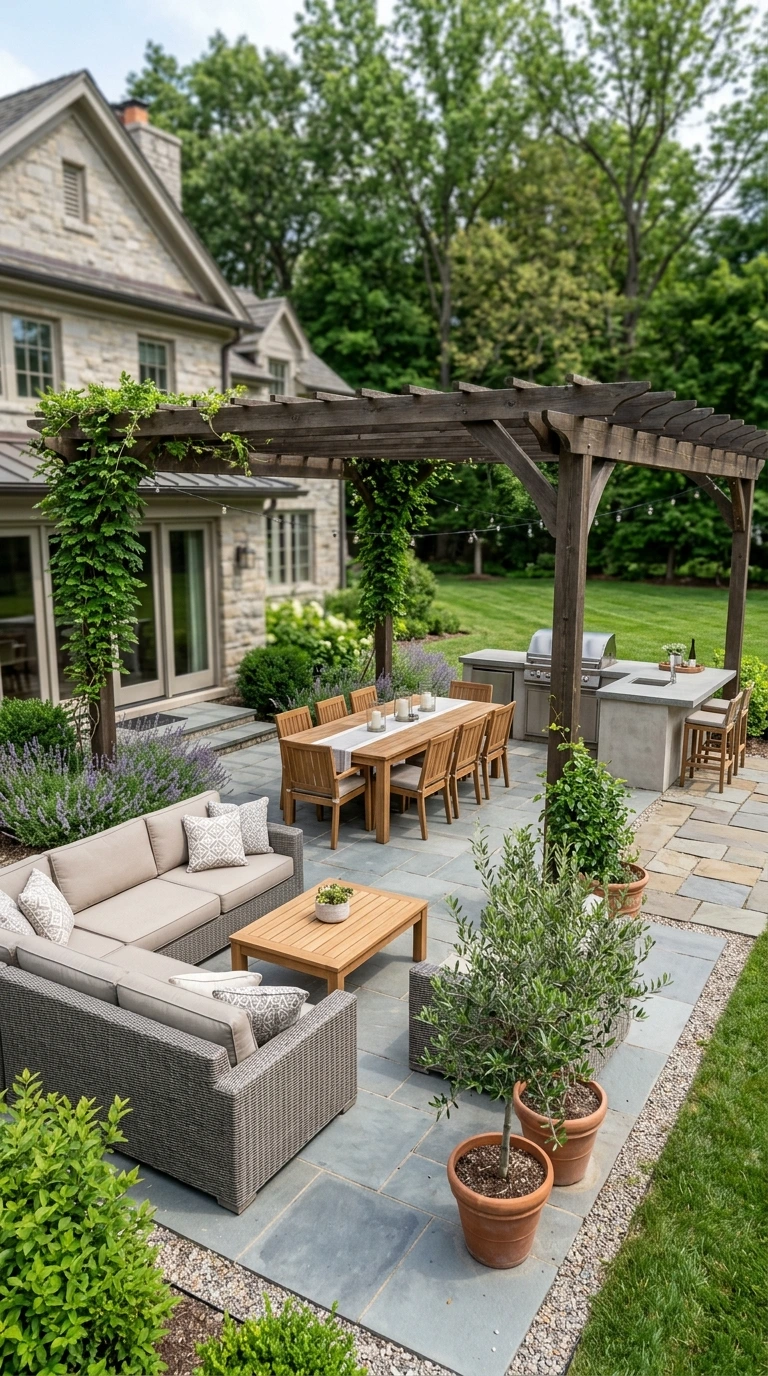
Every beautifully arranged outdoor space has a clear focal point — a single element that the furniture arrangement organises itself around and that the eye naturally moves toward when entering the space. Without a focal point, outdoor furniture arrangements feel directionless even when the individual pieces are beautiful.
A fire pit is the most powerful and most socially compelling outdoor focal point available. A stunning view — a garden, a pool, a landscape — is a naturally occurring focal point that costs nothing to use. A dining table positioned as the central anchoring element. A water feature creating both visual and auditory focus. A pergola or architectural structure framing the space. Identify the focal point of your specific patio before placing any furniture — and then arrange every seat to face or relate to it.
3. Create Distinct Zones Like a Resort
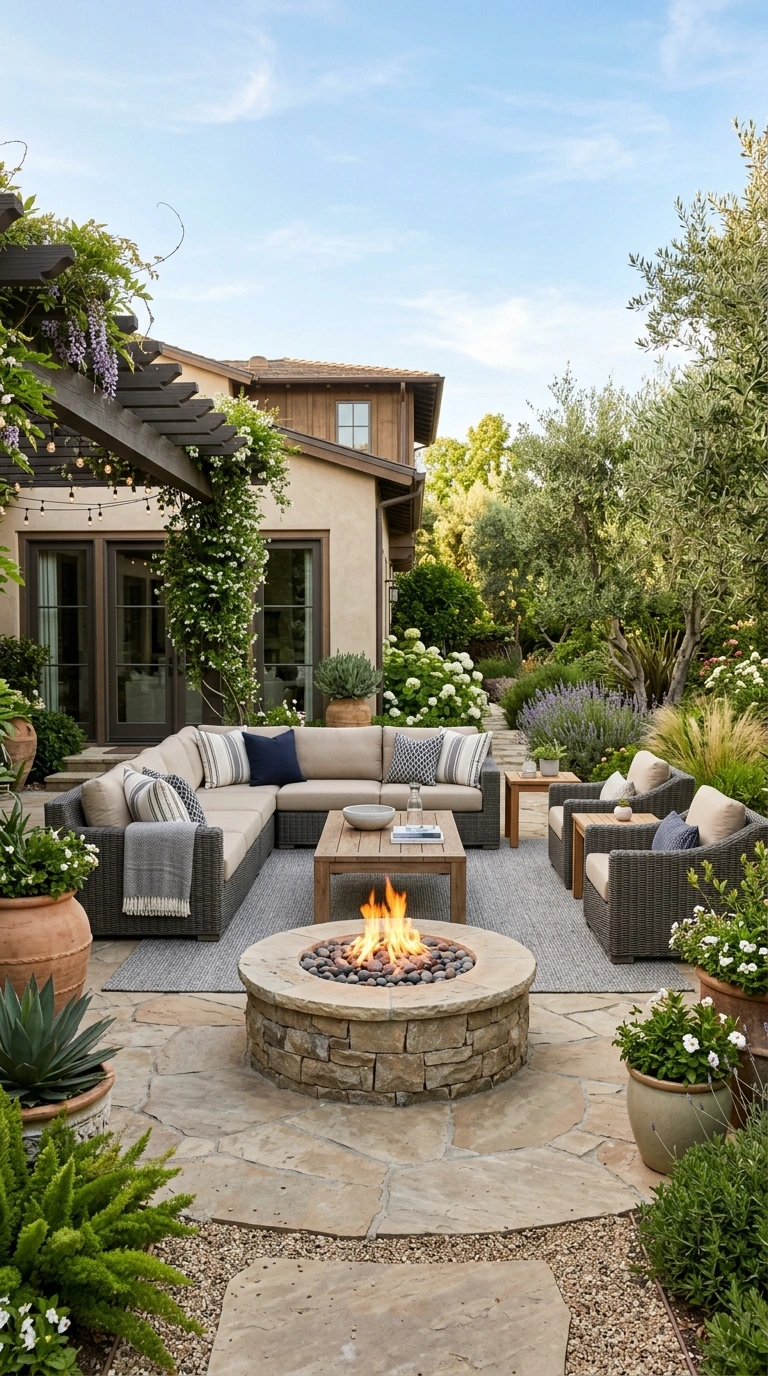
Luxury resort patios don’t function as single undifferentiated spaces — they are composed of multiple distinct zones, each serving a different purpose, each clearly legible, and each flowing naturally into the adjacent zone. This zone-based approach is the structural thinking that separates genuinely extraordinary outdoor spaces from simply well-furnished ones.
A lounge zone — sofas, deep chairs, a coffee table — for relaxed conversation and evening drinks. A dining zone — table, chairs, proximity to the kitchen or grill — for meals. A sun deck or relaxation zone — chaise lounges, daybeds — for solo or paired rest. A fire zone — seating circled around a fire pit — for evening warmth and social gathering. Not every patio needs all four zones — but creating at least two distinct functional areas transforms the patio from a space you use into a space you live in.
4. Float Furniture Away From Walls
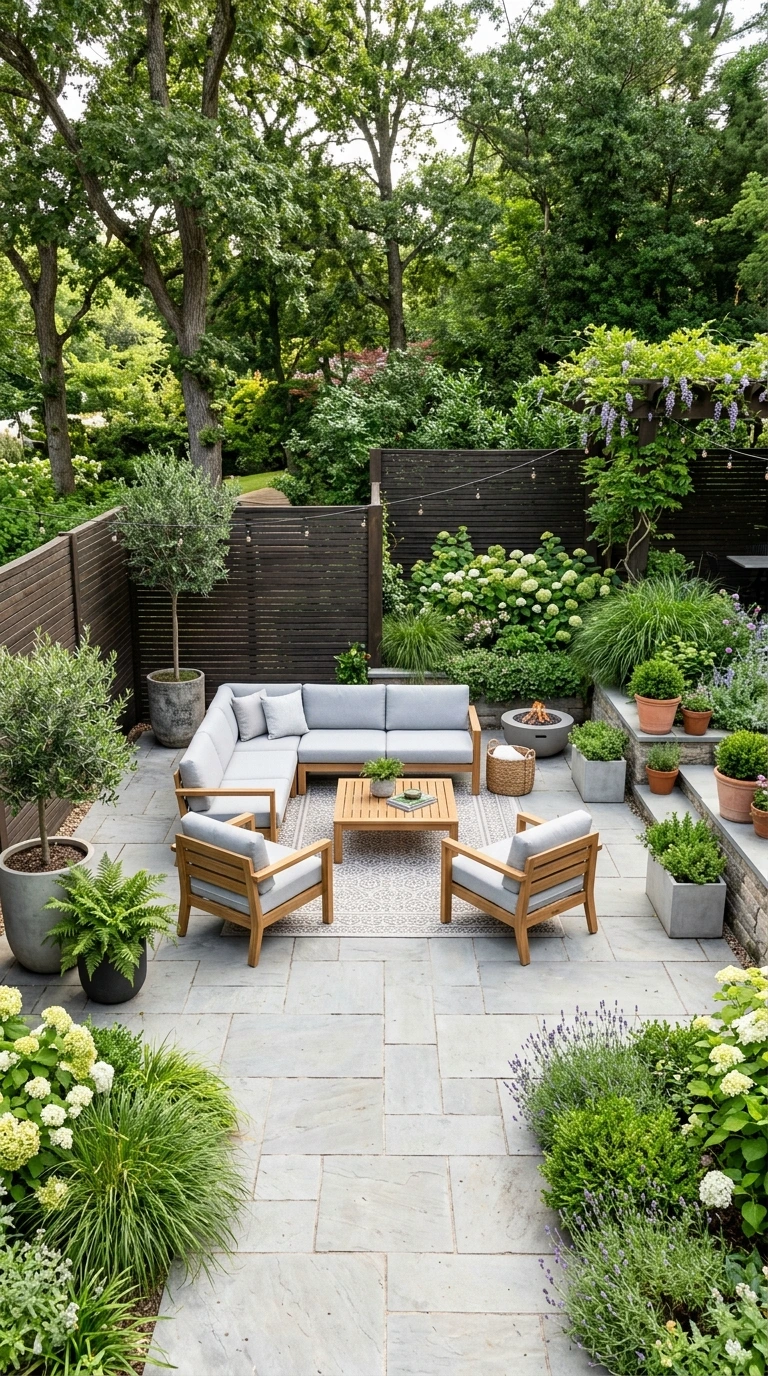
The most common outdoor furniture arrangement mistake — and the one that most immediately eliminates the resort quality from any patio — is pushing all furniture against the walls and perimeter of the space. This instinct creates clear floor space in the centre but makes the space feel like a waiting room rather than a living environment.
Floating furniture toward the centre of the space — with at least 30cm of clearance between the back of seating pieces and any wall, railing, or planter — creates the conversational intimacy and spatial generosity that resort spaces achieve. A sofa floating in the middle of the patio with a coffee table in front of it and two chairs completing the arrangement looks genuinely designed. The same sofa pushed against a wall looks like it’s waiting to be moved somewhere else.
5. Get the Spacing Right
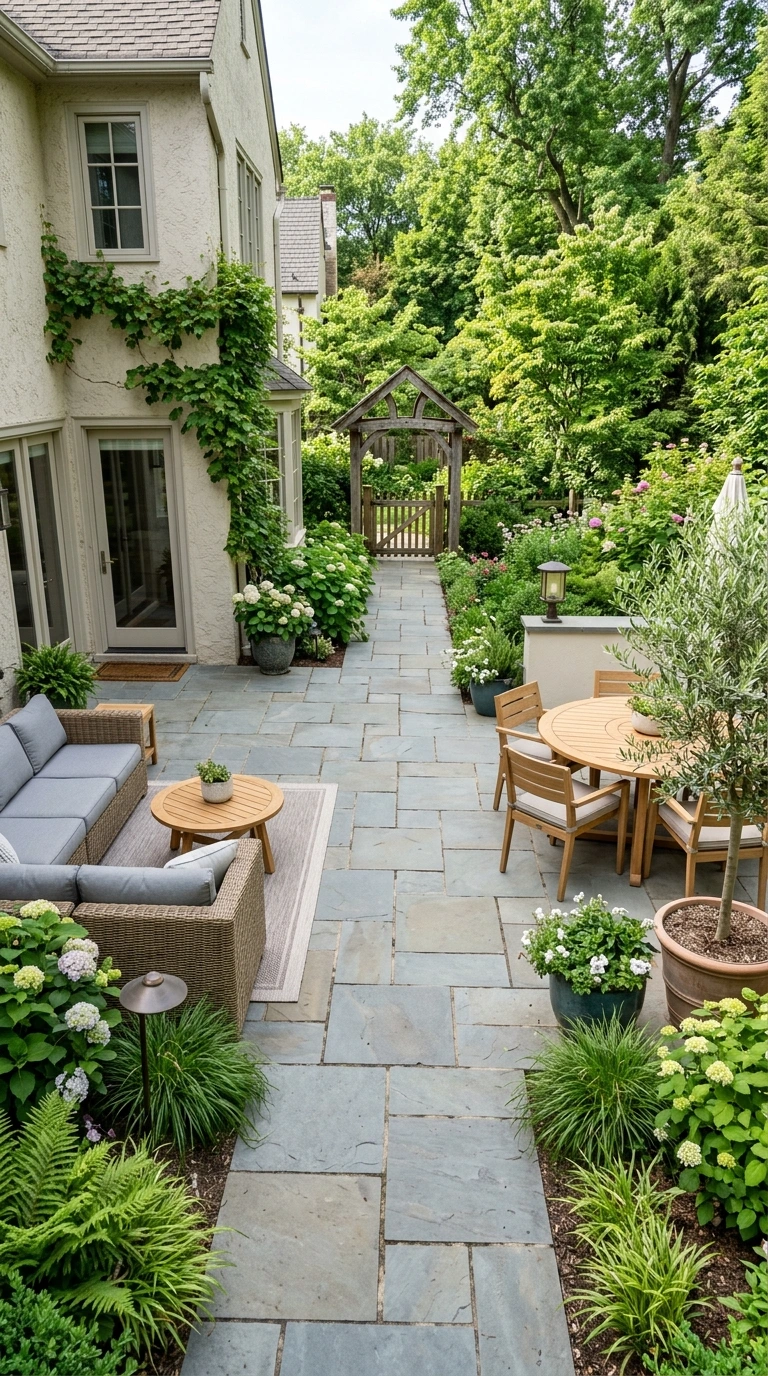
Specific spacing measurements are what separate an outdoor furniture arrangement that functions beautifully from one that looks right but feels uncomfortable in use — and these numbers are worth knowing before any arrangement decisions are finalised.
Key Outdoor Furniture Spacing Guidelines:
- Coffee table to sofa: 40-45cm — close enough for comfortable use, not so close that it blocks natural movement
- Walking paths and traffic lanes: minimum 90cm between any two fixed elements — enough for comfortable single-file movement
- Dining chair to table: 45-60cm of clearance when the chair is pulled out — allows seated and standing movement without obstruction
- Sofa to facing chairs: 1.2-2m — close enough for easy conversation without shouting
- Chaise lounge spacing: 60-90cm between parallel lounges — enough personal space for each occupant
These measurements can be tested before purchase by placing tape on the patio floor to represent the furniture footprint — a five-minute check that prevents expensive mistakes.
6. The Conversation Circle Configuration
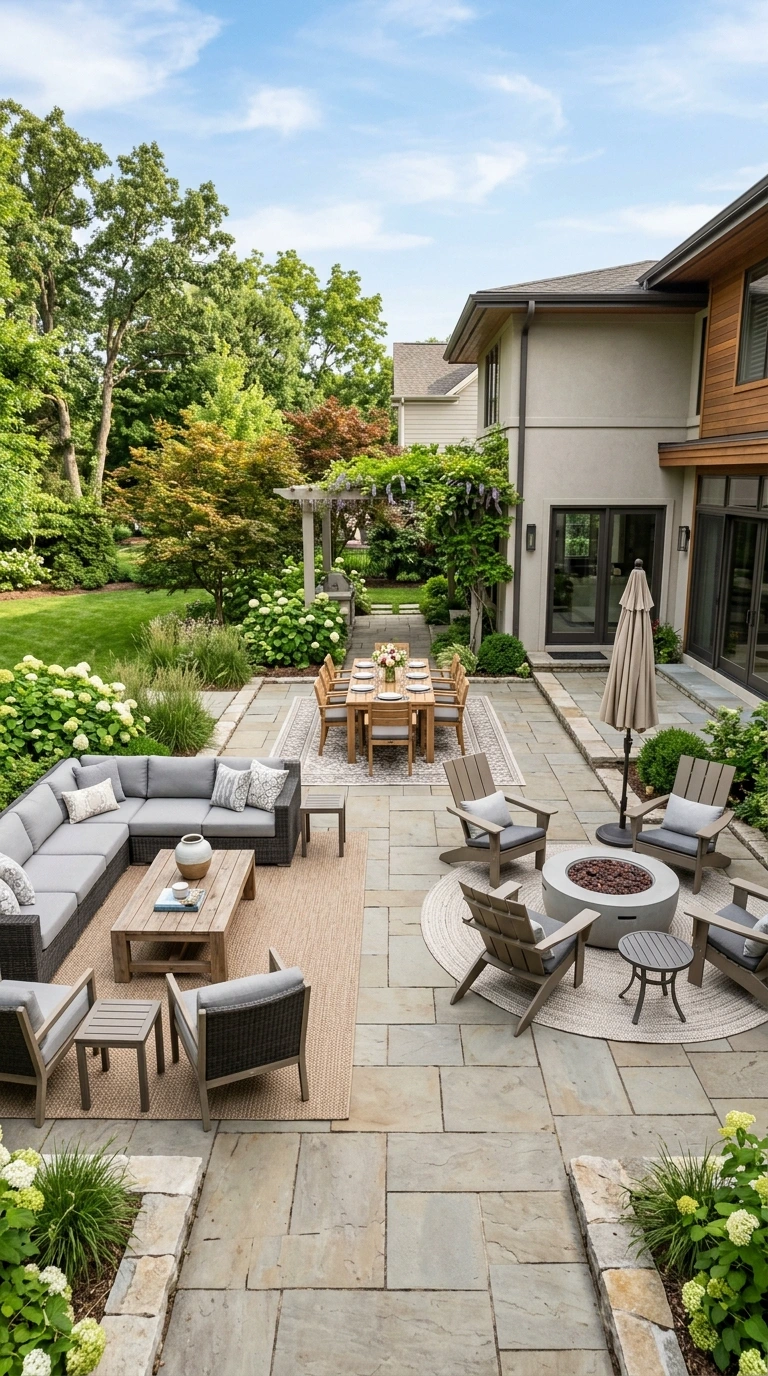
The conversation circle — seating arranged in a circle or oval around a central focal point — is the arrangement most directly associated with the luxury resort and high-end outdoor living aesthetic. It creates a specific quality of social intimacy and visual completeness that linear or L-shaped arrangements rarely achieve.
Four to six chairs or a combination of a sofa and chairs arranged in a U-shape or full circle around a central fire pit, coffee table, or low planter creates the conversation circle. Every seat has equal visual access to the focal point and equal conversational proximity to every other seat — which is why resort spaces use this configuration for their premium outdoor lounge areas. No one sits in the awkward corner seat. No one has to raise their voice to be heard from across the arrangement.
7. The L-Shape Sectional Approach
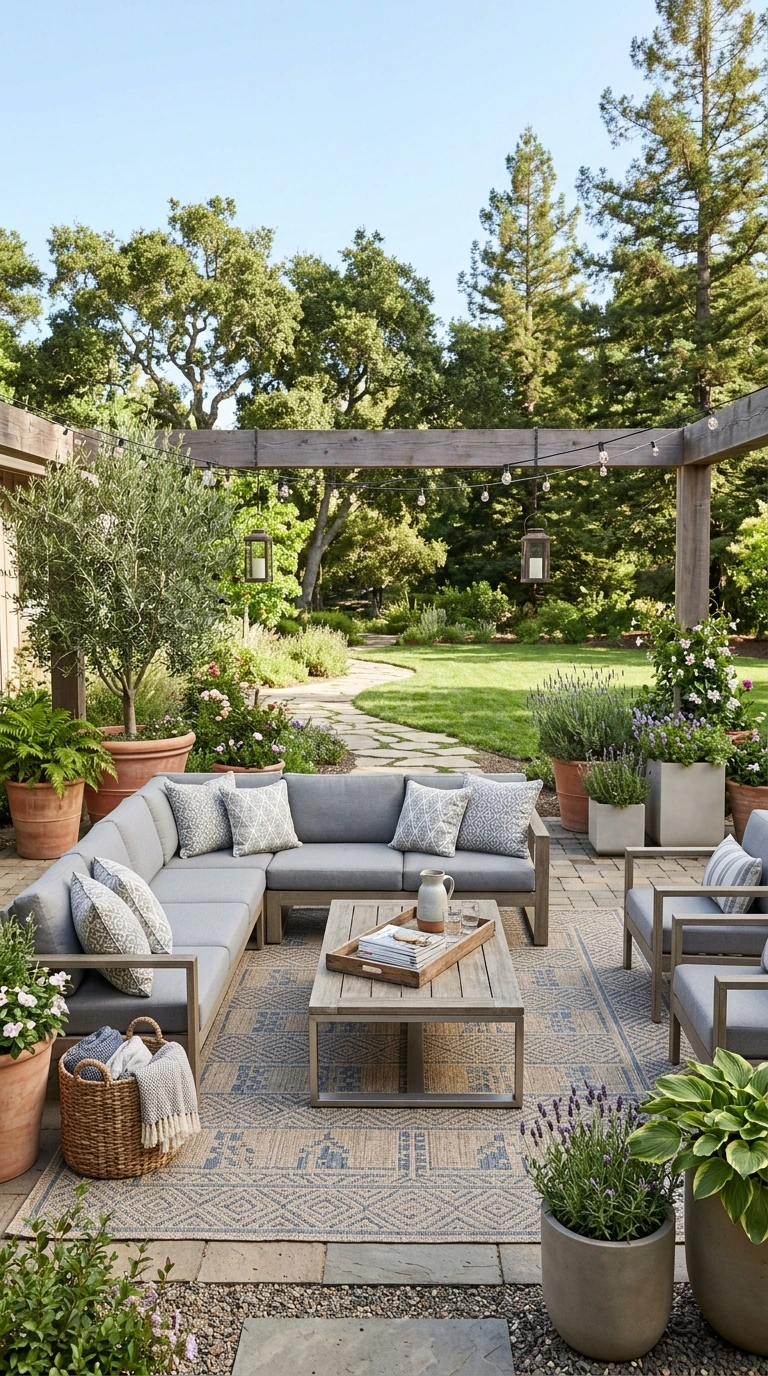
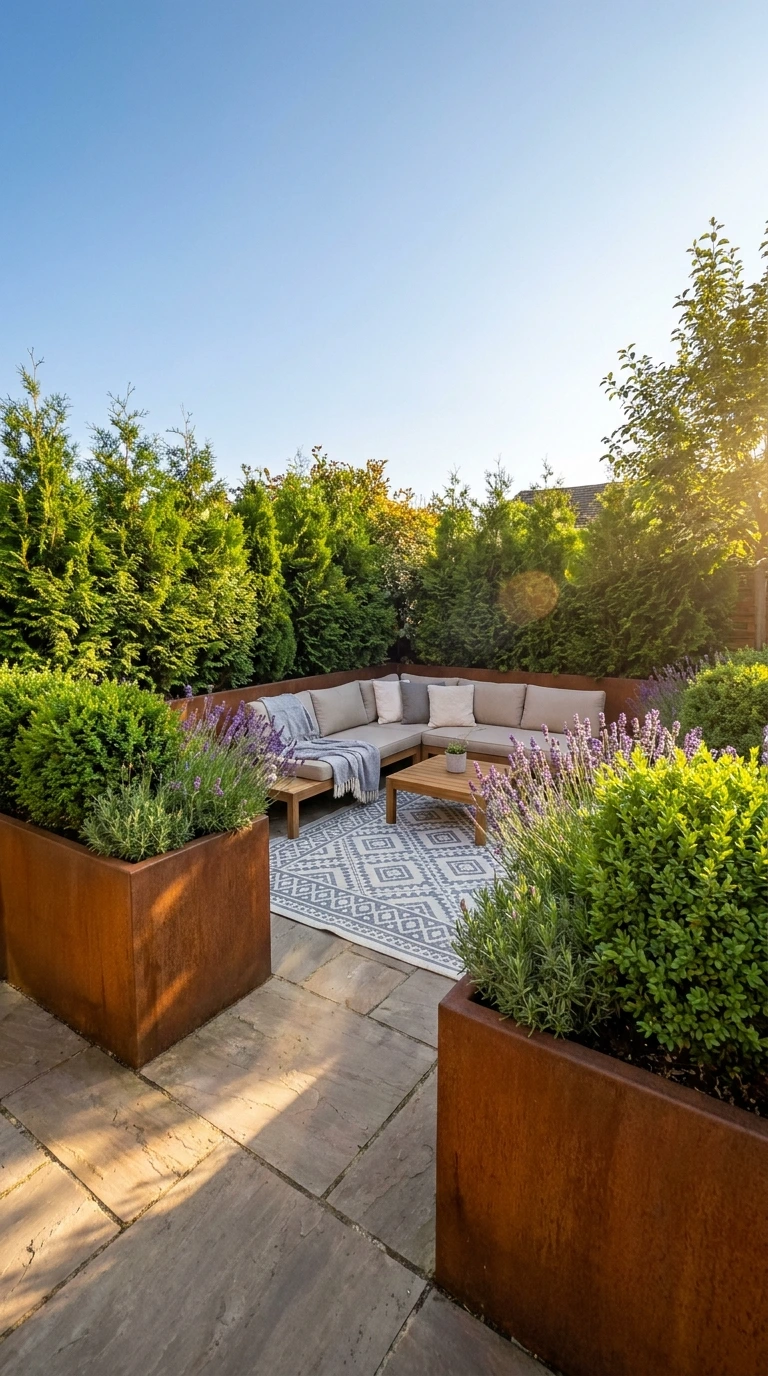
An L-shaped sectional or sofa arrangement positioned in a corner of the patio is the most space-efficient and most versatile outdoor seating configuration for medium-sized patios — tucking the bulk of the seating into a corner and freeing the remainder of the patio for a dining zone, planting, or a fire feature.
Position the longest section of the L against the wall or railing that receives the best light or has the most interesting view. Angle the shorter section at 90 degrees. Position a coffee table within 40-45cm of every seat. Leave the open corner of the L-arrangement — the space facing the arrangement from across the coffee table — clear for a single or pair of chairs that can be added or removed as guest numbers change. This configuration handles eight to ten people at full capacity while feeling intimate and relaxed at two.
8. Orient Seating Toward the View
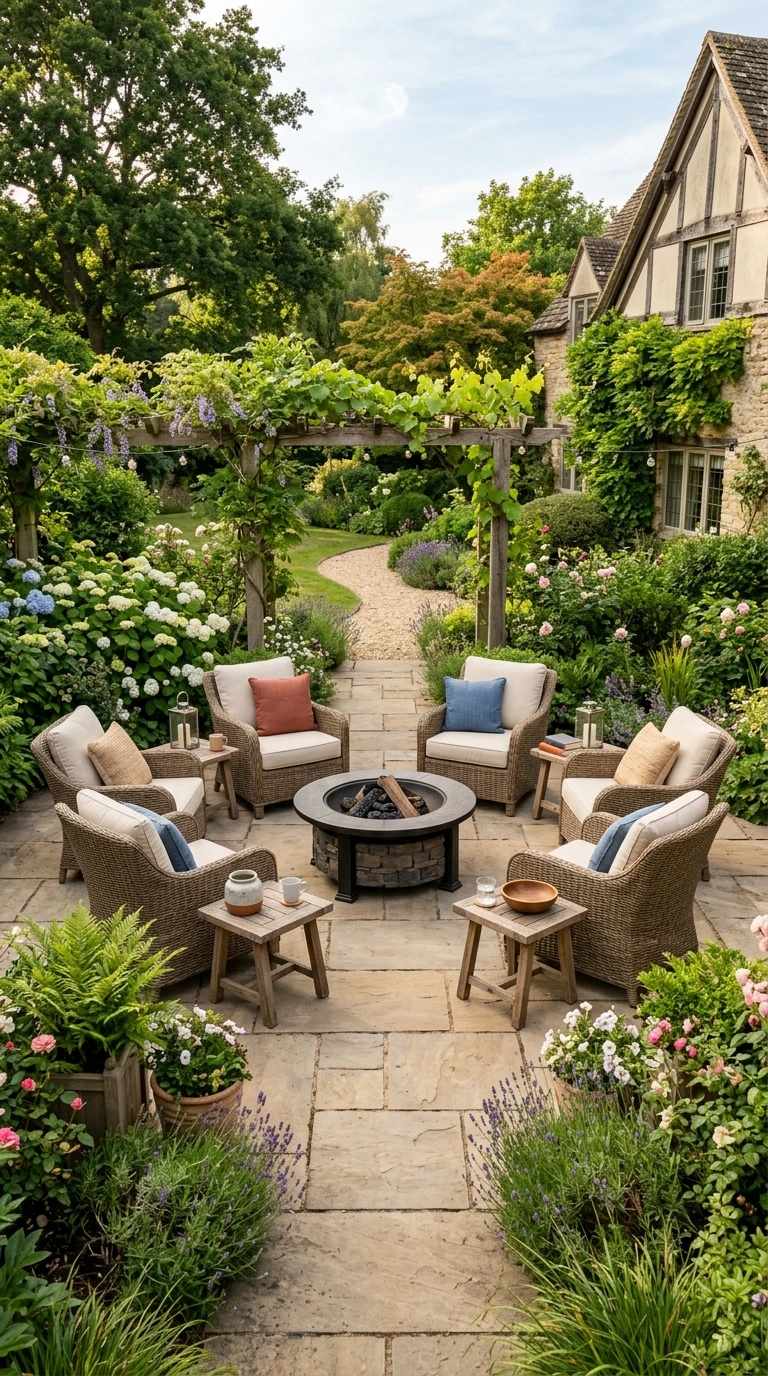
One of the most consistently overlooked outdoor furniture arrangement principles is view orientation — ensuring that the primary seating direction faces the most interesting, most beautiful, or most meaningful view available from the patio. Resort patios do this instinctively and absolutely.
Identify the best view from the patio — even a modestly sized garden view is significantly more pleasant to face than a fence or blank wall. Orient the primary sofa or the longest seating piece so that the natural resting position of a seated occupant faces that view. If the patio has multiple good views, orient different zones toward different views — a lounge zone facing the garden, a dining zone facing the outdoor kitchen or a focal point within the garden.
9. Chaise Lounges — The Resort Signature Piece
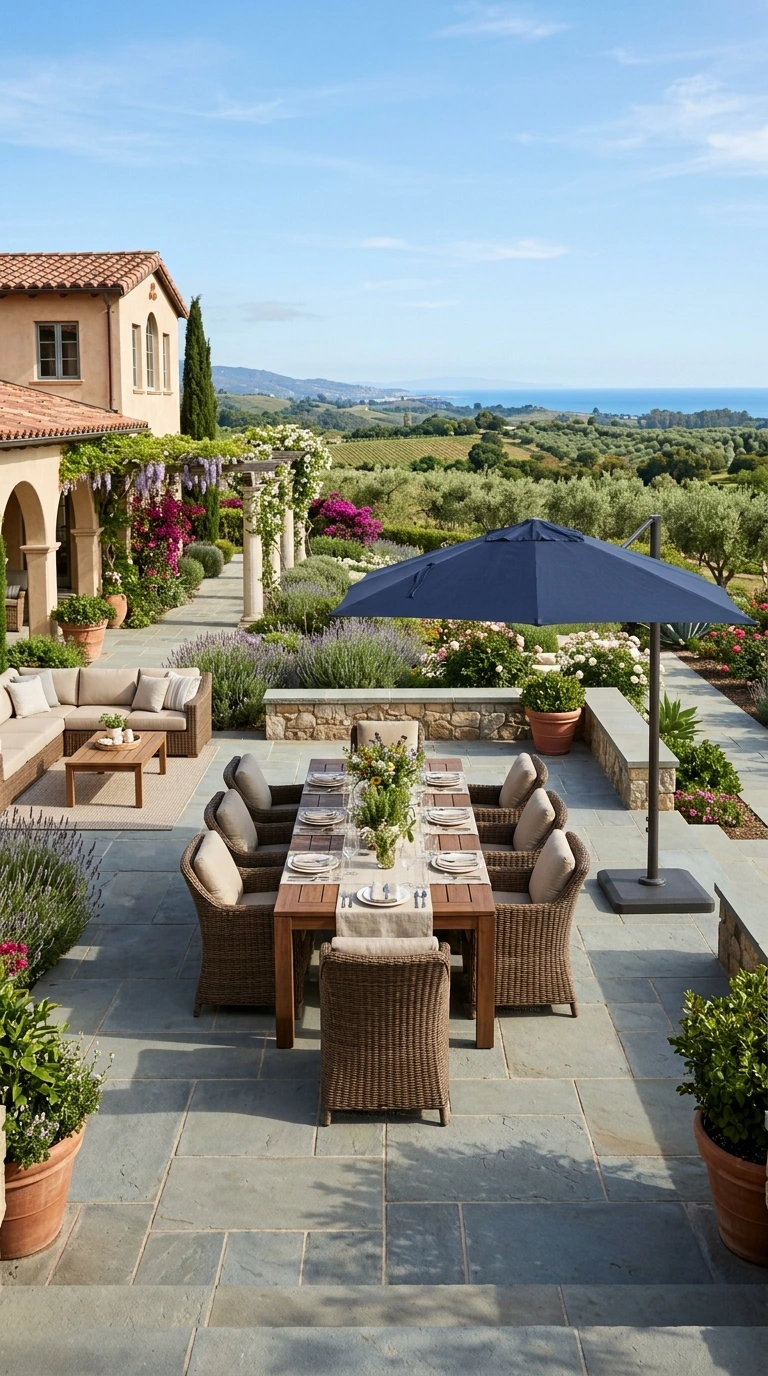
Nothing communicates luxury resort patio more immediately and more completely than a well-positioned pair of chaise lounges — and their inclusion in an outdoor arrangement transforms the patio from a sitting space into a genuine relaxation destination.
Position chaise lounges parallel to each other with a shared side table between them — following designer Ashley Gilbreath’s approach of arranging the heads at opposite ends to promote conversation while maintaining the lounging position. Position them to face the best available view or the afternoon sun, depending on how the patio is primarily used. Add a small side table on the outer side of each chaise for drinks, sunscreen, and books. Two quality chaise lounges positioned with genuine intention create more resort atmosphere than a larger seating arrangement without them.
10. The Outdoor Rug as Zone Definer
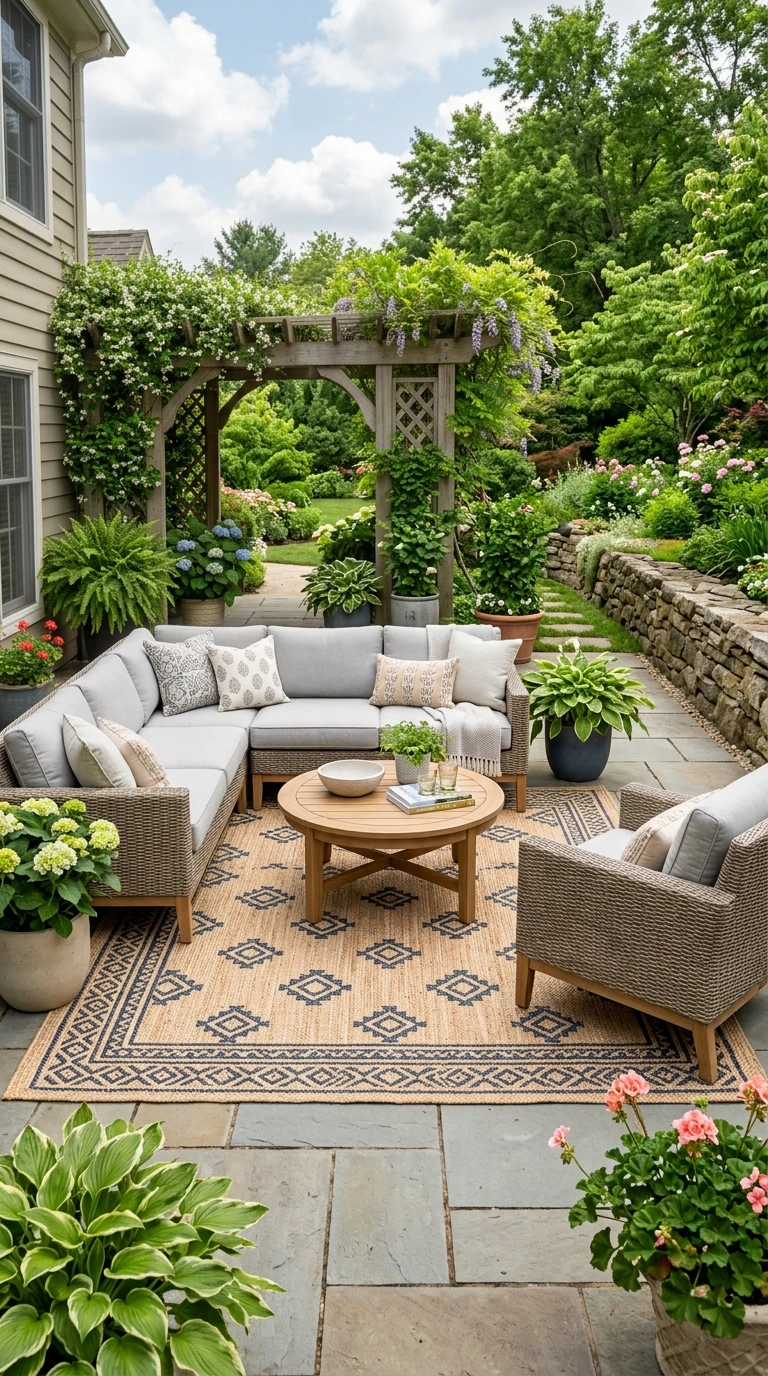
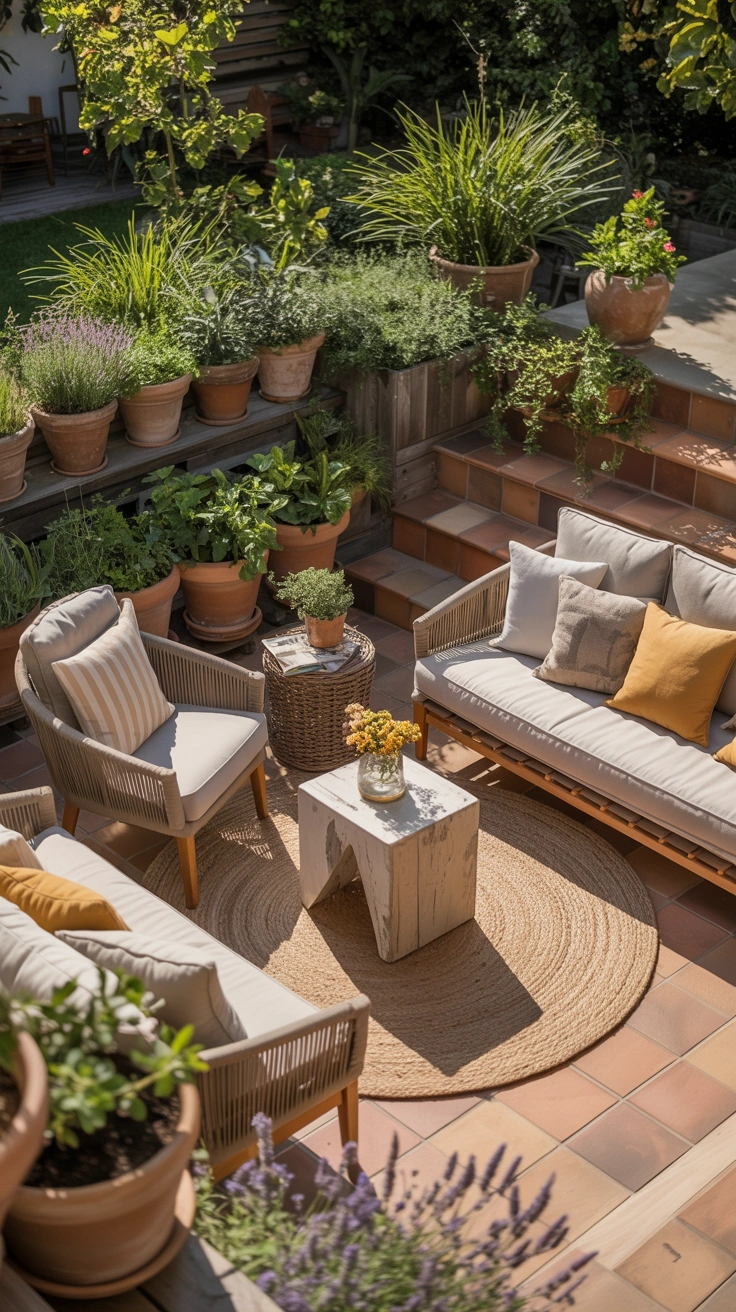
An outdoor rug is the single most effective zone-defining element in any patio arrangement — because it creates a visual and physical boundary around a furniture grouping that communicates “this area is its own room” in a way that furniture positioning alone doesn’t achieve.
Choose a rug large enough for all furniture legs to sit on its surface — at minimum, the front legs of all seating pieces should rest on the rug. A rug that’s too small for the furniture arrangement looks like a mistake; one sized correctly looks designed. In a patio with two distinct zones — lounge and dining — two separate rugs create the visual separation that prevents the space from reading as a single overcrowded arrangement. Natural fibre-effect or flatweave outdoor rugs in warm neutral tones suit the widest range of furniture styles and age gracefully in outdoor conditions.
11. Proportion Furniture to the Space
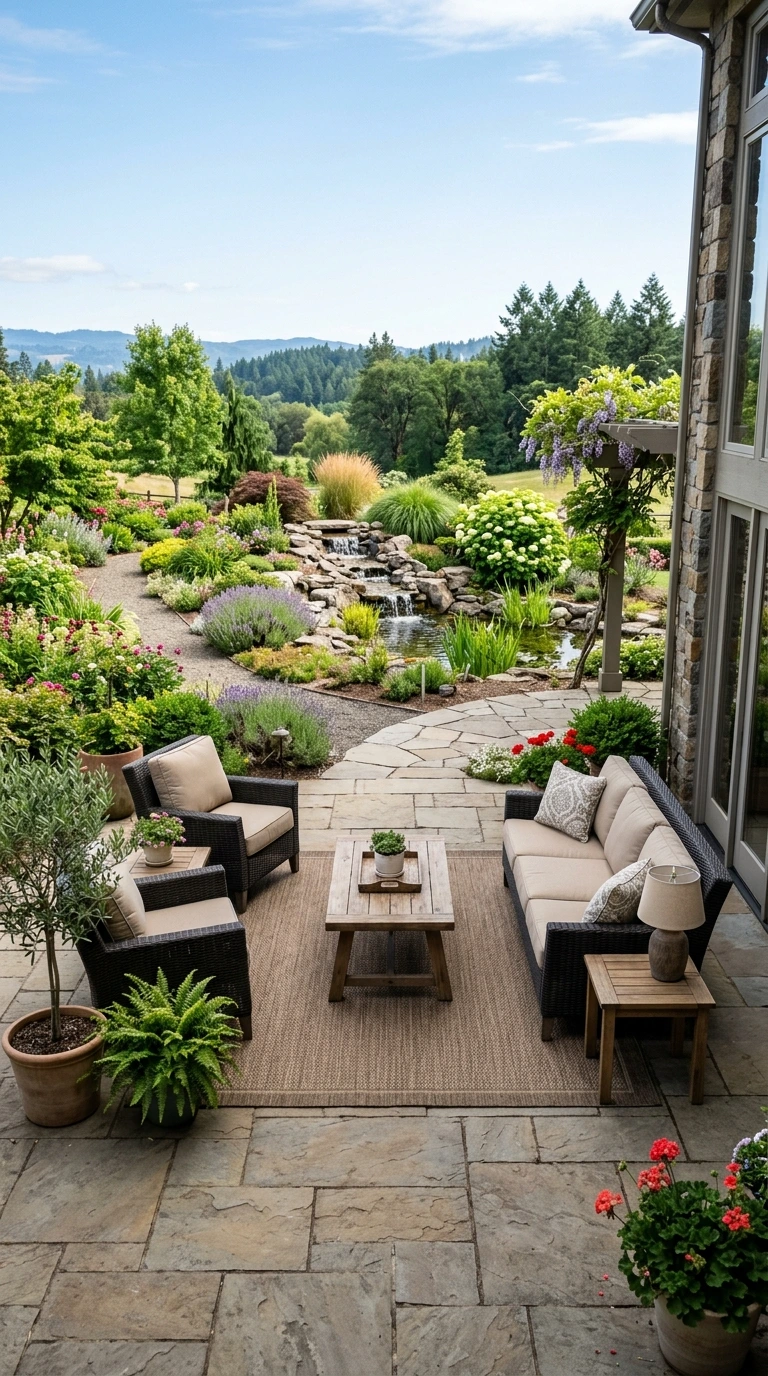
The specific failure mode that makes patios look most unlike resort spaces is furniture that is wrong in scale for the space — either too small (pieces that look lost in the space, creating a provisional quality) or too large (pieces that crowd the space and eliminate the visual breathing room that luxury outdoor spaces always provide).
As a general principle, outdoor furniture in any given zone should cover approximately 60-70% of the zone’s floor area, with the remaining 30-40% as clear floor or path space. A very large patio doesn’t need a very large sofa — it needs two distinct zones each with appropriately proportioned furniture. A small patio doesn’t need miniature furniture — it needs one well-proportioned arrangement rather than attempting multiple zones.
12. Consider Sun and Wind Direction
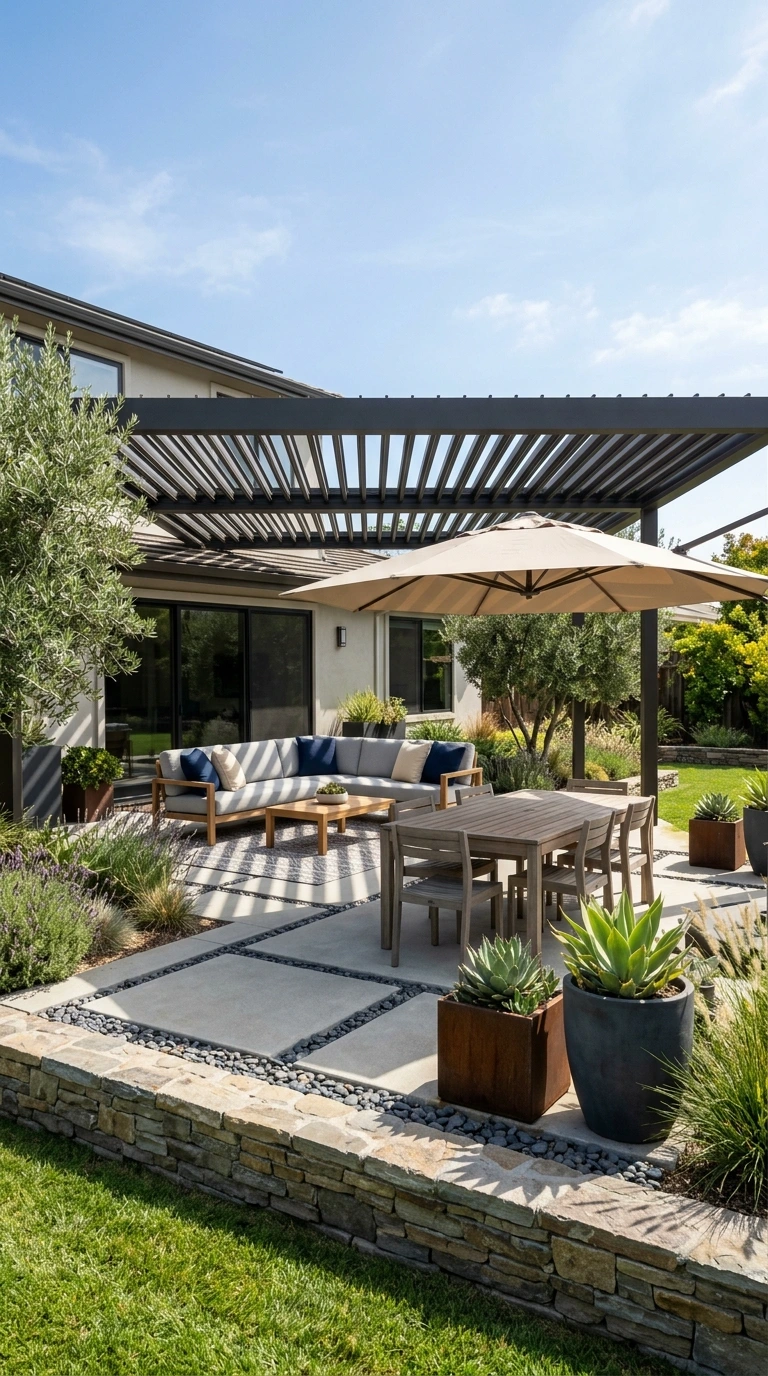
Sun and wind direction are the practical variables that most directly affect whether an outdoor furniture arrangement actually gets used at the hours when people want to be outside — and ignoring them creates a beautifully arranged patio that nobody sits in because it’s too hot, too cold, or too windy.
Position dining areas in naturally shaded spots or add umbrellas, pergolas, or shade sails for adjustable coverage. Check how the sun moves throughout the day and plan primary lounge seating for areas that receive the most pleasant light at the times you most frequently use the patio — typically afternoon shade for hot climates, afternoon sun for temperate ones. Wind direction matters, particularly if lightweight furniture or accessories are used — position heavier anchor pieces to block prevailing wind from reaching the primary seating areas.
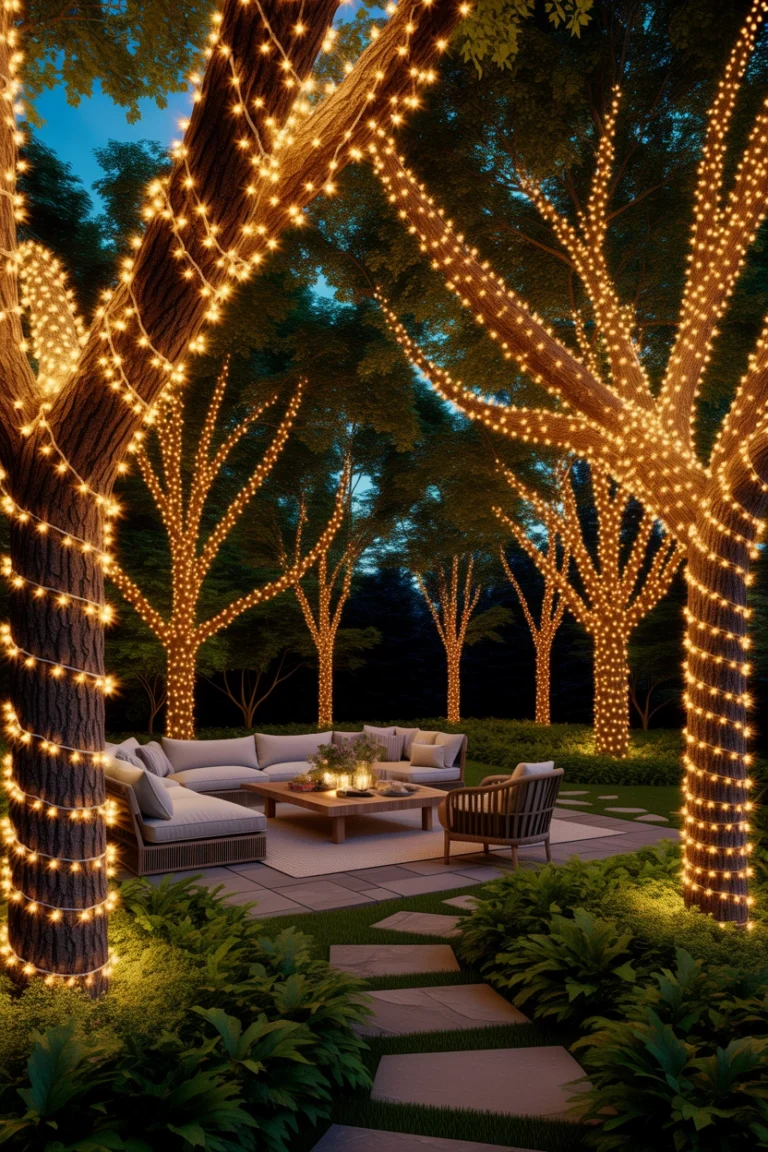
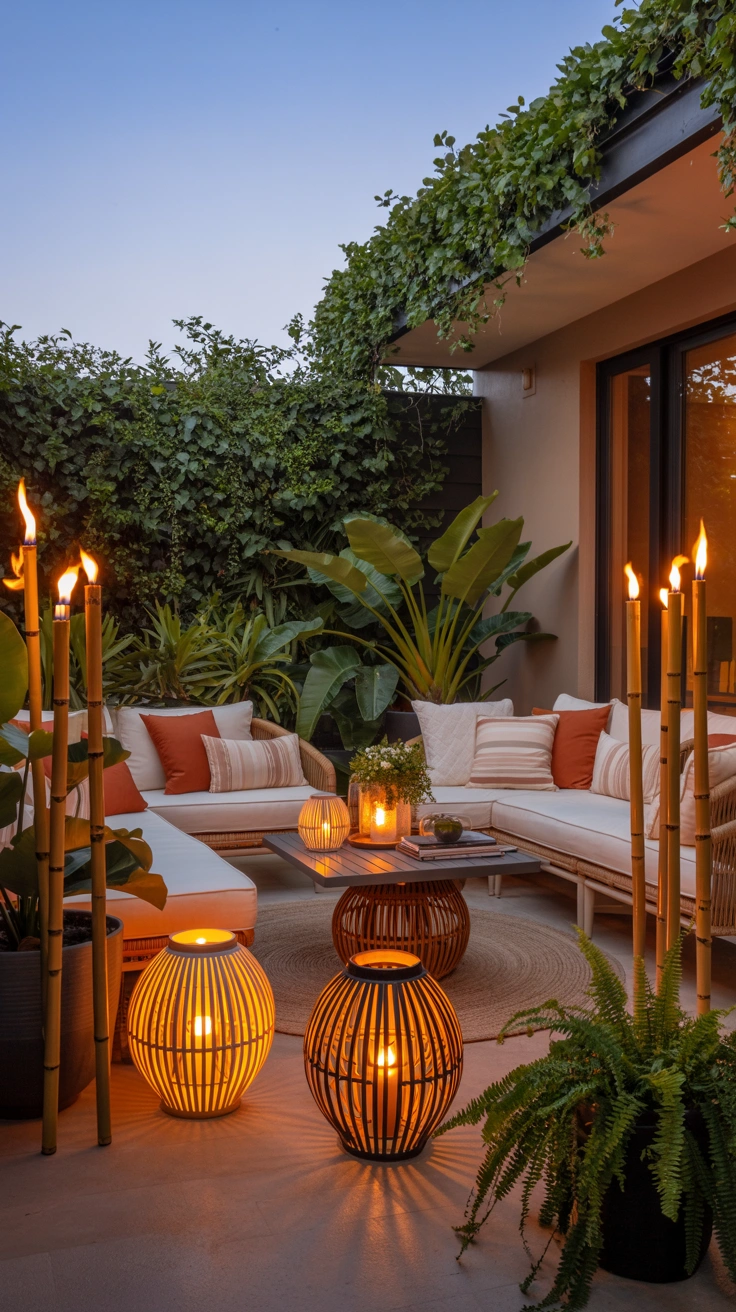
13. Layer the Lighting Like a Resort Does
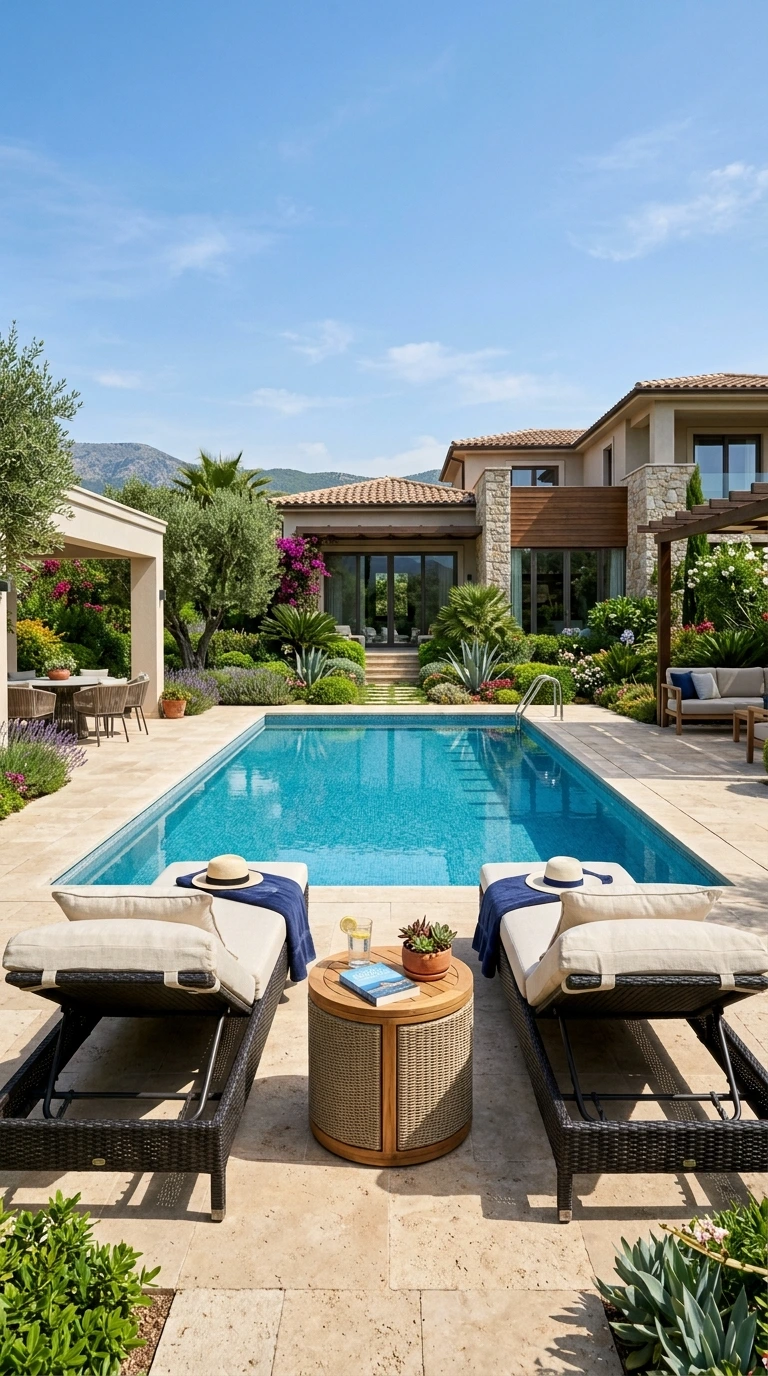
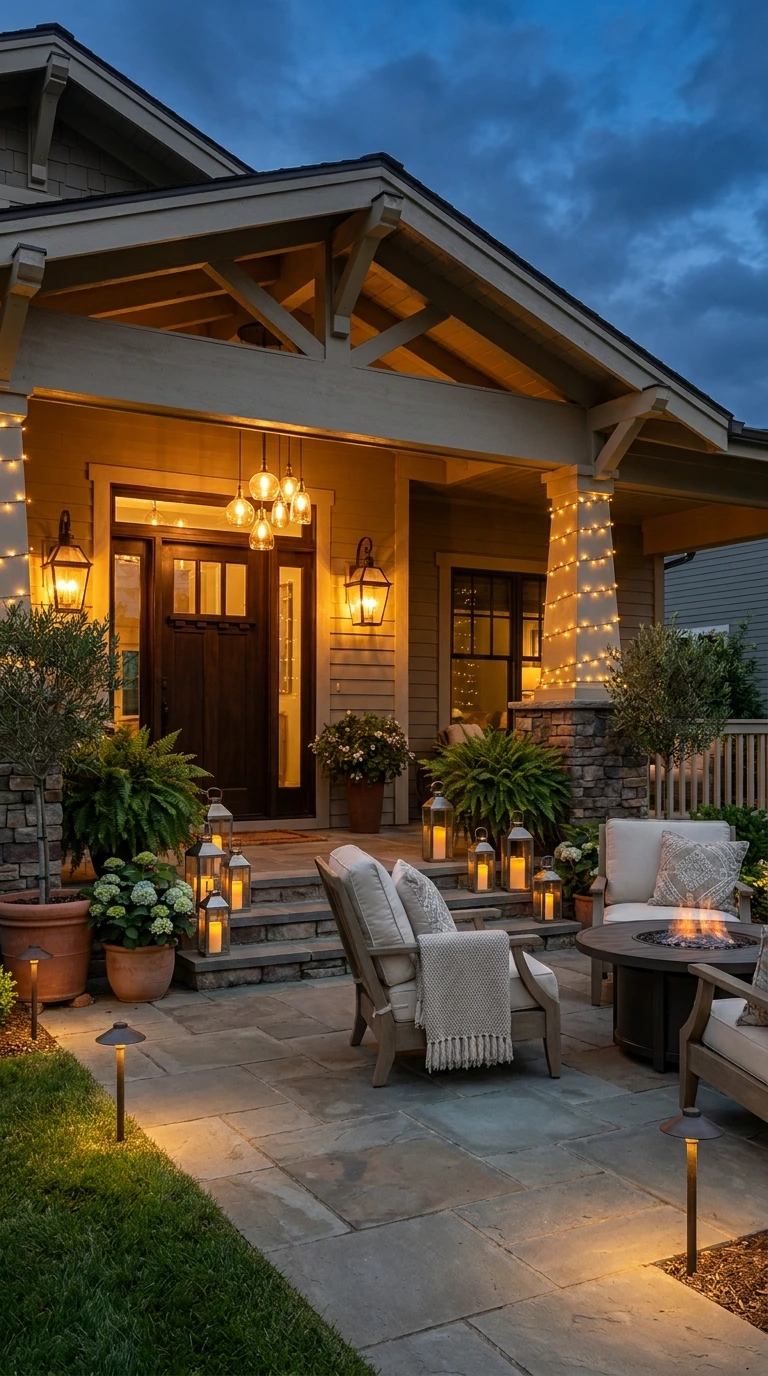
Resort outdoor spaces are lit with the same sophistication as any well-designed interior — and the layered lighting approach that makes resort patios look so extraordinary at night is entirely replicable in a domestic setting.
Overhead ambient lighting — string lights, pendant over the dining area — creates the canopy level of illumination. Mid-level lighting — lanterns, wall sconces, table lamps in weather-resistant fittings — creates the human-scale warmth level. Ground-level lighting — path lights, uplighters on plants and trees, candles on surfaces — creates the ground-level depth that makes the overall lighting arrangement feel genuinely three-dimensional. These three layers together create a patio that looks genuinely different at night than a space lit from a single source — more atmospheric, more intimate, and more genuinely extraordinary.
14. Plants as Structural Elements
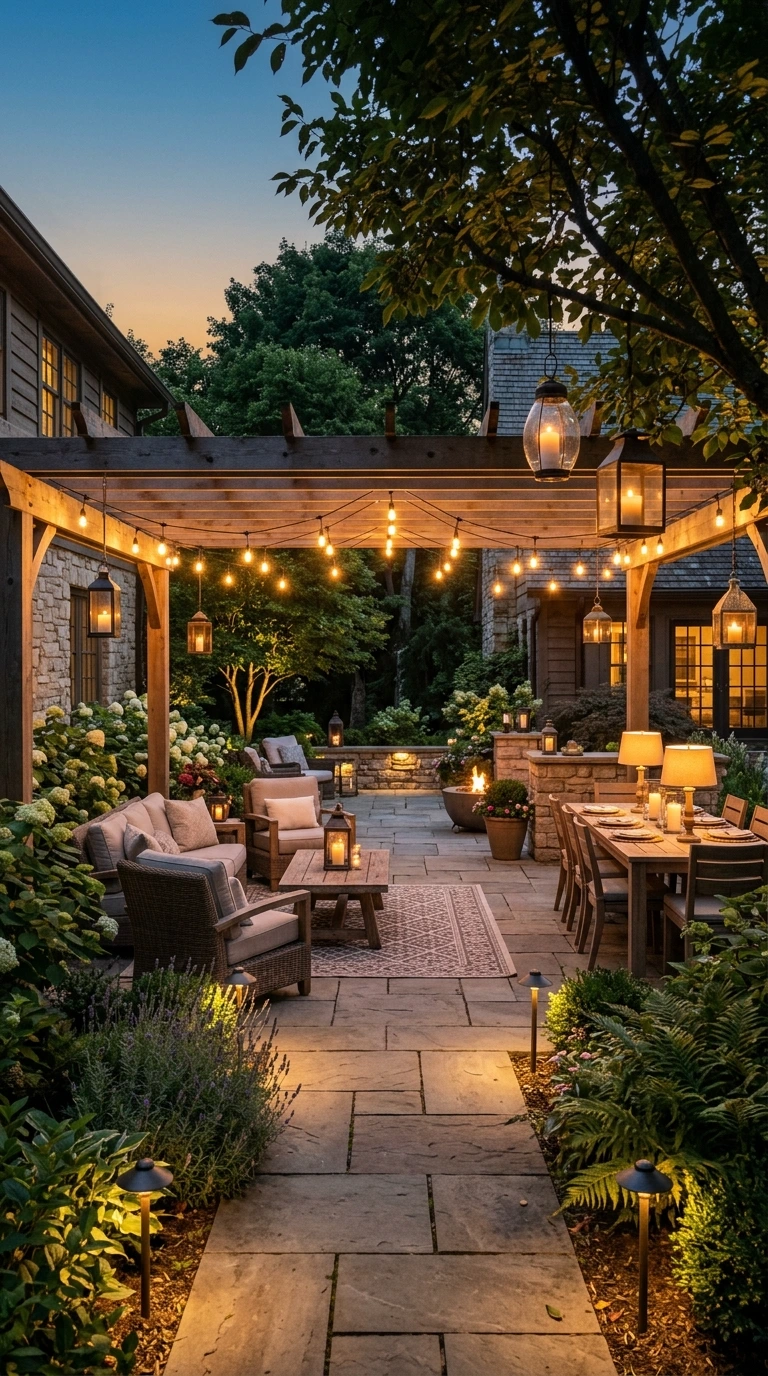
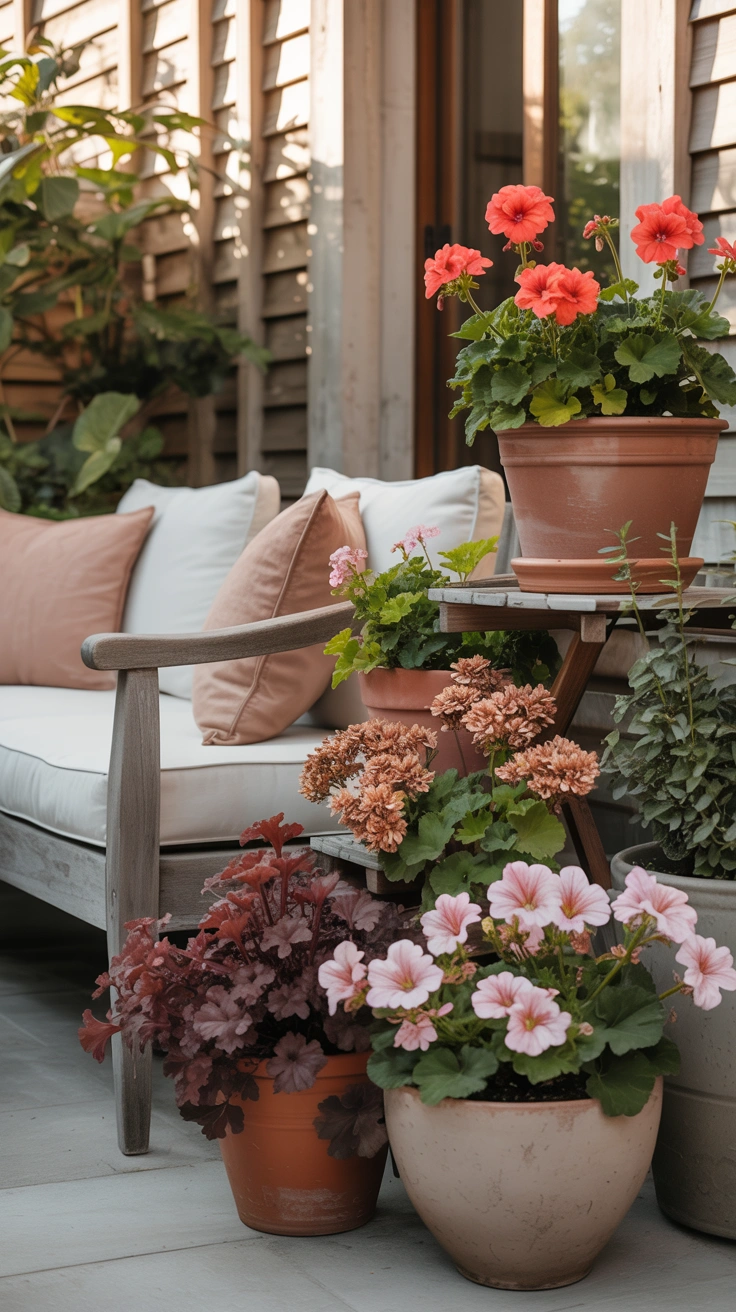
Plants in a luxury resort patio are not simply decorative additions — they are structural elements that create enclosure, define boundaries between zones, add vertical dimension, and provide the living organic warmth that makes outdoor spaces feel genuinely connected to the natural world.
Tall potted plants — olive trees, standard bay trees, architectural bamboo — at the corners of the patio create a sense of enclosure that gives the outdoor room a quality of contained privacy. Medium-height planting along one edge defines a boundary between the patio and the adjacent garden. Fragrant plants — lavender, rosemary, jasmine — positioned near seating areas add a sensory dimension that photography cannot capture but that every visitor to the patio immediately and deeply appreciates.
15. The Finishing Layer — Cushions, Throws and Textiles
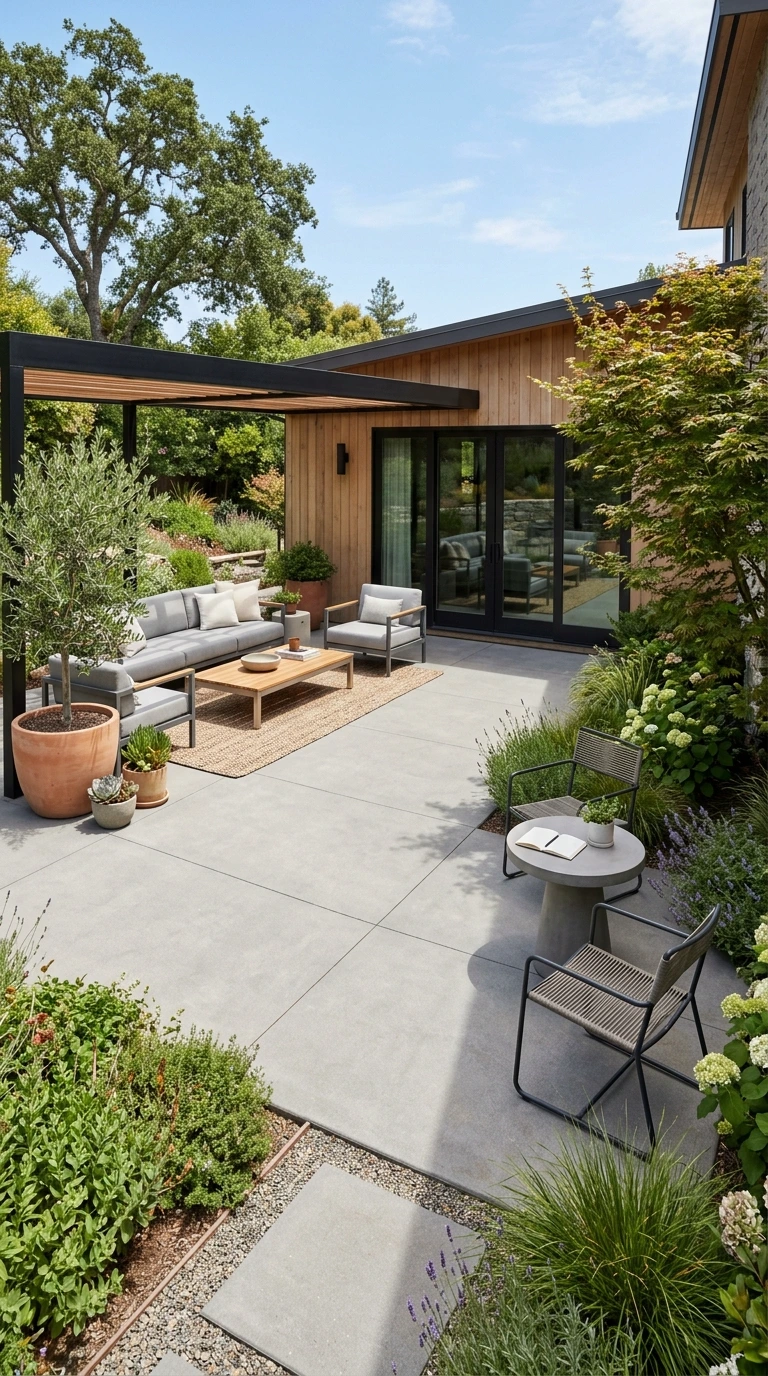
Outdoor cushions and textiles are the layer that transforms structurally correct outdoor furniture into the warm, inviting, genuinely resort-quality space that makes people want to sit down and stay. The difference between outdoor furniture with and without quality soft furnishings is the difference between a patio that functions and one that genuinely delights.
Choose outdoor cushions in weather-resistant performance fabrics in a cohesive palette of two or three complementary tones. Generous cushion depth — at least 8-10cm of seat and back cushioning — creates the difference between sitting and genuinely sinking in. Add outdoor throws for cooler evenings — their physical presence communicates welcome and genuine consideration for comfort even before anyone picks one up. Resist buying too many different patterns — consistency within the textile palette creates the resort quality of coherence that a mixture of unrelated patterns undermines.
16. Storage Makes or Breaks the Resort Feeling
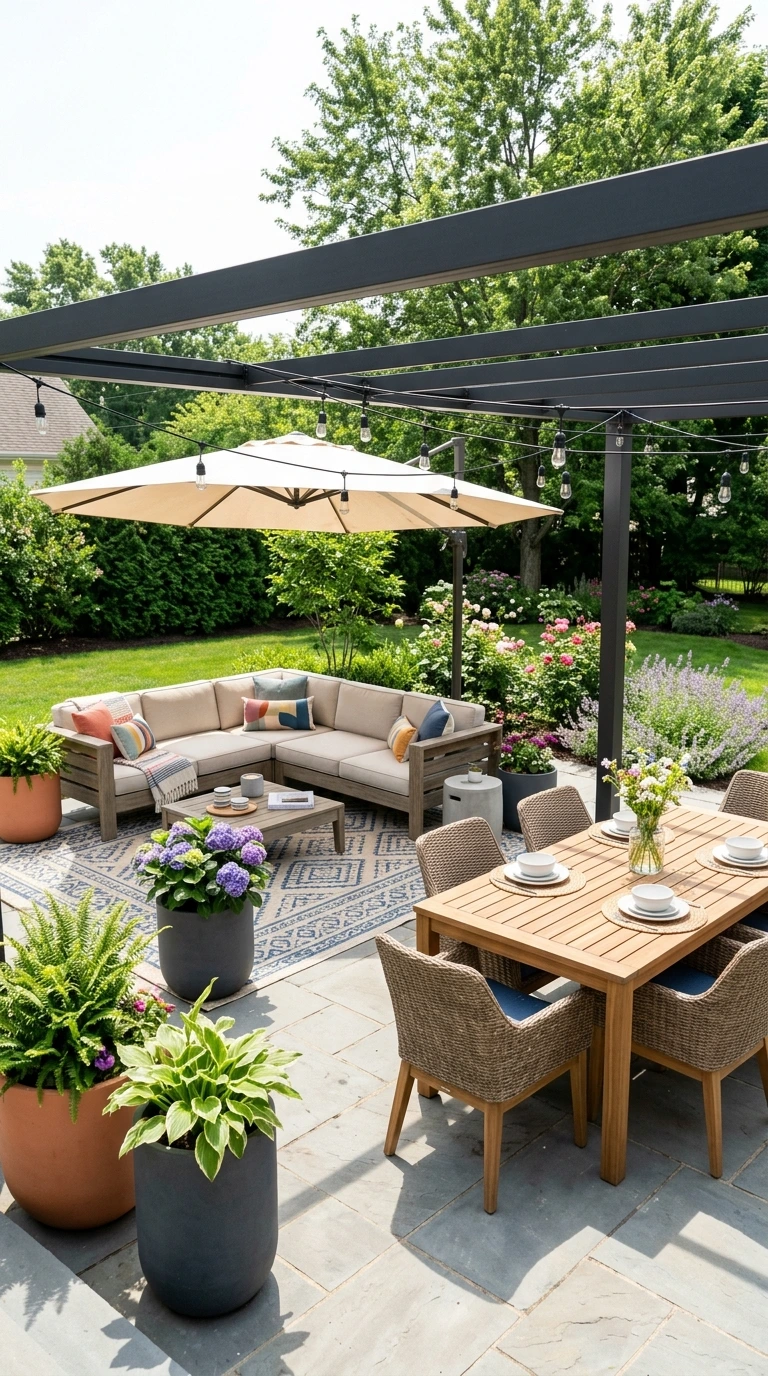
The specific quality that distinguishes a resort patio from a domestic one at the end of a real day of use is the presence or absence of organised, accessible storage for cushions, throws, garden tools, and the accumulated accessories of outdoor living. A resort patio always looks ready. A domestic one without storage looks like it just recovered from something.
An outdoor storage bench at the patio’s edge stores cushions and throws inside while providing additional seating outside. A weatherproof storage cabinet in a complementary material to the furniture conceals larger items. Built-in storage beneath bench seating in a pergola or covered area is the most architecturally resolved solution. Whatever the specific approach, the ability to store and retrieve outdoor accessories quickly and neatly is the practical infrastructure that allows the resort aesthetic to be maintained in real daily use rather than only for photographs.
Frequently Asked Questions
1. How much space do I need between outdoor furniture pieces?
The minimum walking path between any two pieces of outdoor furniture should be 90cm — enough for comfortable single-file movement. Between a coffee table and a sofa, 40-45cm works well for comfortable daily use. For dining chairs, allow 45-60cm of clearance from the table edge when chairs are pulled out.
2. Should I push outdoor furniture against walls to save space?
No — and this is the most common outdoor furniture mistake. Floating furniture away from walls and railings by at least 30cm creates the conversational intimacy and spatial generosity of resort spaces. Pushing furniture against walls makes a patio feel like a waiting room rather than a living environment.
3. How do I create a resort feel on a small patio?
Focus on one well-executed zone rather than attempting multiple. A small lounge arrangement with a quality sofa or two chairs, an outdoor rug correctly sized for the arrangement, one or two quality plants, and good lighting creates more resort atmosphere than a crowded small patio trying to do everything simultaneously.
4. What type of outdoor furniture looks most like a luxury resort?
Deep-seated sofas and chairs in weather-resistant performance fabrics, chaise lounges with quality cushioning, natural materials like teak and rattan, and pieces with clean contemporary lines all contribute to the resort aesthetic. The arrangement and the finishing layers (rugs, lighting, plants, textiles) contribute as much as the furniture itself.
5. How do I define zones without walls or dividers?
Outdoor rugs are the most effective zone-defining tool — one rug under the lounge arrangement and a different rug under the dining table creates clear visual separation between zones. Different levels of lighting, changes in flooring material, and planting between zones all contribute to zone definition without physical barriers.
6. Should outdoor furniture match perfectly?
A cohesive palette and consistent material language across pieces creates the resort quality of considered design — but pieces don’t need to be from the same set. Mixing a teak coffee table with rattan chairs and a woven sofa in complementary tones creates more visual interest than a matched set while still reading as intentionally coordinated.
Conclusion
Eighteen principles that build the luxury resort patio from the ground up — sketching before arranging, choosing a focal point, creating distinct zones, floating furniture away from walls, applying correct spacing, using conversation circles and L-shapes strategically, orienting toward views, incorporating chaise lounges, defining zones with rugs, proportioning correctly, considering sun and wind, layering lighting, using plants structurally, finishing with quality textiles, organising storage, refreshing seasonally, and editing to what genuinely belongs.
The luxury resort patio is not a function of budget. It is a function of the specific principles applied to the arrangement of whatever furniture and space is available — and every one of those principles is accessible regardless of what the furniture cost or how large the patio is.