Best Multi-Functional Furniture for Studio Apartments in 2026
Introduction
In a studio apartment, every square foot has to earn its keep. There is no spare bedroom to absorb the overflow, no guest room for the sofa bed, no dining room for the table you use four times a year. Each piece of furniture you bring through the door either pulls double duty or quietly steals space you can’t afford to lose. That is why multi-functional furniture isn’t a trend in small-space living — it is the entire strategy.
The good news is that double-duty furniture has grown up. The murphy beds that used to look like wall closets now come with sofas, desks, and shelving built in. Coffee tables lift into dining desks, ottomans swallow whole wardrobes, and room dividers carry libraries. The pieces on this list were chosen for one reason: each one replaces at least two single-purpose items, so your studio gains function without gaining footprint.
What follows are fifteen multi-functional furniture ideas for studio apartments, ordered roughly by impact — the bed that disappears wins over the table that nests. For each piece you’ll get honest guidance on what to look for, what goes wrong, and where it fits best. Pair these picks with smart studio apartment decor inspiration and you’ll have a small home that lives much bigger than its floor plan suggests.
1. Murphy Bed With a Sofa Built In
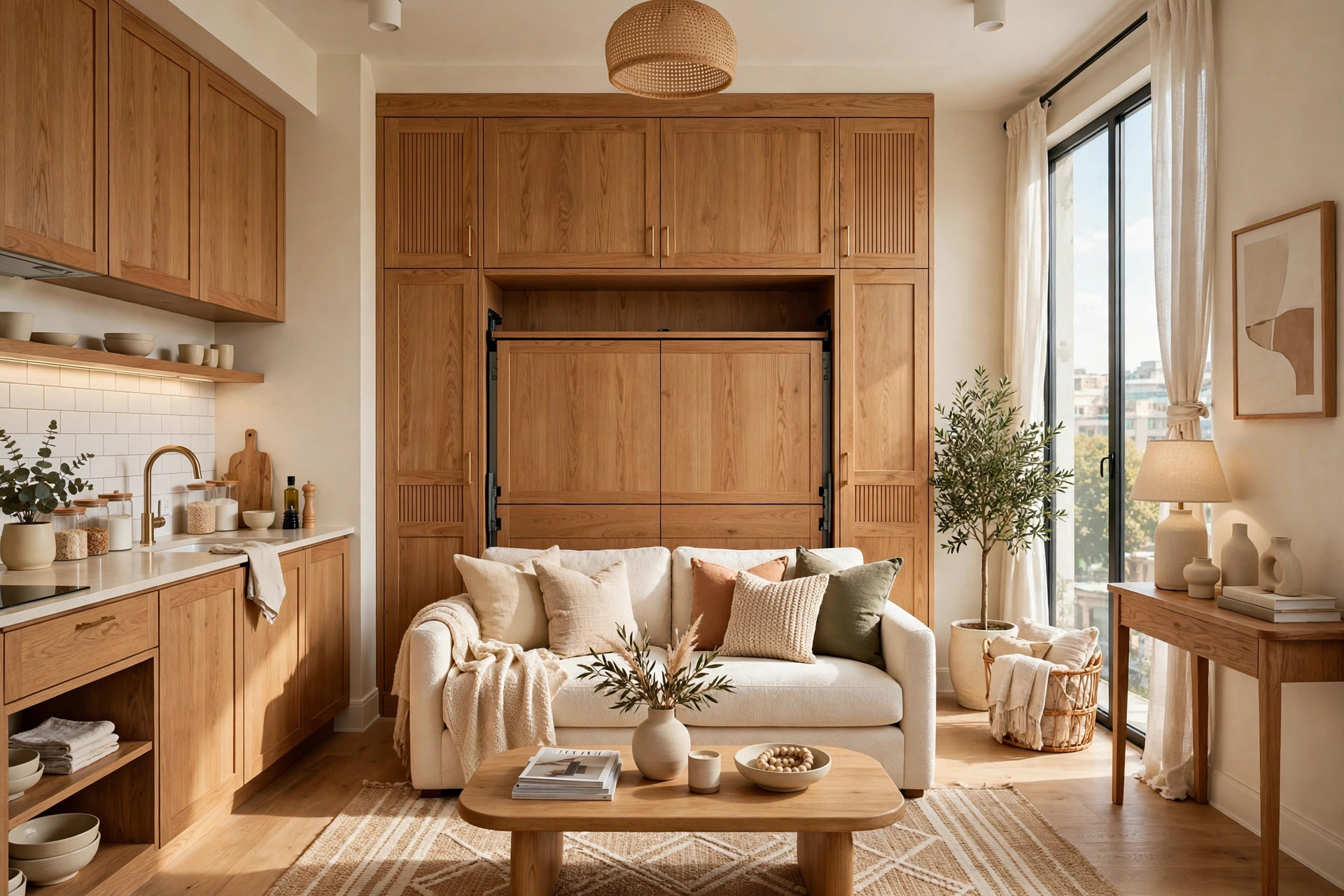
Nothing changes a studio apartment more than a bed that disappears. A murphy bed with an attached sofa folds up into the wall cabinet by day — sofa seating for lounging and guests — and folds down over it at night, converting your living room into a bedroom in under a minute. The sofa section stays put (or swings away, depending on the mechanism), so the daily ritual is genuinely quick, not a twenty-minute wrestling match with cushions. For studios under 500 square feet, this single piece can replace a bed frame, a sofa, and the feeling that you sleep in your living room.
Mechanism quality is everything here. Piston-assisted or counterbalanced mechanisms open with one hand and lock safely at both ends; cheap spring versions feel wobbly and loud. Check the open and closed footprints against your room dimensions — the cabinet needs a clear swing zone equal to the bed length, free of rugs and coffee tables. And if you’re renting, know that most murphy units anchor to studs in the wall; freestanding versions exist, but they cost more and need deeper cabinets, so confirm your lease allows wall mounting before you fall in love with one.
⚠️ Warning: A murphy bed must be anchored to wall studs — drywall anchors alone are not enough for something this heavy that moves. If your lease forbids drilling into walls, look for a freestanding cabinet model or skip to the sleeper sofa below instead of improvising a “stable enough” setup.
2. A Sleeper Sofa Worth Sitting On
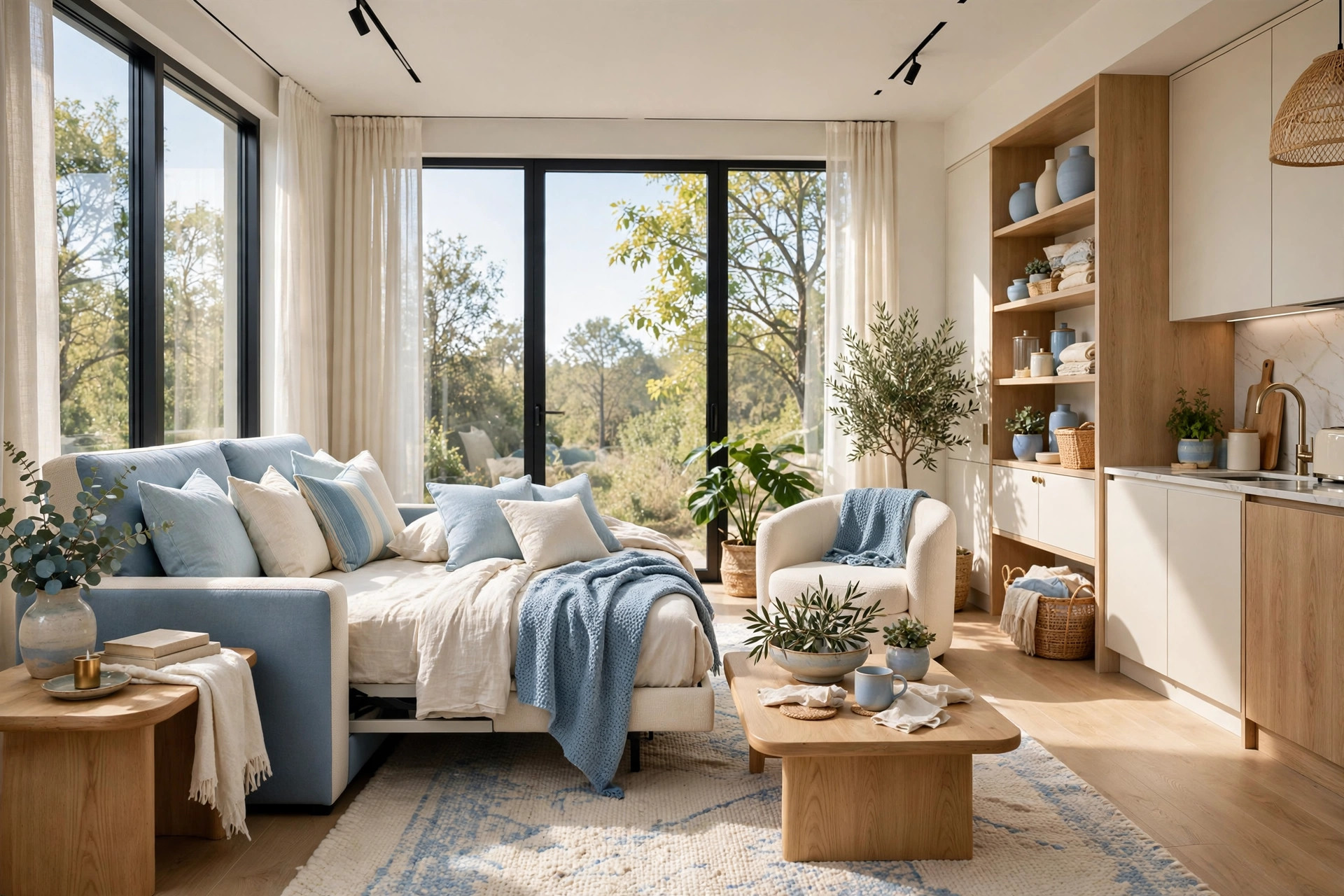
If a wall-mounted bed is out, the sleeper sofa is the classic studio answer: a real couch by day, a real bed by night. The 2026 generation has fixed most of the old complaints — pull-out mechanisms are smoother, mattresses are thicker, and plenty of models now ship with memory-foam toppers built in. The best test is still the old-fashioned one: sit on it like a sofa and lie on it like a bed before buying. A sleeper you dread unfolding is just an expensive regular sofa with a lumpy middle.
Size and mechanism decide whether it fits your life. Measure the fully opened length plus walkway space — a queen pull-out needs roughly seven feet of clear floor when extended, which can swallow a studio’s living zone. Click-clack futon-style sleepers and fold-down backs open faster and cost less, though they sleep best for one or two occasional nights rather than every night. Whatever style you choose, buy for the bed you’ll sleep on daily if this is your primary bed; a mechanism rated for occasional use will loosen and sag under nightly service within a year or two.
3. Storage Ottoman: The Hardest-Working Piece You Own
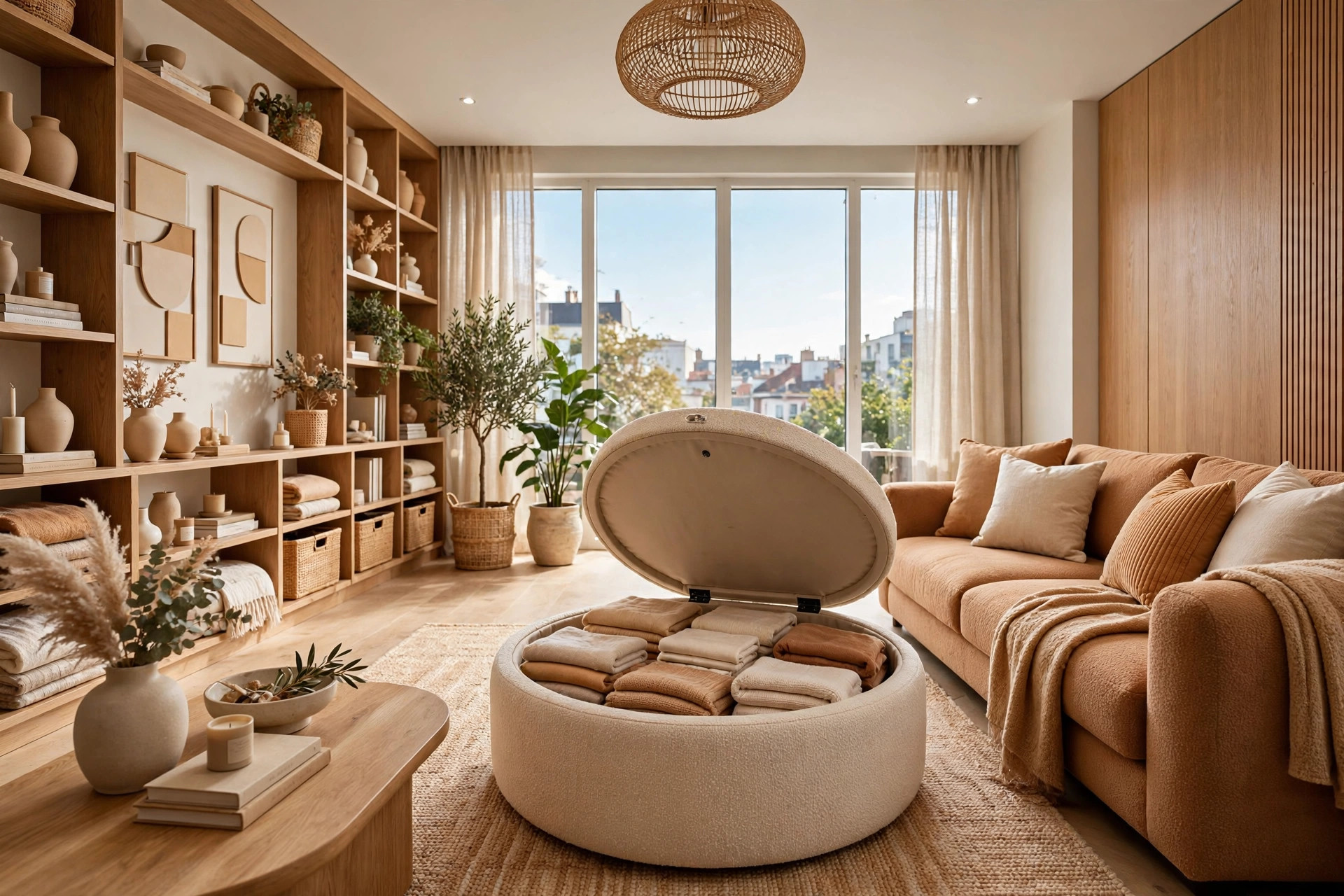
The storage ottoman is the easiest win on this list. By day it is a footrest, extra seating for guests, or a coffee table substitute with a tray on top; lift the lid and it hides blankets, board games, off-season clothes, or the tangle of chargers colonizing your surfaces. Unlike most storage, it stores in the exact zone where the clutter happens — the living area — so things actually get put away instead of migrating to a closet across the room.
Choose with the lid and the frame in mind. A hinged top that opens fully and stays open on its own is far easier to use than a lift-off lid you must set aside, especially when your hands are full. If the ottoman will double as seating, sit-test the frame for sturdiness and check its weight rating — cheap frames bow and creak within months. One large ottoman usually serves a studio better than a coffee table plus a separate storage cube, and round models soften traffic paths in tight layouts where corners become bruises.
💡 Pro Tip: In a studio, swap your coffee table for a large storage ottoman with a flat tray on top. You lose nothing as a surface, gain a cubic yard of hidden storage, and the tray lifts off when you need a footrest — three pieces of furniture in one footprint.
4. Lift-Top Coffee Table

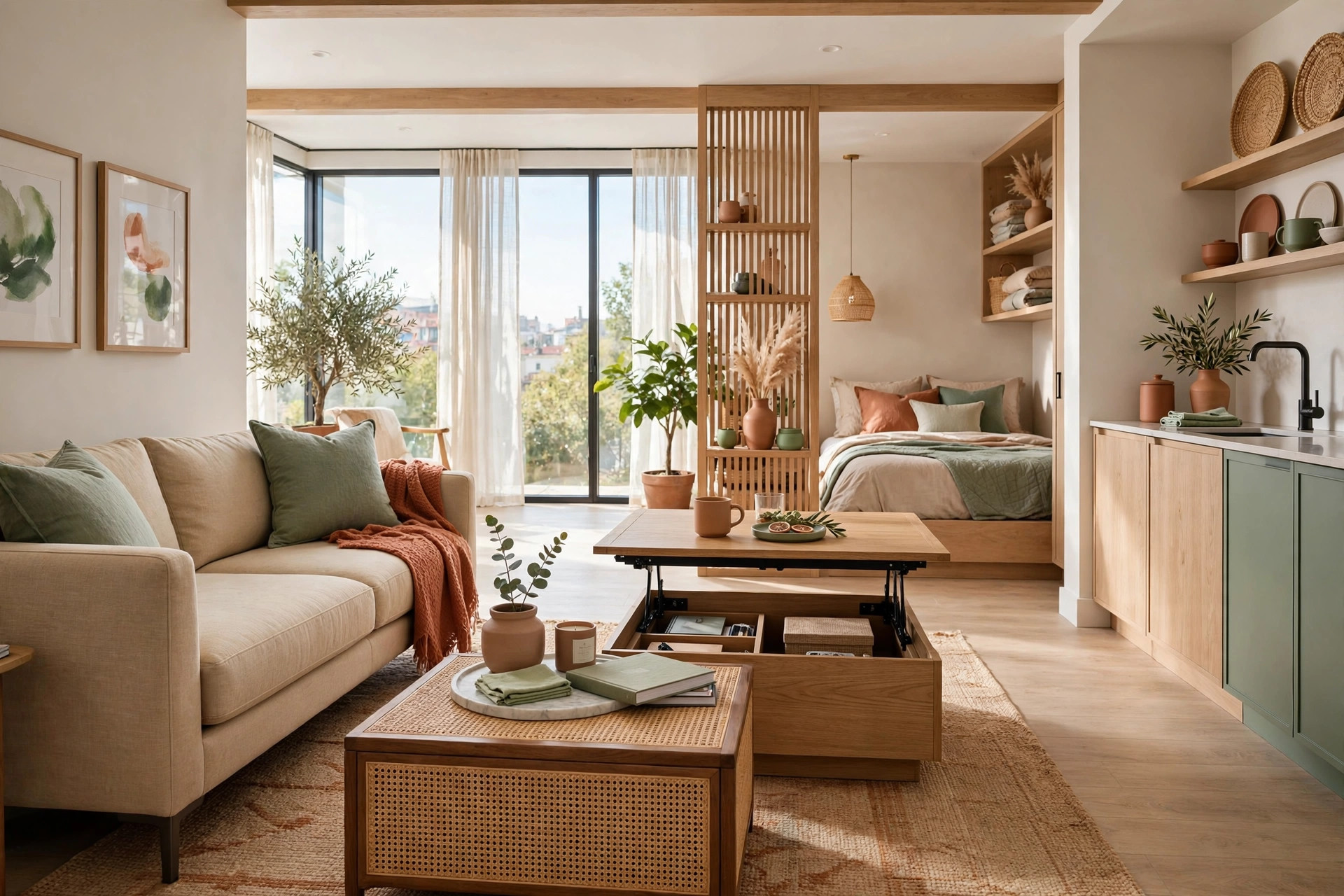
A lift-top coffee table looks like a normal table until the top half rises on hinges to dining or laptop height. Suddenly your couch becomes the dining chair, your lap stops being the desk, and the table you eat off slides back into a coffee table when guests arrive. The hollow base of most models adds a bonus: a storage compartment for remotes, magazines, and the throw blankets that used to live on the sofa.
The lift mechanism is the make-or-break detail. Test it in person if you can — a good one glides up with one hand and clicks level at the top; a stiff one wobbles and fights you every meal. Check the raised height against your sofa seat: dining comfort needs roughly a foot of clearance between seat cushion and table top. And be honest about the footprint when raised — some lift-tops expand forward over your knees, so you need clearance between the table and the couch for legs, not just for the table itself.
5. Drop-Leaf Dining Table
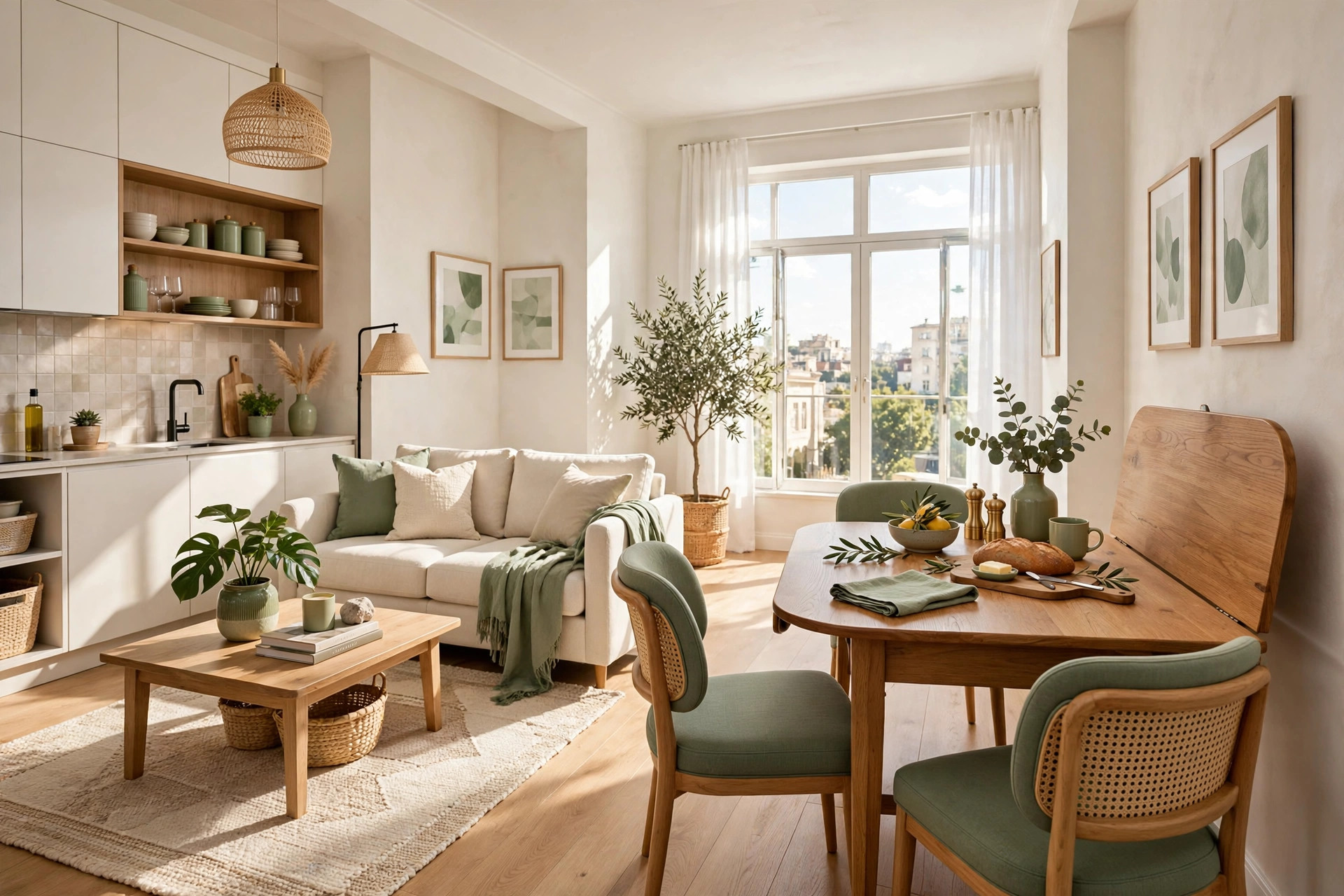
Few pieces adapt to a studio’s shifting needs like a drop-leaf table. Both leaves down and it is a slim console against the wall, holding a lamp and keys; one leaf up and it seats two for dinner; both leaves up and four friends fit around it on a Saturday. It scales from sideboard to dining table in seconds, which is exactly the flexibility a one-room home demands. Pair it with stackable or folding chairs that stash underneath and the whole dining setup nearly vanishes between meals.
Stability separates the good from the annoying. Gate-leg and drop-leaf mechanisms should lock firmly with no wobble at the hinge — press down on the raised leaf’s outer edge before buying. Solid wood or wood-veneer tops handle daily use and look better over time; lightweight laminates scratch and show it. Measure the fully extended size against your open floor space, and confirm at least two feet of clearance on each used side so chairs pull out without hitting walls or furniture.
6. Wall-Mounted Fold-Down Desk
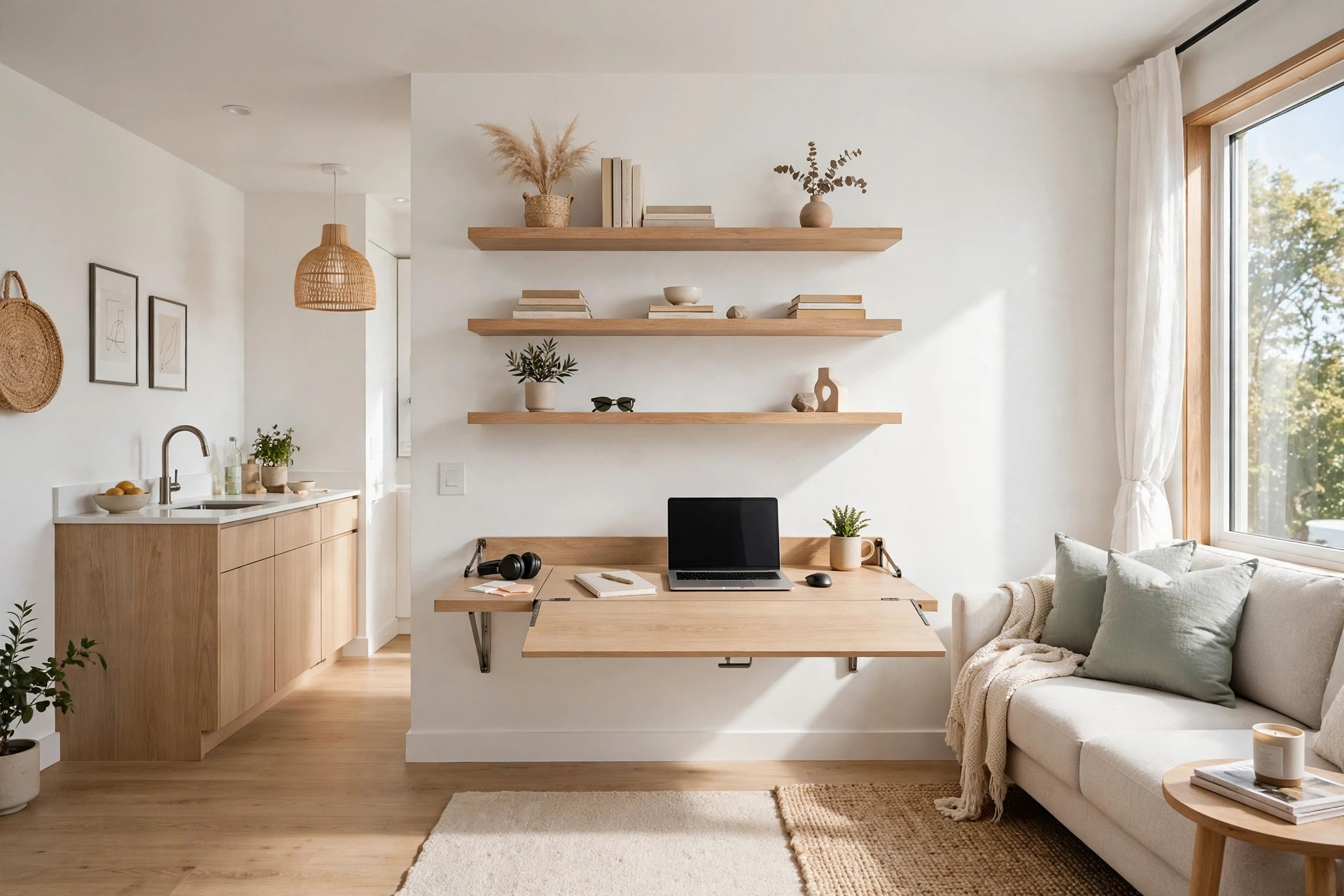
Remote work in a studio means a desk has to exist without permanently claiming wall space. A wall-mounted fold-down desk solves it: flip it down for a real work surface, flip it up to a slim cabinet when the workday ends. The better models include interior shelves that stay usable when the desk folds, so your monitor stand, notebooks, and charging station have a home that never needs packing up. It is the home-office version of the murphy bed — the room’s identity changes in five seconds.
Mounting and depth are the two things to get right. Like a murphy bed, this anchors to studs; the loaded weight of a desk plus a monitor and books is real. Choose a depth of at least sixteen inches for the work surface — anything shallower turns laptops into balancing acts. And position it where folding it down doesn’t block a walkway or swing into another piece of furniture. Near the sofa works well: the desk closes at dinner time and the living room is a living room again.
7. Loft Bed With Living Space Below
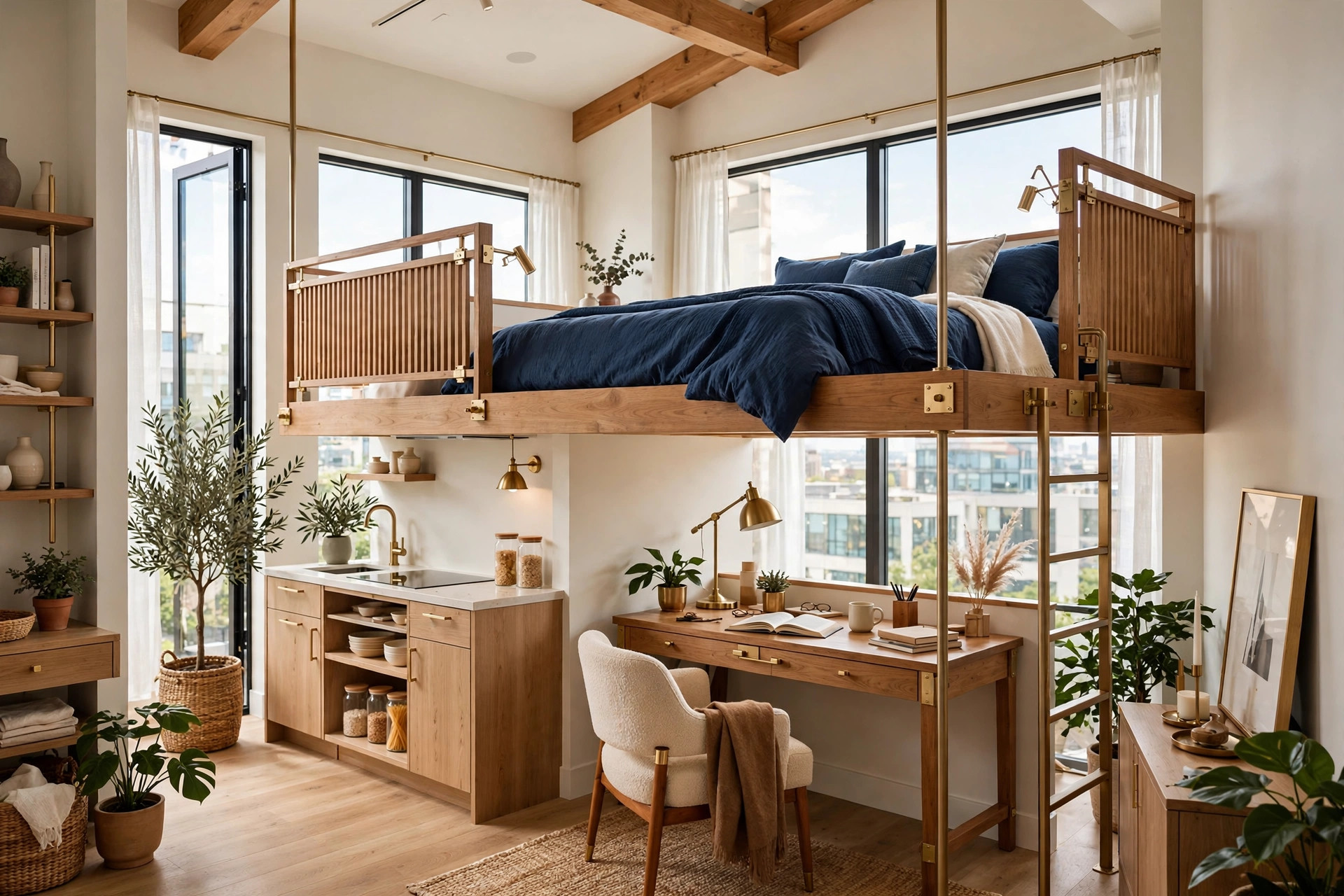
If your ceilings allow it, a loft bed is the most dramatic space multiplier in small-space living: the bed goes up, and the entire bed footprint below becomes a desk zone, a reading nook, a wardrobe, or a second seating area. You’re effectively adding a room without adding square footage. This works best in studios with ceilings of nine feet or more, where there’s real headroom both on the mattress and underneath it.
Safety and structure matter more here than with any other piece on this list. Buy a loft rated for adult weight with a proper guardrail and a ladder or stairs you can actually climb half-asleep — narrow rungs get old fast. Anchor the frame to the wall if the design allows; a tall loft should never wobble. And check your lease and building rules first: some buildings restrict loft beds, and the added weight on upper floors matters in older structures. Done right, though, it pairs beautifully with the zoning ideas in our guide on how to divide studio apartment into zones — the space below the loft becomes a distinct “room.”
8. Daybed That Moonlights as a Sofa

A daybed is the quiet overachiever of studio furniture: pushed against a wall with bolsters and throw pillows, it reads as a deep, comfortable sofa; dressed with sheets at night, it is a twin bed. Unlike a sleeper sofa, there is no mechanism to unfold and no mattress compromise — you sleep on a real mattress every night. It anchors a studio’s living zone the way a sofa does, while secretly being the bedroom.
The trick is styling it to read as seating, not as a bed you gave up on. A tailored daybed cover or a fitted sheet plus a throw, firm back cushions or large pillows against the wall, and a slim console table behind it all sell the sofa illusion. Storage drawers underneath or a trundle version add a second bed or deep storage for the same footprint. Just be honest about sleeping size: a twin works for one person comfortably and two people only if they’re cozy, so couples should look at the full-size daybed models or the sleeper options above.
📌 Important: A daybed against the wall needs the mattress to breathe. Pull it out an inch or two and check behind it seasonally — trapped moisture between a mattress and a cold exterior wall can grow mildew. A slatted base and occasional airing prevent the problem entirely.
9. Storage Bench for the Entryway
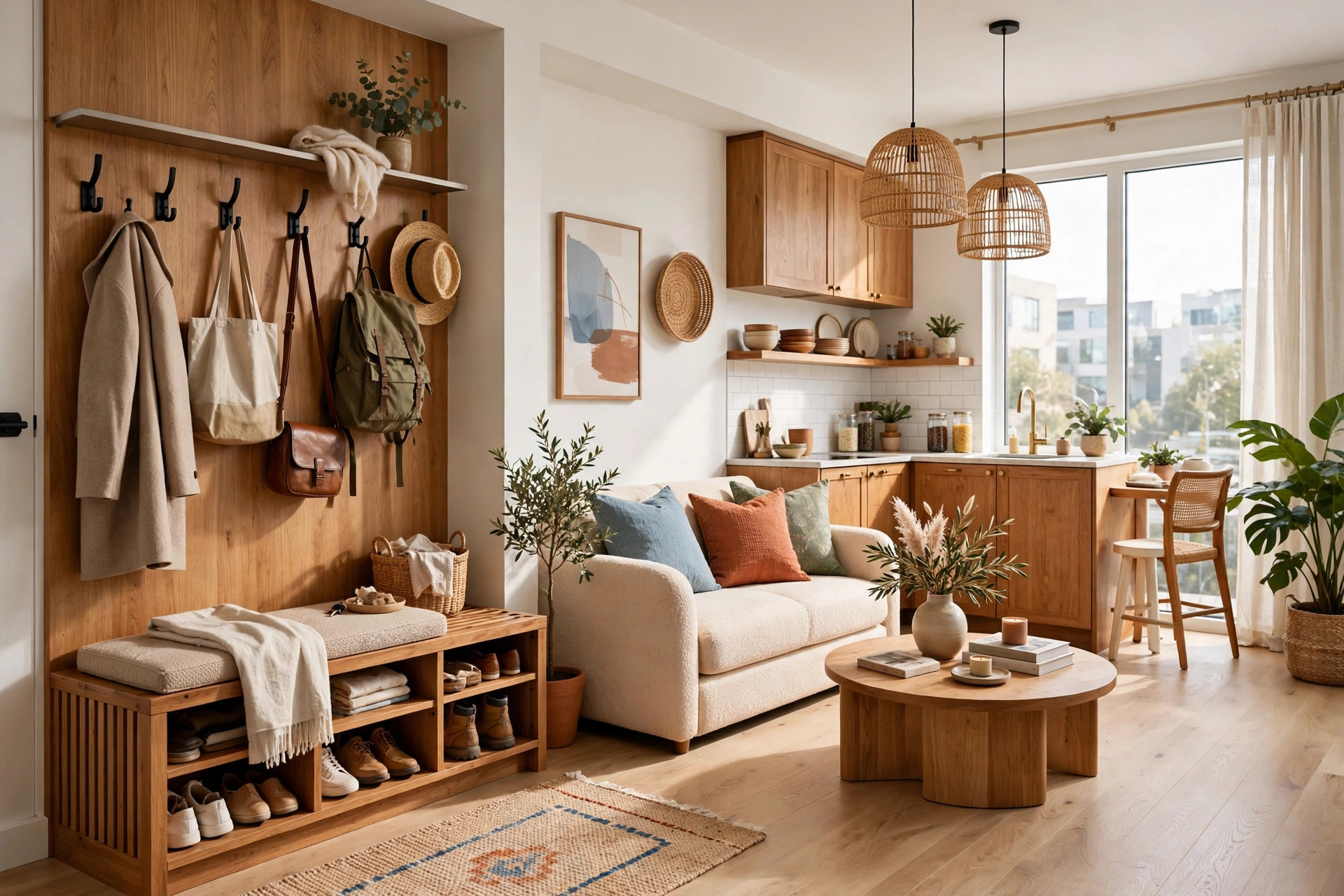
Studios rarely have real entryways, but the coat-shoe-bag pile still forms somewhere — usually right inside the door. A storage bench solves the landing zone in one piece: sit to put on shoes, stash shoes and bags inside, hang coats on hooks above it. It turns the chaotic first four feet of your apartment into an organized threshold, and because it is furniture rather than a closet, it moves with you to the next rental.
Size it to the wall, not the fantasy. A bench that sticks past the door swing or blocks the path to the kitchen becomes an obstacle course. Measure the clear wall, leave room for the door to open fully, and choose a height that works for sitting — around eighteen inches. Ventilated storage or a slatted design keeps shoe odors from concentrating inside a closed box. If your door opens directly into the living zone, a bench with a lid also doubles as extra guest seating.
10. Nesting Side Tables
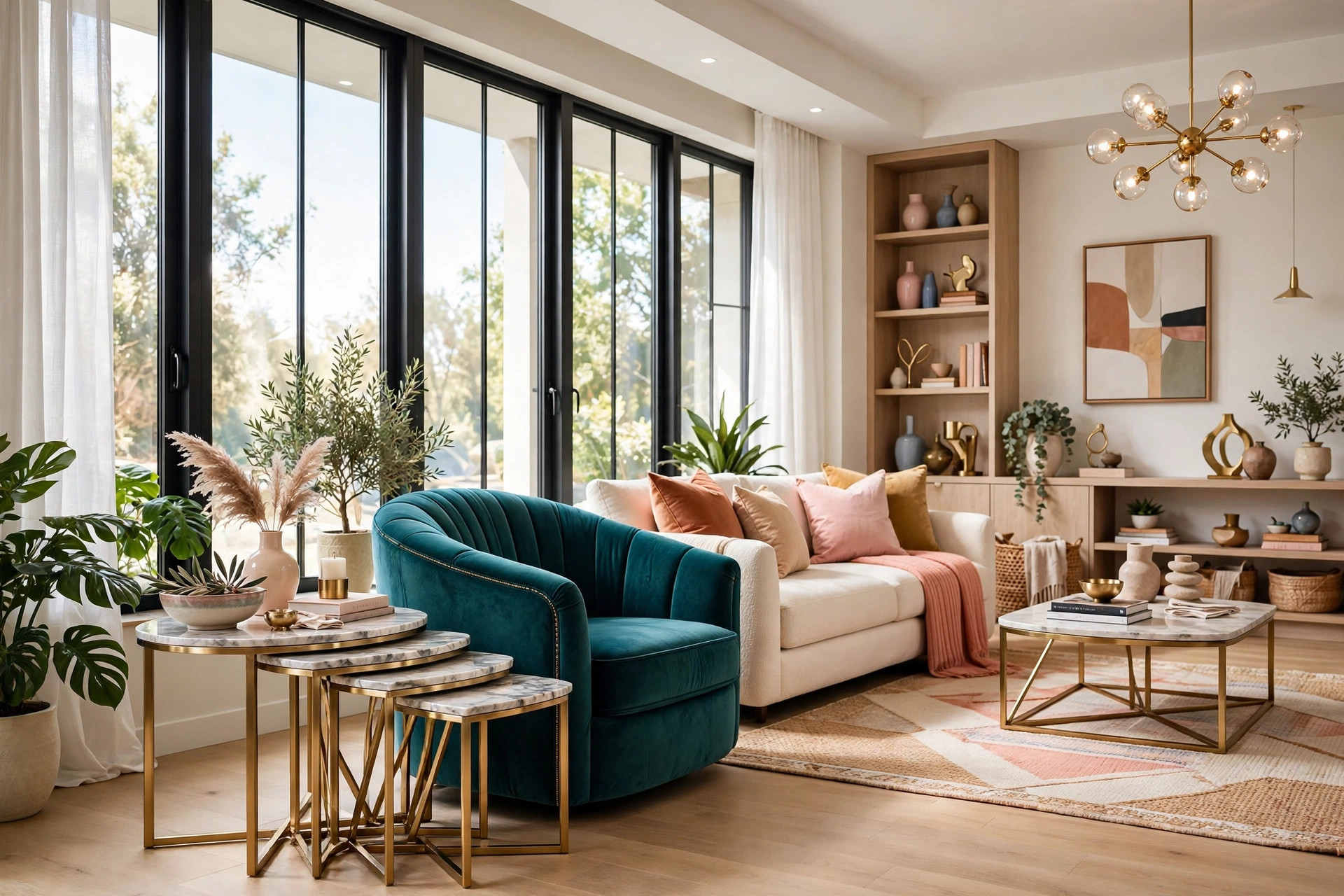
Nesting tables are the lowest-commitment multi-functional piece on this list: a set of two or three tables that tuck completely under one another, then fan out across the room when you need surfaces — a side table here, a laptop stand there, a plant riser by the window. They give you the surfaces of three tables while permanently occupying the footprint of one. For studios where every piece must justify its floor space, that math is unbeatable.
Look for sets where the smaller tables are genuinely usable — at least side-table height — rather than decorative minis. Metal frames with wood or stone tops handle daily use and look far more expensive than they are; all-glass sets show every fingerprint. And because they scatter, buy a set with a unifying finish so the pieces look intentional wherever they land, not like furniture that escaped. They are also the cheapest way to add serving surfaces when guests come over — no folding chairs required.
11. Storage Bed Frame With Deep Drawers
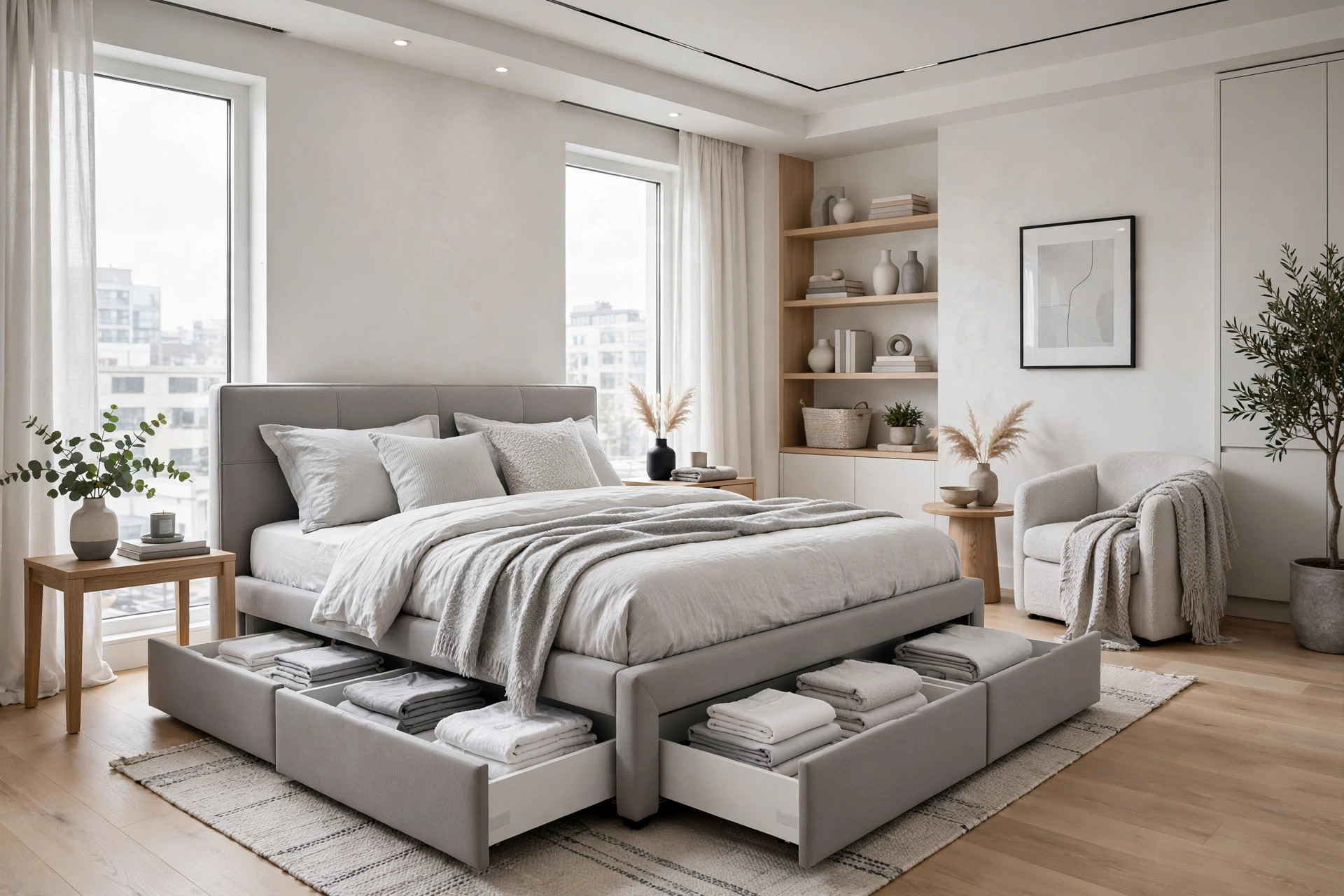
If your studio keeps a permanent bed — no murphy, no daybed — the frame itself should work. A storage bed with deep drawers reclaims the entire under-bed footprint: off-season clothes, spare bedding, luggage, and bulk buys all disappear into drawers you can actually reach. Compared with bins shoved under a standard frame, drawers stay organized, stay dust-free, and don’t require lying on the floor to retrieve anything.
Drawer depth and glide quality decide whether you love it or abandon it. Shallow drawers hold little and deep ones need full-extension glides so the back half isn’t a black hole. Solid drawer boxes on metal glides last years; fabric bins on rails sag and snag. Check that drawers clear your rug and that the frame’s footprint fits the mattress size exactly — an ill-fitting frame shifts and squeaks. This pairs well with the visual tricks for making sleeping zones feel airy, like those in our guide to how to make a small bedroom feel bigger.
💡 Pro Tip: Before buying any storage bed, inventory what will actually live in it. Measure your bulkiest items — the folded duvet, the suitcase — and buy drawer depth to match. A storage bed filled with things that don’t fit its drawers is just an expensive regular bed.
12. Open Bookshelf Room Divider
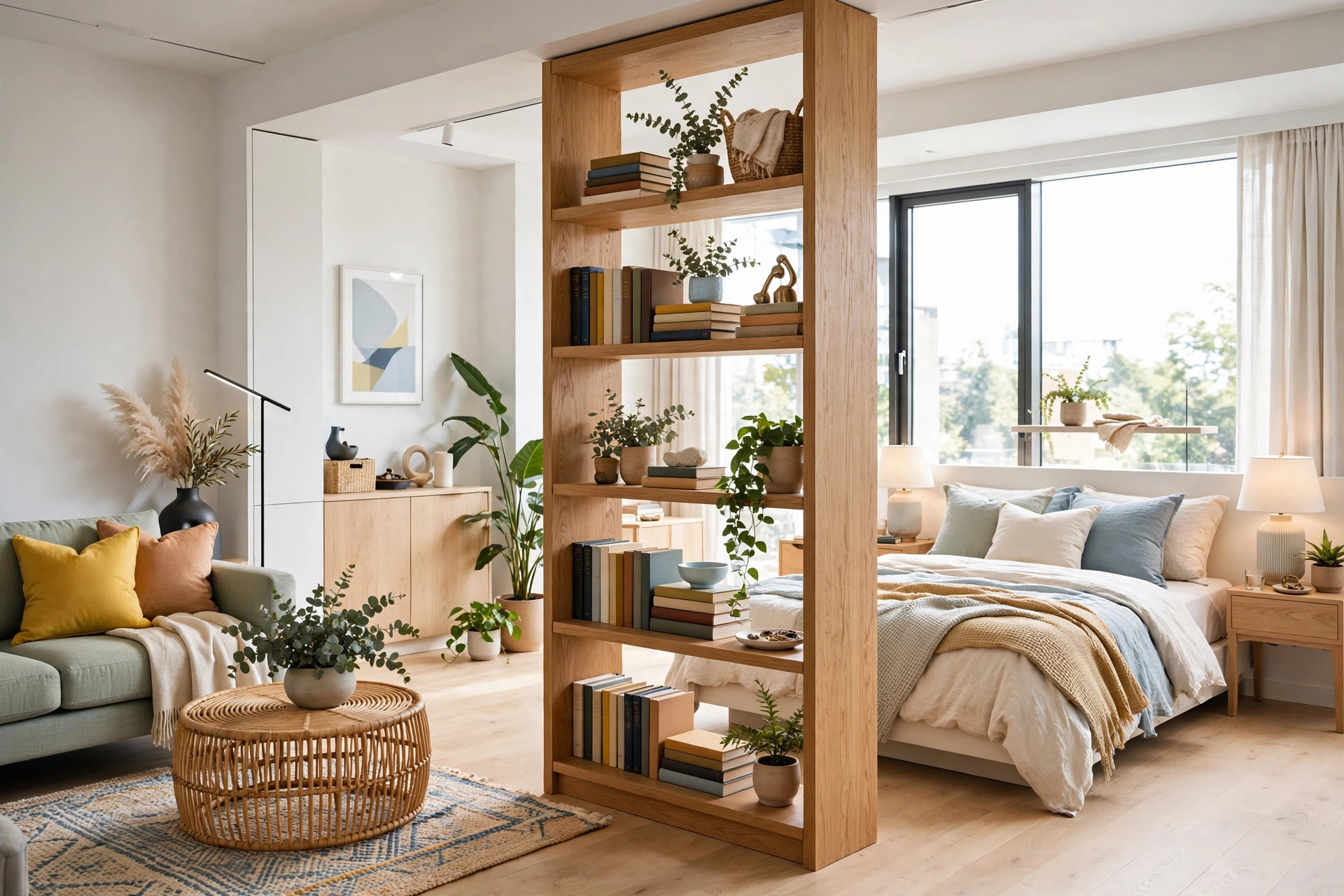
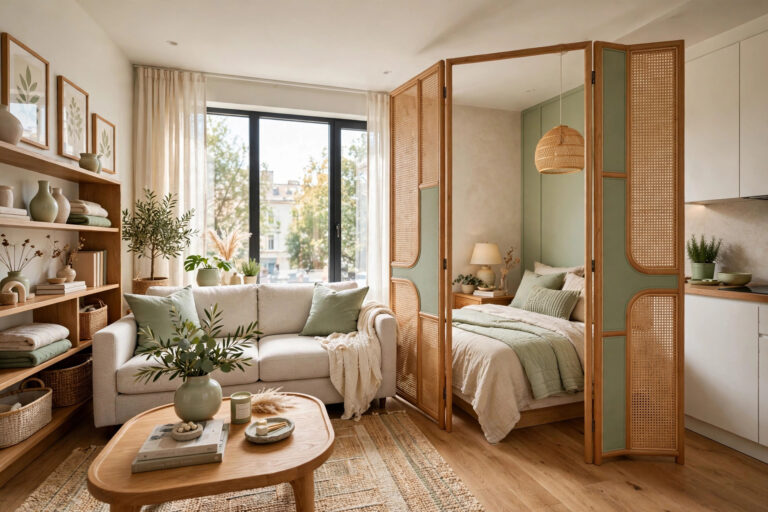
In a studio, the bookshelf is the wall you get to choose. A tall open bookshelf placed perpendicular to the main wall divides sleeping and living zones while staying airy — light passes through, sightlines stay open, and both sides get storage. Unlike a curtain or folding screen, it earns its floor space twice: once as architecture, once as a library, display shelf, and media console in one.
Stability is non-negotiable for a freestanding divider. A loaded bookshelf is top-heavy; anchor it to the wall or floor per the manufacturer’s instructions, especially with kids or pets around. Keep both faces styled — the “back” of the shelf faces one of your zones, so finish it or arrange books and baskets to look intentional from both sides. Leave the top shelf light to preserve the open feeling, and resist the urge to pack every cube; negative space is what keeps a divider from feeling like a wall.
13. Rolling Kitchen Island
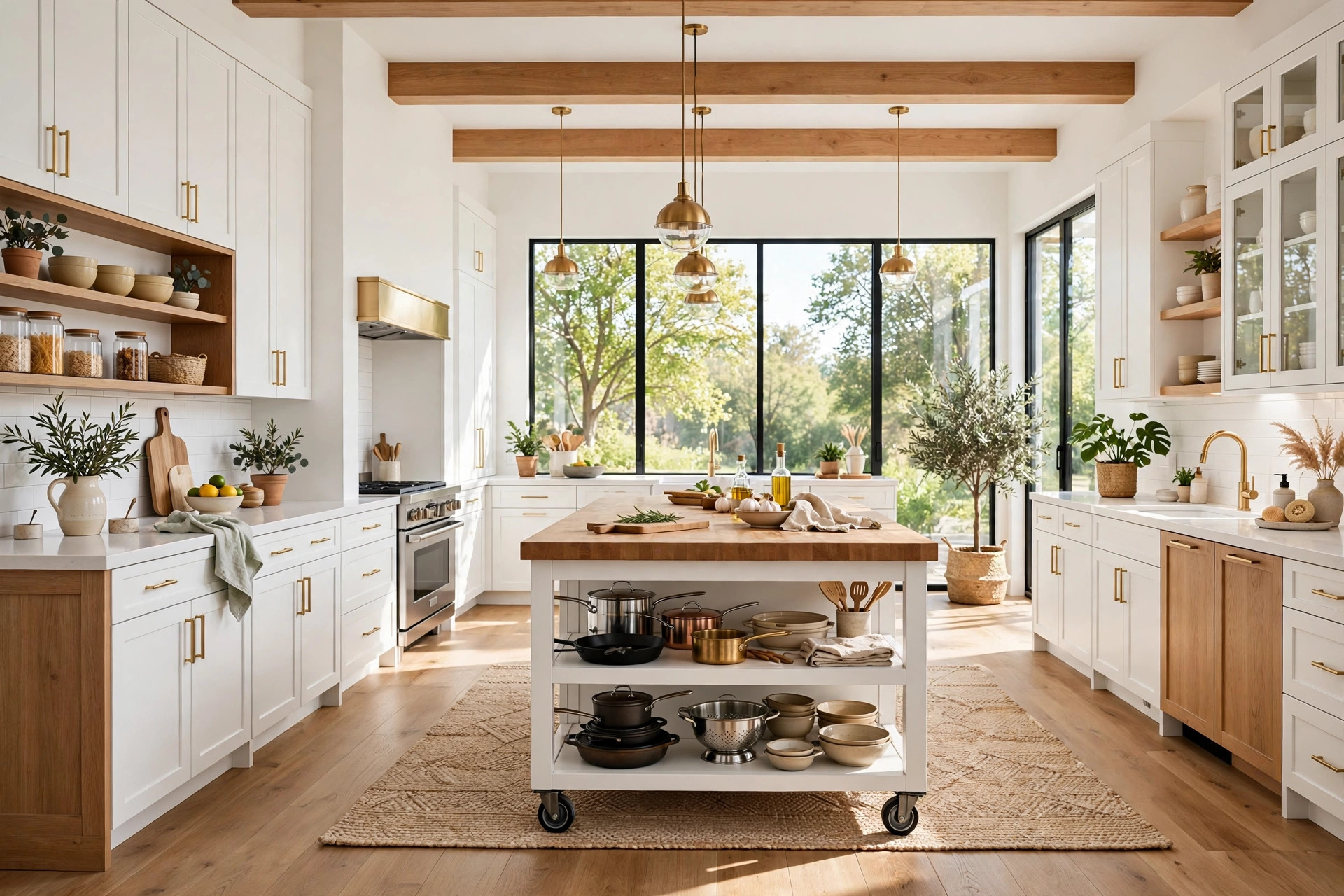
Studio kitchens are often a single counter run, which means prep space, storage, and the occasional dining spot all compete for the same two feet of counter. A rolling kitchen island adds all three: a butcher-block or stone top for chopping and serving, shelves or cabinets below for appliances and pantry overflow, and lockable casters so it docks against the wall when you need the floor. Roll it out as a breakfast bar, roll it back as a sideboard — the kitchen flexes with the day.
Casters and height make or break it. Locking casters should engage firmly — an island that drifts while you chop is a hazard, not a helper. Match the top height to your existing counters (around thirty-six inches) so it reads as one continuous workspace. Measure doorways and the dock spot: it needs a home when parked, not a permanent spot in the middle of your traffic path. If your studio has no dining zone at all, a two-stool island can quietly become the dining table too.
14. Console-to-Dining Table
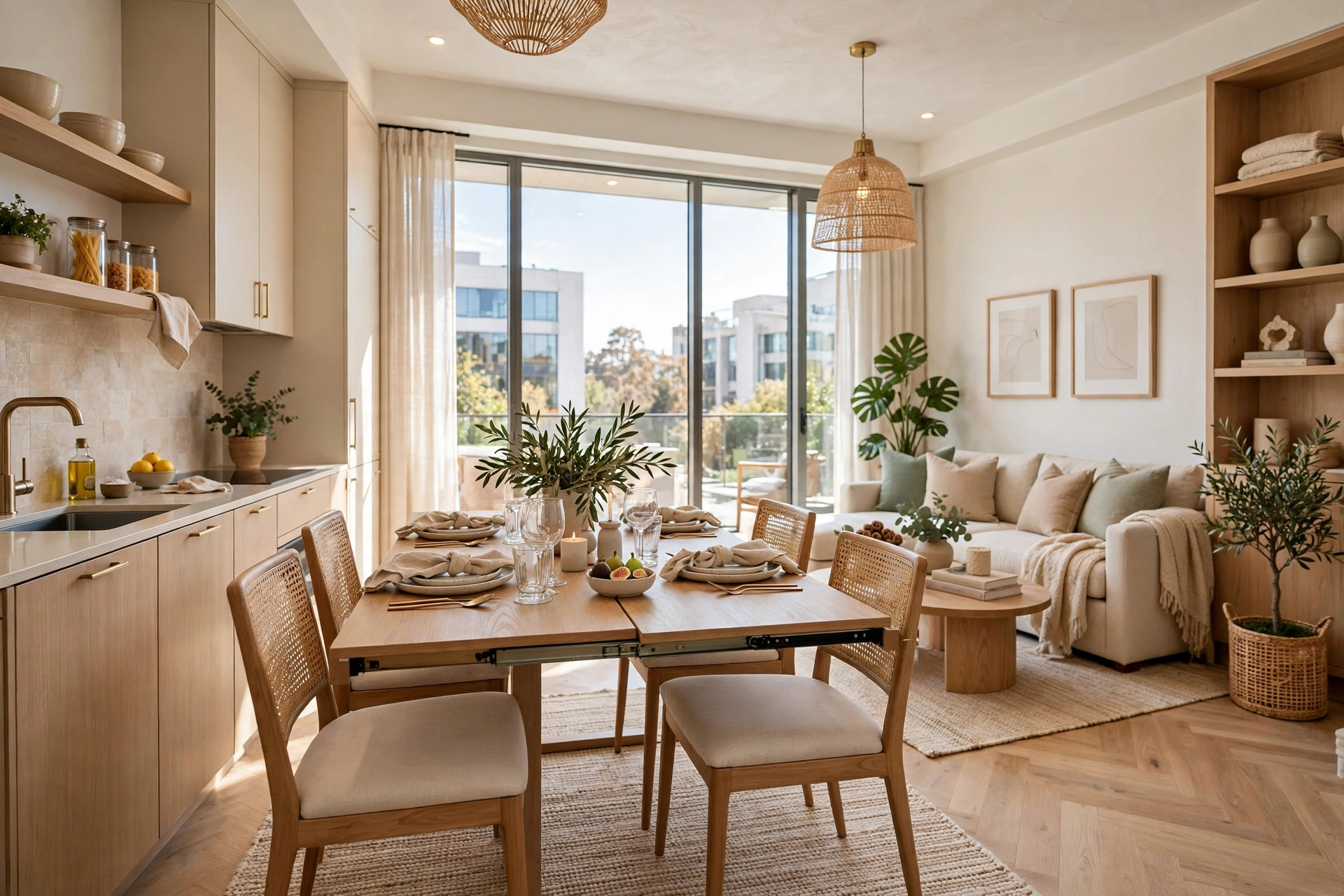
The console-to-dining table is the transformer of the furniture world: a slim console table, barely a foot deep, that expands — through butterfly leaves, telescoping frames, or accordion mechanisms — into a full dining table seating six to eight. Against the wall it holds keys, mail, and a lamp; on dinner-party night it becomes the biggest table your studio has ever seen. No other piece delivers this much range in this little permanent footprint.
Mechanism and seating are the honest trade-offs. Expansion should be a one-person job — if you need two people and an instruction manual, you’ll never use it. Store the leaves inside the console itself, not in a closet across the room. And plan the chairs separately: this table needs stackable or folding chairs that live elsewhere, because it can’t store seating for eight inside a twelve-inch console. For the daily reality of one or two people, the drop-leaf table above is simpler; the console table is for the studio that hosts.
15. Sleeper Chair: The One-Person Guest Solution
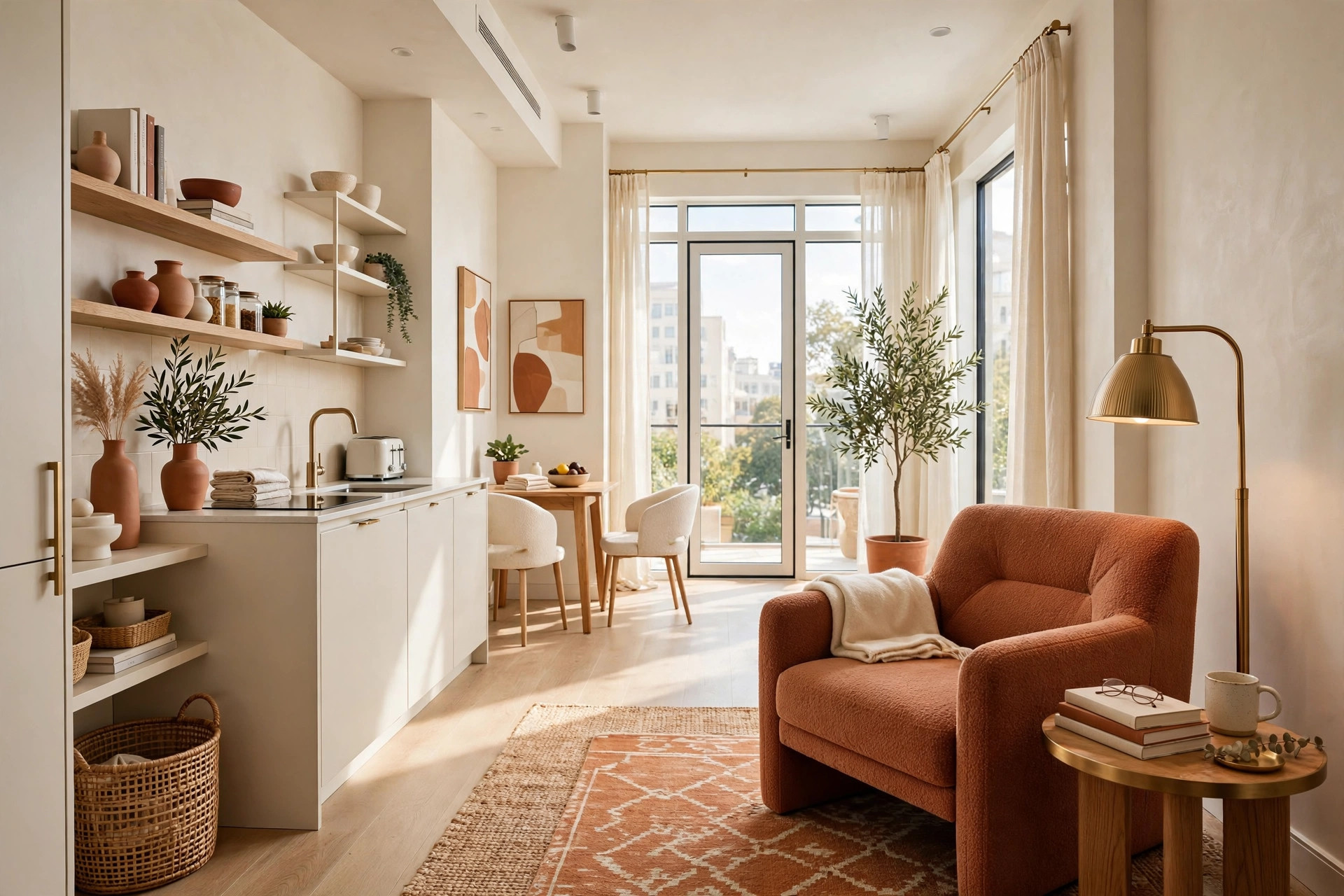
Not every studio needs to sleep two extra people — sometimes the guest list is one friend, one night. A sleeper chair (a convertible accent chair that unfolds into a twin bed) handles exactly that, in the footprint of a reading chair. By day it’s your favorite corner seat; by night it saves your guest from the air mattress. For studios where a full sleeper sofa would dominate the room, the sleeper chair keeps the seating scale right.
Comfort honesty applies double here. Test the unfolded bed the same way you’d test a sofa bed — many sleeper chairs are fine for a night and punishing for a week, and that’s okay if one night is the job. Check the unfolded footprint; some models extend surprisingly far forward. And choose upholstery that matches your main seating so the chair reads as a designed accent, not a compromise. One sleeper chair plus your main sofa often serves a studio better than one oversized sleeper sofa.
⚠️ Warning: Convertible mechanisms add real cost to any chair or sofa. If guests visit twice a year, a quality air mattress and a nice throw may serve you better than a mediocre sleeper you’ll sit on daily — spend the mechanism money where daily comfort lives.
Quick Comparison: Multi-Functional Furniture by Cost and Footprint
Studio Furniture Quick-Start Checklist
- ✅ Measure twice: record the room’s length, width, ceiling height, and every doorway before shopping.
- ✅ Map the open and closed footprint of each convertible piece — swing zones need clear floor.
- ✅ Anchor tall and wall-mounted pieces to studs; check your lease first.
- ✅ Buy for daily use if the piece serves daily (bed, desk), occasional use if it doesn’t.
- ✅ Choose storage you can actually reach — full-extension drawers beat deep bins.
- ✅ Keep one clear traffic path through the studio no matter how pieces expand.
- ✅ Test mechanisms in person when possible: lifts, folds, and glides should move smoothly with one hand.
Common Multi-Functional Furniture Mistakes
Mistake 1: Buying for the fantasy guest, not the daily reality
The six-person expanding table for the dinner party that happens twice a year, the king-size sleeper for guests who never come — oversized “just in case” pieces punish you daily for scenarios that rarely happen. Buy for the life you live 350 days a year; borrow, rent, or improvise for the other fifteen.
Mistake 2: Ignoring the open footprint
Every convertible piece has two sizes: closed and open. Shoppers measure the closed size, fall in love, and discover the murphy bed lands on the coffee table or the sleeper sofa blocks the bathroom door. Tape the open dimensions on your floor before ordering — the five minutes of painter’s tape saves months of regret.
Mistake 3: Choosing mechanisms over comfort
A clever fold means nothing if the bed hurts or the chair wobbles. Mechanisms are the sizzle; comfort is the steak. Always prioritize the version you’ll use daily — sit, lie, lift, and fold before committing, because the novelty of the trick fades long before the discomfort does.
Mistake 4: Skipping the lease check on wall-mounted pieces
Murphy beds, fold-down desks, and anchored shelving all need studs and screws. Plenty of leases restrict or forbid wall mounting, and losing deposit money — or worse, a wall repair bill — erases every dollar the clever furniture saved. Confirm in writing before you buy, or choose freestanding designs.
Mistake 5: Forgetting traffic flow
A studio with brilliant furniture and no walkable path is a storage unit you sleep in. Keep at least one clear route from door to kitchen to bed, even with every piece fully expanded. If a layout only works with everything folded away, the layout doesn’t work.
Frequently Asked Questions
1. What is the single best multi-functional furniture piece for a studio apartment?
A murphy bed with a sofa, if your lease allows wall mounting — it reclaims the entire bed footprint every day, which no other single piece can match. If wall mounting is off the table, a quality sleeper sofa or a daybed gives you the same day-night transformation without a single screw.
2. How much should I budget for multi-functional furniture in a studio?
Start with the pieces that replace the most: a convertible bed or sofa is the big investment, while ottomans, nesting tables, and storage benches are affordable wins you can add anytime. Buying in stages — bed first, then storage, then flexible tables — keeps the budget manageable and lets each piece prove its worth.
3. Are murphy beds safe for everyday use?
Yes, when they’re quality mechanisms properly anchored to wall studs. Modern piston and counterbalance systems are designed for daily cycling and lock securely at both ends. The safety issues come from bargain mechanisms, drywall-only anchors, and skipped installation steps — buy the good hardware and follow the mounting instructions exactly.
4. Can I use multi-functional furniture in a rental?
Most of it, yes — ottomans, nesting tables, daybeds, storage beds, rolling islands, and freestanding dividers need no mounting at all. Only wall-mounted pieces (murphy beds, fold-down desks) and anchored tall shelving need lease approval, so check your agreement first and lean on freestanding designs where there’s any doubt.
5. What is the best dining solution for a tiny studio?
For one or two people, a drop-leaf table with tuck-away chairs wins on simplicity — it scales from console to four-top in seconds. If you host larger groups, a console-to-dining table expands further for the same parked footprint. And in the smallest studios, a lift-top coffee table lets the sofa do the dining.
6. How do I arrange multi-functional furniture in a studio layout?
Zone first, furnish second. Decide where sleeping, lounging, working, and eating happen, then place each convertible piece so its open position serves its zone without blocking another. Our guides to furniture arrangement small living room and apartment decorating on a budget walk through layouts that make small rooms work hard.
7. Will multi-functional furniture look cheap or dorm-like?
Not if you buy for finish as well as function. Matching wood tones, real upholstery fabrics, and consistent hardware make convertible pieces read as designed furniture. The dorm look comes from mismatched, obviously temporary pieces — a cohesive palette fixes it faster than any single upgrade.
Conclusion
The best multi-functional furniture for studio apartments isn’t about clever tricks — it’s about honest math. Every piece on this list replaces two or more single-purpose items, which means your studio gains a bedroom, an office, a dining room, and storage without gaining a single square foot. Start with the bed, because the bed owns the most floor; add storage where clutter actually happens; then layer in the flexible tables and seating that let the room change shape with your day.
Shop in stages, measure the open footprints, test every mechanism, and keep your lease in the loop on anything that mounts to a wall. Do that, and your studio stops feeling like a compromise and starts feeling like a choice — one well-designed room that does the work of three. For more small space furniture ideas to round out the plan, browse the rest of our small-apartment guides and build the setup your square footage deserves.