10 DIY Craft Supplies Worth Buying for Home Decor Projects
Introduction
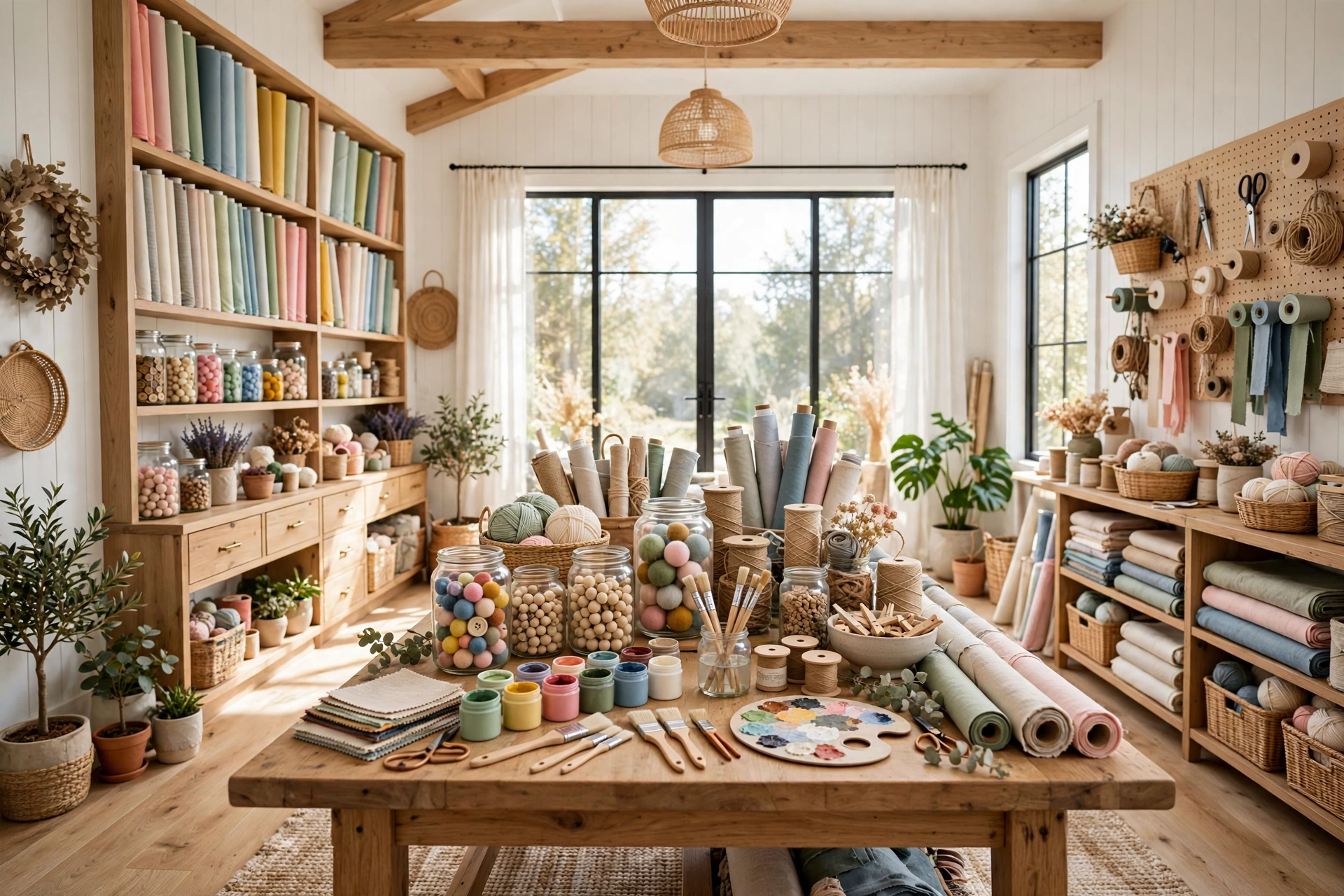
Walk into any craft store and you will understand why so many DIY projects stall before they start. The shelves are full of glitter, specialty tools, and clever gadgets that promise beautiful results and mostly collect dust. The truth is that almost every home decor project you actually want to make, from painted furniture to handmade wall art, relies on the same small set of supplies. Buy those ten things well, and you can make dozens of projects. Buy the wrong things, and you will spend more money for worse results.
The difference between a craft supply worth buying and one worth skipping is simple: does it show up in project after project, and does quality actually change the result? A good hot glue gun earns its place because it holds, it does not string everywhere, and it survives a hundred projects. A cheap one leaks, burns your fingers, and drops your wreath off the wall by Tuesday. The same logic applies to paint, fabric, wood glue, and the rest of this list. Spend a little more on the things you use constantly, and spend almost nothing on the one-use novelties.
This guide covers the ten DIY craft supplies home decor projects genuinely need, in the order you should buy them. Each one includes what to look for, what to avoid, and the projects it unlocks, so you can build a craft cupboard that works as hard as you do. If you are just starting out, these easy DIY home decor ideas are the perfect first projects to try with your new supplies, and every one of them uses something on this list.
1. Quality Acrylic and Chalk Paint
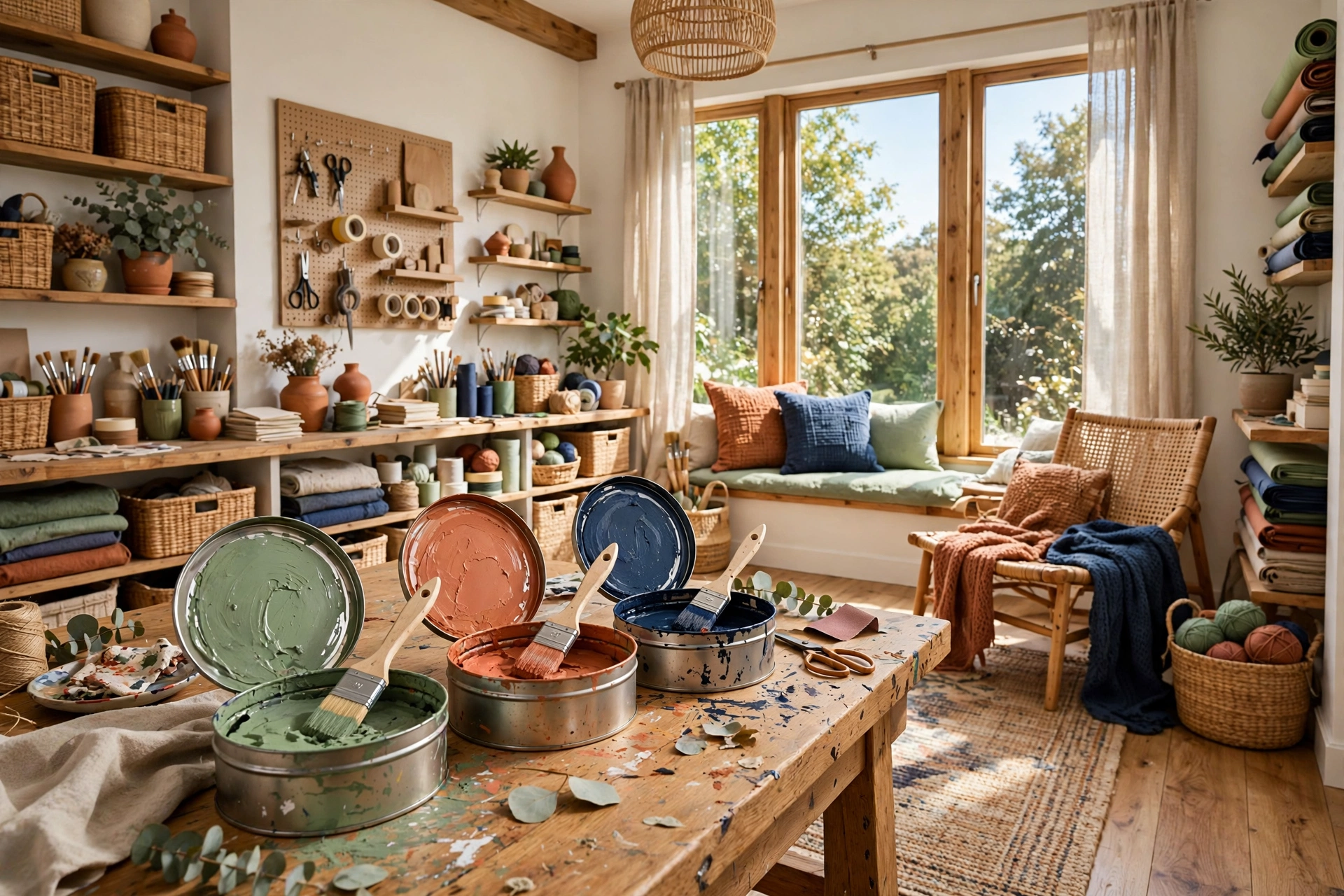
Paint is the single highest-impact craft supply you can own, because it changes the colour of almost anything: furniture, frames, pots, jars, canvas, and wood. A good acrylic paint goes on smoothly, covers in two coats, and dries to a finish that does not look streaky or chalky in the wrong way. Chalk paint is the forgiving cousin: it sticks to sealed wood with almost no sanding, dries fast, and gives furniture that soft matte vintage finish that looks far more expensive than the tin cost.
Buy paint in the colours you actually live with, not the colours that look exciting in the shop. A warm white, a deep sage green, a soft terracotta, and a classic navy will cover ninety percent of home decor projects, and you can mix them for everything else. Small pots are fine for craft projects, but if you plan to paint furniture, buy the larger tin: running out halfway through a dresser is how a weekend project becomes a month-long one. Always seal painted furniture with wax or a matte topcoat, because paint that is not sealed chips the first time someone sets a mug down on it.
2. A Reliable Hot Glue Gun
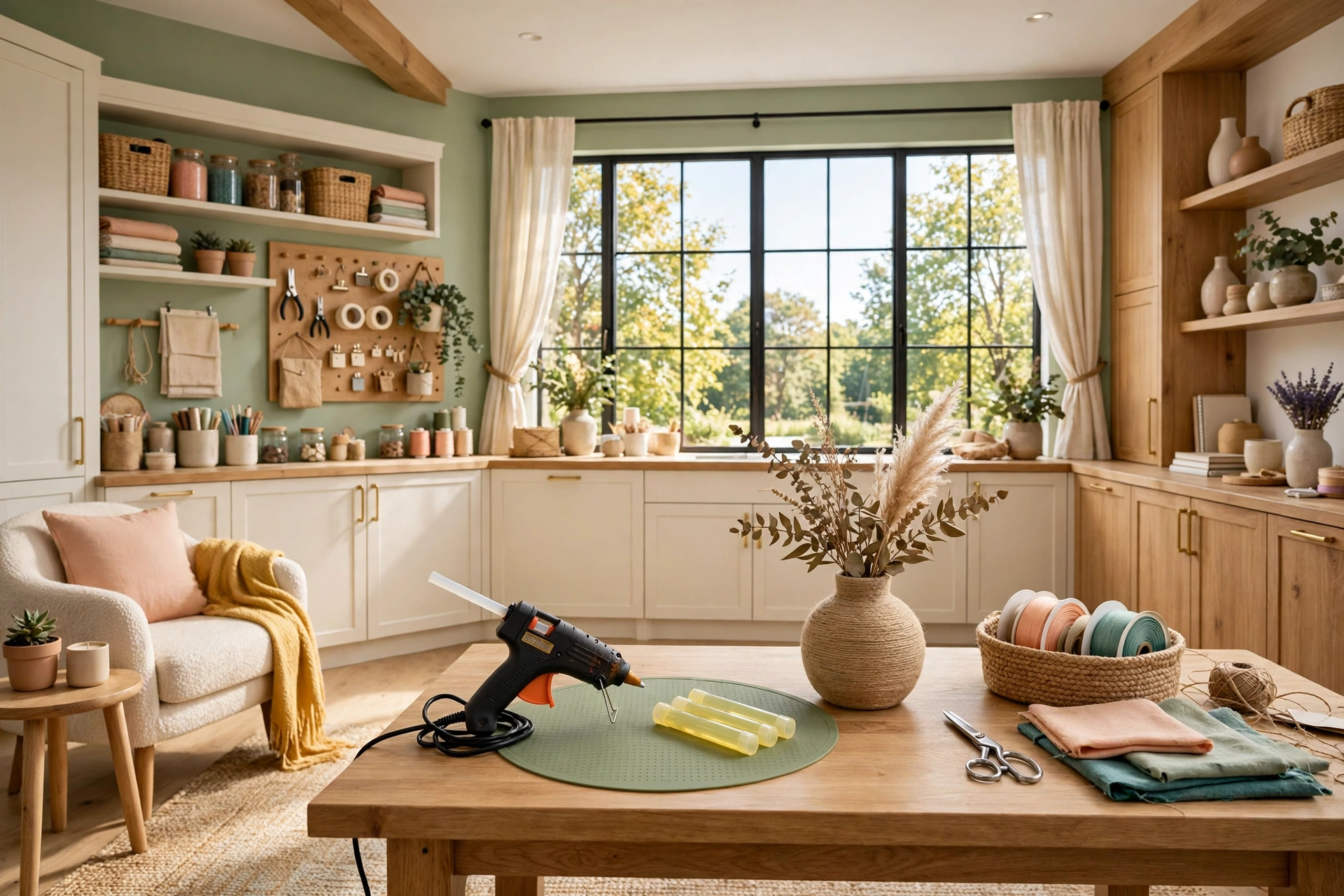
A hot glue gun is the workhorse of DIY home decor. It sticks fabric to wood, rope to glass, dried flowers to wreaths, and trim to mirrors, and it does it in seconds. The difference between a good glue gun and a bad one is not subtle: a good gun heats up fast, keeps a steady temperature, feeds sticks smoothly without jamming, and does not drip hot glue all over your table while you are thinking. A cheap gun does all four of those things badly, and the burns it gives you will put you off crafting for a week.
Buy a full-size gun rather than a mini one if you plan to do real projects, because the mini guns run out of glue at the worst moment and cannot keep up with anything bigger than a greeting card. Stock up on glue sticks in bulk, they are cheap, and keep a silicone mat under the gun so drips peel off instead of ruining your table. Always keep a bowl of cold water nearby when you are learning, and remember that hot glue is a temporary bond on some surfaces: it is perfect for decor, but never trust it alone to hold anything heavy on a wall.
3. Good-Quality Fabric and Linen
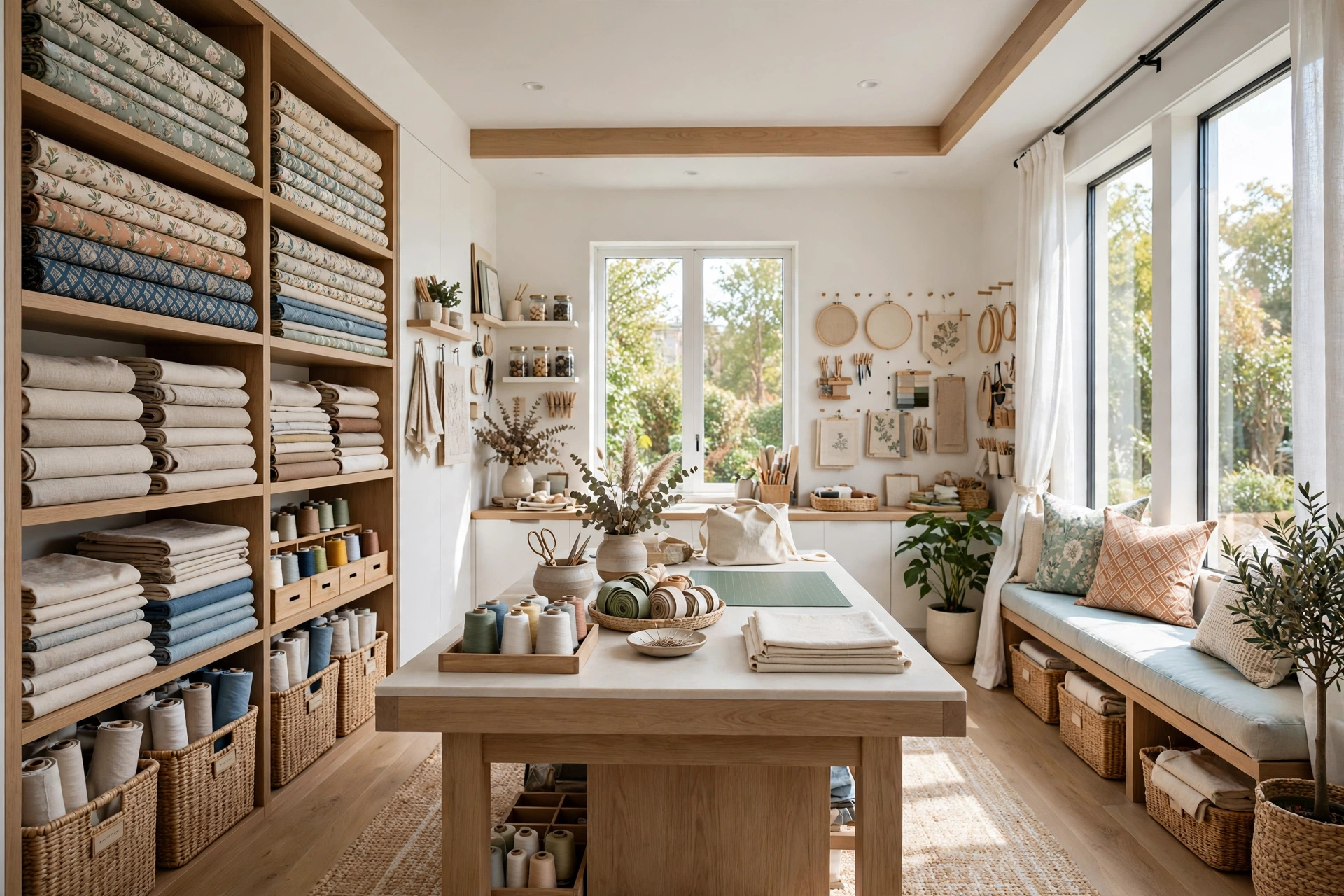
Fabric is the fastest way to change the colour and texture of a room, and a small stash of good fabric unlocks pillow covers, table runners, framed panels, curtain tiebacks, and upholstery projects. Linen, cotton canvas, and a heavy cotton duck are the three fabrics to buy first: linen drapes beautifully and looks expensive even in a plain weave, canvas is sturdy enough for cushions and storage, and cotton duck takes paint and stencils well for custom projects. Buy them in solid colours and one or two patterns that match your home, not in a rainbow of prints you will never use.
The mistake most beginners make is buying the cheapest fabric on the roll. Thin, shiny polyester looks cheap on a sofa and frays the moment you cut it, while a good linen-look cotton costs only a little more and behaves beautifully under a needle, a glue gun, or an iron. Check the remnant bin and the end-of-roll section before you buy full price, because upholstery-weight offcuts are often sold for a fraction of the cost and are exactly the right size for cushion covers and framed fabric panels. Wash and iron your fabric before you start, because fabric that shrinks after you have sewn it is a project ruined.
DIY Craft Supplies Quick-Start Checklist
- ✅ Buy paint in colours you already live with, not colours that excite you in the shop
- ✅ Choose a full-size hot glue gun and keep a silicone mat underneath it
- ✅ Stock linen, cotton canvas, and cotton duck before buying patterned fabric
- ✅ Buy wood glue, screws, and sandpaper together so a project never stalls halfway
- ✅ Test every paint, stain, and glue on a scrap piece before touching the real thing
- ✅ Store supplies in clear labelled boxes so you can see what you own before shopping
- ✅ Keep one shelf for finished projects and one for supplies, never mixed together
4. Wood Glue, Pine Boards, and Dowels
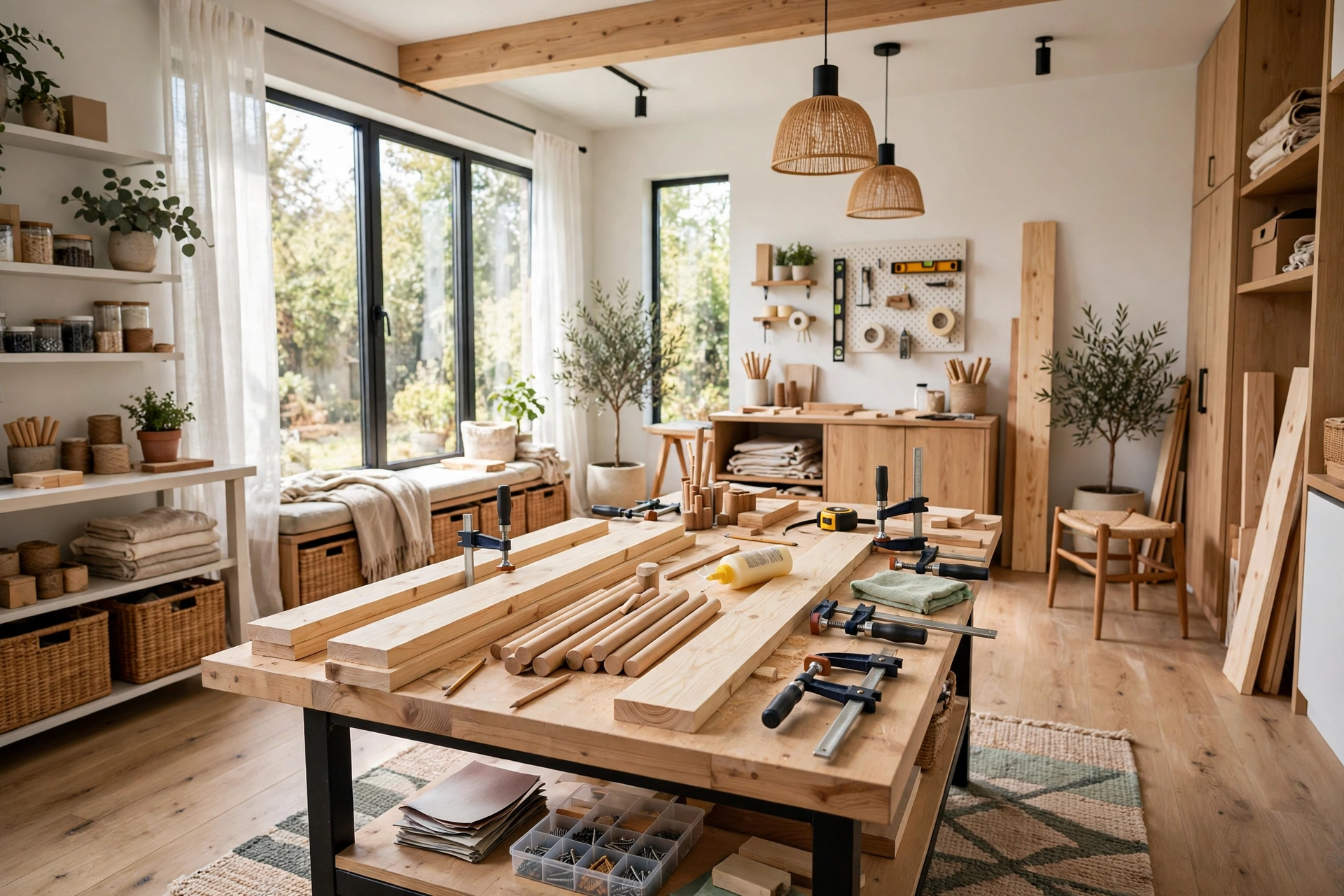
Wood is the backbone of DIY home decor, and a small stock of pine boards, dowels, and good wood glue lets you build shelves, frames, plant stands, and wall panels without a workshop. Pine is cheap, light, easy to cut with a hand saw, and takes paint and stain well, which makes it the right wood for almost every beginner project. Buy boards in a few standard lengths and keep them somewhere dry and flat, because warped boards are the number one reason a simple build goes wrong.
Wood glue matters more than most people expect. A good aliphatic wood glue creates a bond stronger than the wood itself once it cures, while a cheap glue stays rubbery and lets joints creep apart over time. Apply it thinly, clamp the joint or tape it tight, and wipe away the squeeze-out with a damp cloth before it dries, because dried glue shows through paint and stain as a pale blotch. Dowels are the quiet hero here: a wooden dowel becomes a curtain rod, a macrame hanger, a plant stand leg, or a wall hanging bar, and a bag of them costs almost nothing. Learning how to make DIY floating shelves is a great first wood project, and it uses every one of these supplies. It is also the core of any DIY room decor on a budget plan, where one board and a bracket beat a new bookcase every time.
5. Spray Paint in Matte Finishes

Spray paint is the fastest way to make a thrifted object look new. One can of matte black spray paint turns a dated brass lamp, a mismatched set of frames, or a plastic planter into a coordinated set in ten minutes, and the finish is smoother than anything you can achieve with a brush on a fiddly shape. Matte and satin finishes look far more expensive than gloss on home decor, so keep matte black, matte white, brushed gold, and one warm metallic in your cupboard and you will reach for them constantly.
The rules for spray paint are simple and non-negotiable. Work outdoors or in a well-ventilated space, shake the can for a full minute, and apply three light coats rather than one heavy one, because a heavy coat drips and a light coat dries smooth. Warm the can in a bowl of warm water on a cold day so the paint flows properly, and always spray a test patch on cardboard first to check the colour and the nozzle. Never spray paint in a closed room, and never skip the mask: the fumes are the one genuinely unpleasant part of an otherwise wonderful supply.
⚠️ Warning: Spray paint fumes are harmful in enclosed spaces. Always work outside or with windows open on both sides of the room, wear a proper respirator mask, and keep cans away from children and pets.
Quick Comparison: DIY Craft Supplies by Cost and Usefulness
6. Decoupage Glue and Sealer
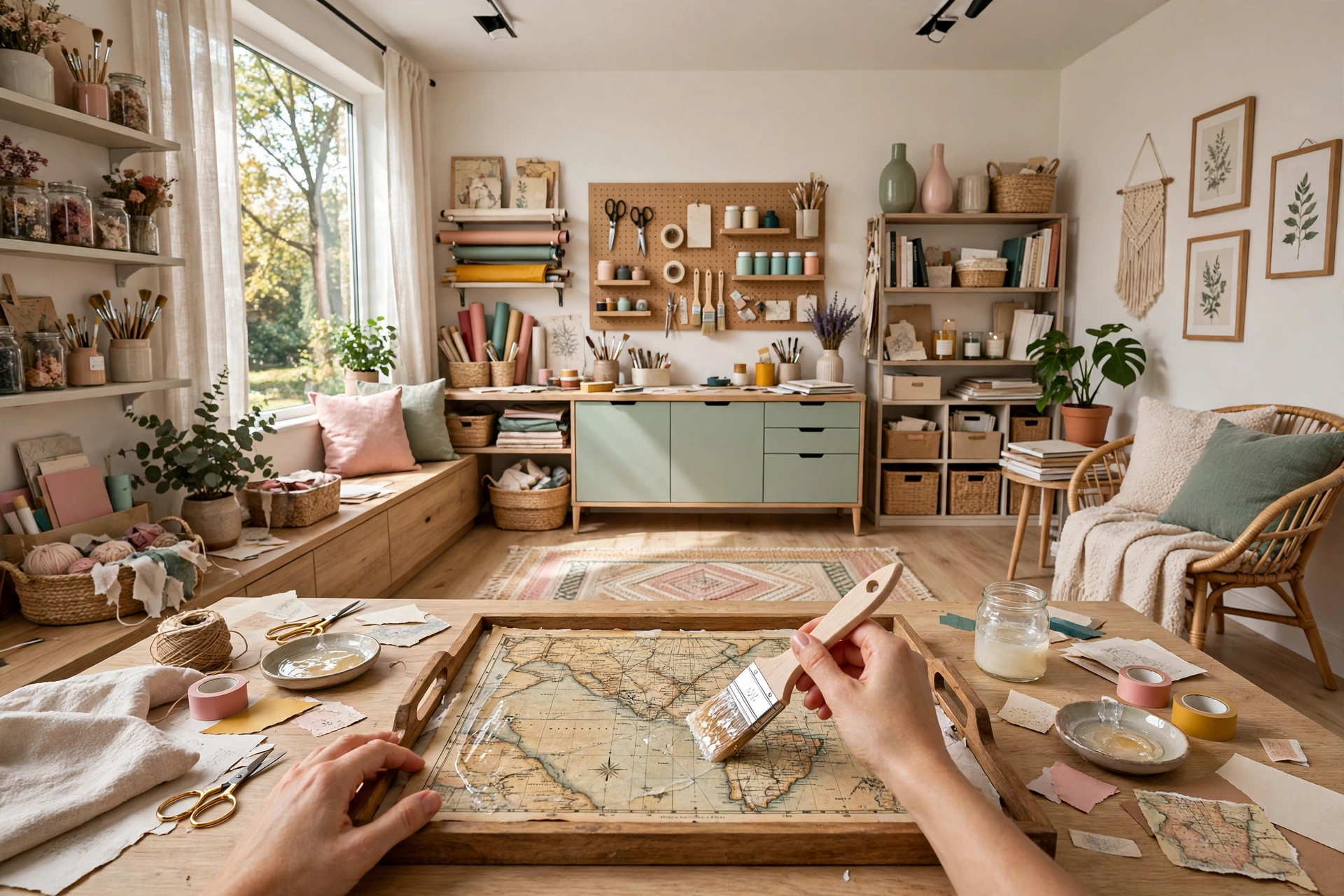
Decoupage glue, the kind sold as a white liquid that dries clear, is one of the most underrated craft supplies for home decor. It sticks paper to wood, glass, and metal, seals the surface, and gives it a smooth protective finish, all from one bottle. Use it to cover a tray with vintage maps, wrap a jar in patterned paper, line a drawer with botanical prints, or seal a painted surface so it survives daily use. One bottle does the job of glue, varnish, and sealer, which makes it excellent value.
The technique is forgiving, but a few habits make the difference between a smooth finish and a wrinkled mess. Brush a thin layer of glue onto the surface first, lay the paper down, then brush another thin layer over the top, smoothing from the centre outward with your fingers or a soft cloth. Let each layer dry fully before adding the next, because wet layers trap bubbles that never come out. Thin paper works better than thick card, and tearing the edges rather than cutting them gives a softer, more professional blend. Keep a dedicated brush for decoupage, because dried glue ruins bristles fast.
💡 Pro Tip: Buy decoupage glue in the matte finish first. Gloss looks sticky and cheap on furniture, while matte disappears into the surface and lets the paper look printed on rather than glued on.
7. Jute Rope, Twine, and Cotton Cord

Natural rope and cord are the texture that makes a room feel warm and handmade. A ball of jute twine wraps a glass jar into a vase, frames a round mirror, or becomes a hanging planter. A thicker cotton cord becomes a macrame wall hanging, a basket, or a plant hanger, and a roll of jute rope turns a plain storage box into a seagrass-look basket for a fraction of the shop price. These supplies are cheap, they never go out of style, and they work in every room from the entryway to the bathroom.
Buy natural, undyed fibres first, because cream, beige, and natural brown go with any colour scheme you already have, while brightly coloured cord limits you to one look. Keep three thicknesses in your cupboard: thin twine for wrapping and tying, medium cord for baskets and plant hangers, and thick rope for mirrors and statement pieces. Store them in a dry place away from sunlight, because damp rope goes musty and faded rope looks tired. When you wrap rope around anything, glue as you go in short sections rather than gluing the whole surface at once, so the rope stays tight and even.
8. Reusable Stencils

Stencils are the shortcut to hand-painted-looking decor without any drawing skill. A good stencil turns a plain wall into a patterned feature, a wooden sign into a boutique piece, a cushion cover into a custom print, and a piece of furniture into something that looks professionally finished. Buy stencils in classic patterns first: a simple geometric, a botanical leaf, a damask, and a set of letters and numbers. Those four cover almost every project, from a stencilled rug to a labelled pantry jar.
The difference between a crisp stencil and a blurry one is technique, not talent. Use a nearly dry brush or a foam pouncer, dab the paint on in thin layers, and tape the stencil down firmly so it cannot shift mid-project. Peel the stencil off while the paint is still slightly wet for the cleanest edge, and wash it immediately so paint does not dry in the cut-outs and ruin it for next time. A reusable stencil that you wash and store flat will last for years and dozens of projects, which makes it one of the best value supplies on this list. If wall projects are your thing, these DIY wall decor ideas use stencils and paint in several of the best looks.
9. A Craft Knife and a Self-Healing Cutting Mat
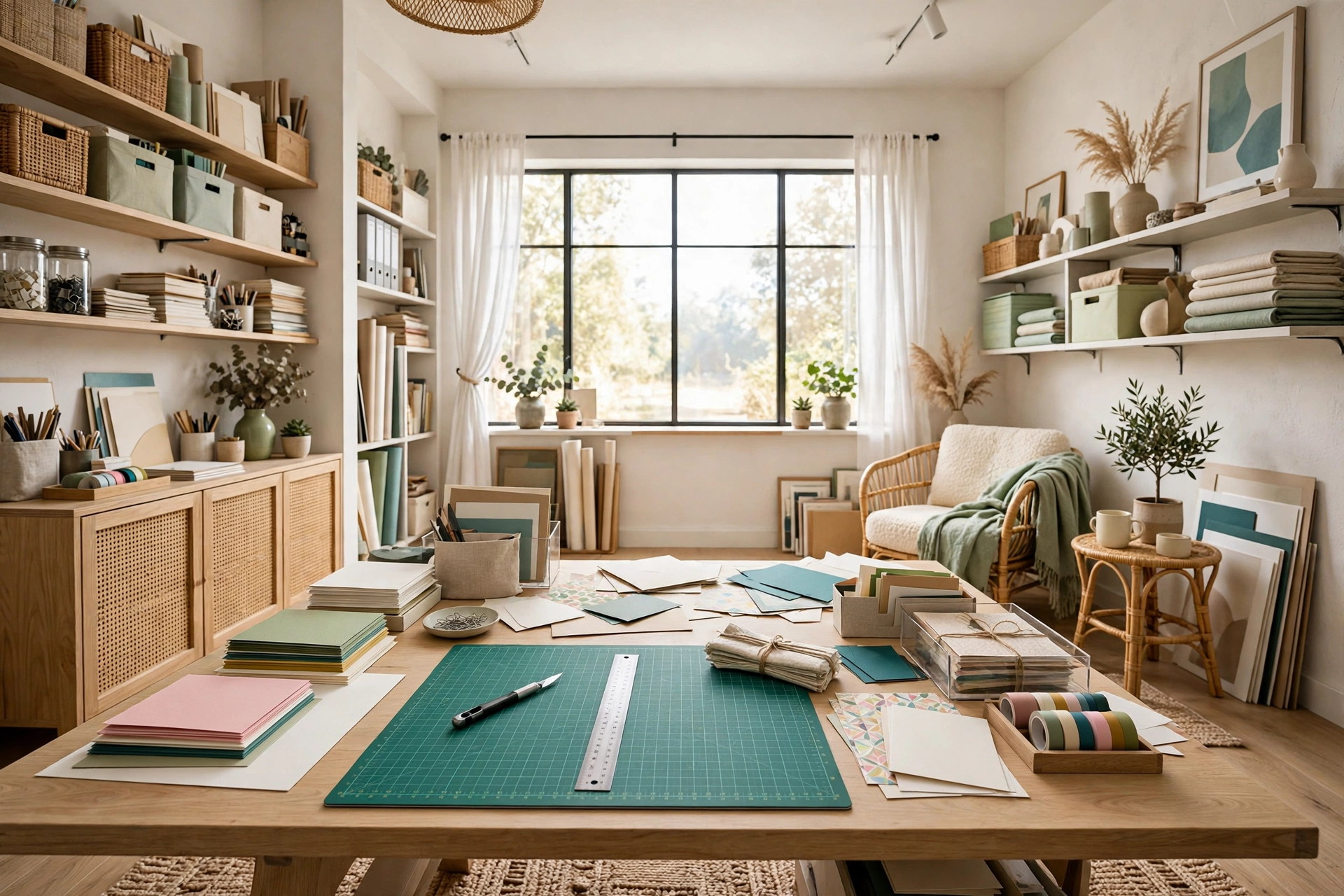
A sharp craft knife and a self-healing cutting mat are the precision tools that make every other supply work better. They cut paper cleanly for decoupage, trim vinyl and contact paper without tearing, cut stencils from acetate, and slice foam board and thin wood for models and templates. A clean cut is the difference between a project that looks handmade and one that looks homemade, and no pair of scissors gives you the same straight edge on a long cut.
Buy a knife with replaceable blades and change the blade often, because a dull blade tears and slips, and a slipping blade is how crafters cut themselves. Always cut away from your body, always use a metal ruler as a guide for straight cuts, and never cut on a table without the mat, because the blade will score your furniture and go blunt in one pass. Keep the mat flat and out of direct sunlight so it stays self-healing, and store the knife with the blade retracted. This is a small purchase that quietly improves every project you make with it.
📌 Important: A craft knife is the one supply on this list that deserves real respect. Keep it out of reach of children, cut away from your fingers, and replace the blade the moment it starts dragging instead of slicing.
10. Knobs, Pulls, and Brackets

Hardware is the jewellery of home decor, and a small box of knobs, pulls, and brackets is the fastest way to finish a project properly. New brass pulls turn a chalk-painted dresser into a boutique piece, matte black knobs update a kitchen in an afternoon, and a set of hidden shelf brackets turns a pine board into floating shelves that look like they cost ten times the price. Hardware is where cheap projects suddenly look expensive, because the eye reads a solid brass pull as quality even when the furniture underneath cost five dollars.
Buy hardware in finishes that match each other, not one of everything. A box of matte black pulls, a box of brushed brass knobs, and a set of shelf brackets in the same two finishes will finish more projects than a drawer full of mismatched singles. Save every knob and hinge you remove from a thrift find, because vintage hardware is hard to buy new and it finishes future flips for free. Before you buy, measure the hole spacing on your furniture, because pulls come in standard sizes and a pull that does not fit the existing holes means drilling new ones. These DIY furniture makeover ideas show how much difference a hardware swap makes, and most of them start with exactly this box of supplies.
Common DIY Craft Supply Mistakes
Mistake 1: Buying the cheapest version of everything
Cheap paint streaks, cheap glue fails, cheap fabric frays, and cheap tools break mid-project. Spend a little more on the five supplies you use constantly, paint, glue, fabric, wood, and a hot glue gun, and save money by skipping the novelty items you will use once.
Mistake 2: Stocking up before you have a project
A craft cupboard full of supplies with no plan is a cupboard full of clutter. Buy the ten supplies on this list, then buy project-specific extras only when you have a project in mind. Your future self will thank you for the shelf space.
Mistake 3: Storing supplies where you cannot see them
Supplies buried in a dark box get forgotten, and forgotten supplies get bought twice. Store everything in clear boxes with labels, keep the most-used items at eye level, and do a quick sort every few months to use up what you have before buying more.
Mistake 4: Skipping the test patch
Every paint, stain, glue, and sealer behaves differently on different surfaces. Test on a scrap piece first, every single time. A five-minute test saves a ruined project and a wasted weekend.
Mistake 5: Using the wrong glue for the job
Hot glue is brilliant for decor and terrible for anything load-bearing. Wood glue is perfect for wood and useless on glass. Fabric glue works on cloth and peels off metal. Match the adhesive to the materials, and when in doubt, check the label before you squeeze the trigger.
Frequently Asked Questions
1. What are the most essential DIY craft supplies for home decor?
The five essentials are quality acrylic or chalk paint, a full-size hot glue gun, good fabric in linen and cotton canvas, wood glue with pine boards and dowels, and matte spray paint. With those five, you can paint furniture, make wall art, sew cushion covers, build shelves, and flip thrift finds.
2. How much should I spend on craft supplies to start?
A sensible starter kit of the ten supplies on this list costs about the same as one medium home decor purchase from a shop, and it will make dozens of projects. Buy the basics first, then add one new supply per project instead of buying everything at once.
3. Where is the best place to buy DIY craft supplies?
Craft stores are best for paint, fabric, and specialty items, while hardware stores are usually cheaper for wood, glue, spray paint, and brackets. Thrift stores and end-of-roll bins are the best source for fabric and hardware, and buying glue sticks and sandpaper in bulk online saves real money over time.
4. Can I do DIY home decor projects without power tools?
Yes. Almost every project in this guide needs nothing more than a drill, a hand saw, a hot glue gun, and a craft knife. A drill is the one power tool worth owning, because it makes hanging shelves and assembling furniture dramatically easier, but even that can be borrowed for a weekend.
5. How do I store craft supplies so they last?
Keep paint sealed and stored upright at room temperature, store fabric folded in a dry place away from sunlight, keep rope and cord dry, and store glue sticks and spray paint away from heat. Clear labelled boxes on a shelf beat a single deep box every time, because you can see what you own.
6. What craft supplies should beginners avoid buying first?
Avoid specialty tools for one technique, expensive glitter and embellishments, and large packs of patterned paper or fabric in colours you do not already use. Buy the versatile basics first, learn what you enjoy making, and then invest in the supplies for that specific craft.
7. Is chalk paint or acrylic paint better for furniture?
Chalk paint is easier for beginners because it needs almost no sanding and dries to a soft matte finish, while acrylic paint is tougher and better for pieces that get heavy daily use. Many crafters use chalk paint for the colour and seal it with wax or a clear topcoat for durability, which gives you the best of both.
Conclusion
A well-stocked craft cupboard is not about owning everything. It is about owning the ten supplies that show up in project after project, buying them in good quality, and knowing how to use them well. Paint, a hot glue gun, fabric, wood, spray paint, decoupage glue, rope, stencils, a craft knife, and a box of hardware will carry you through years of home decor projects, and each one earns its shelf space many times over.
Start with the first five supplies on this list, pick one small project for the weekend, and make something. The confidence you build from one finished piece is worth more than any supply on a shelf, and the next project always gets easier. Your home will look more like you with every piece you make, and that is the whole point of DIY.