Small Apartment Decor Trends for 2026: What’s In, What’s Out
Introduction
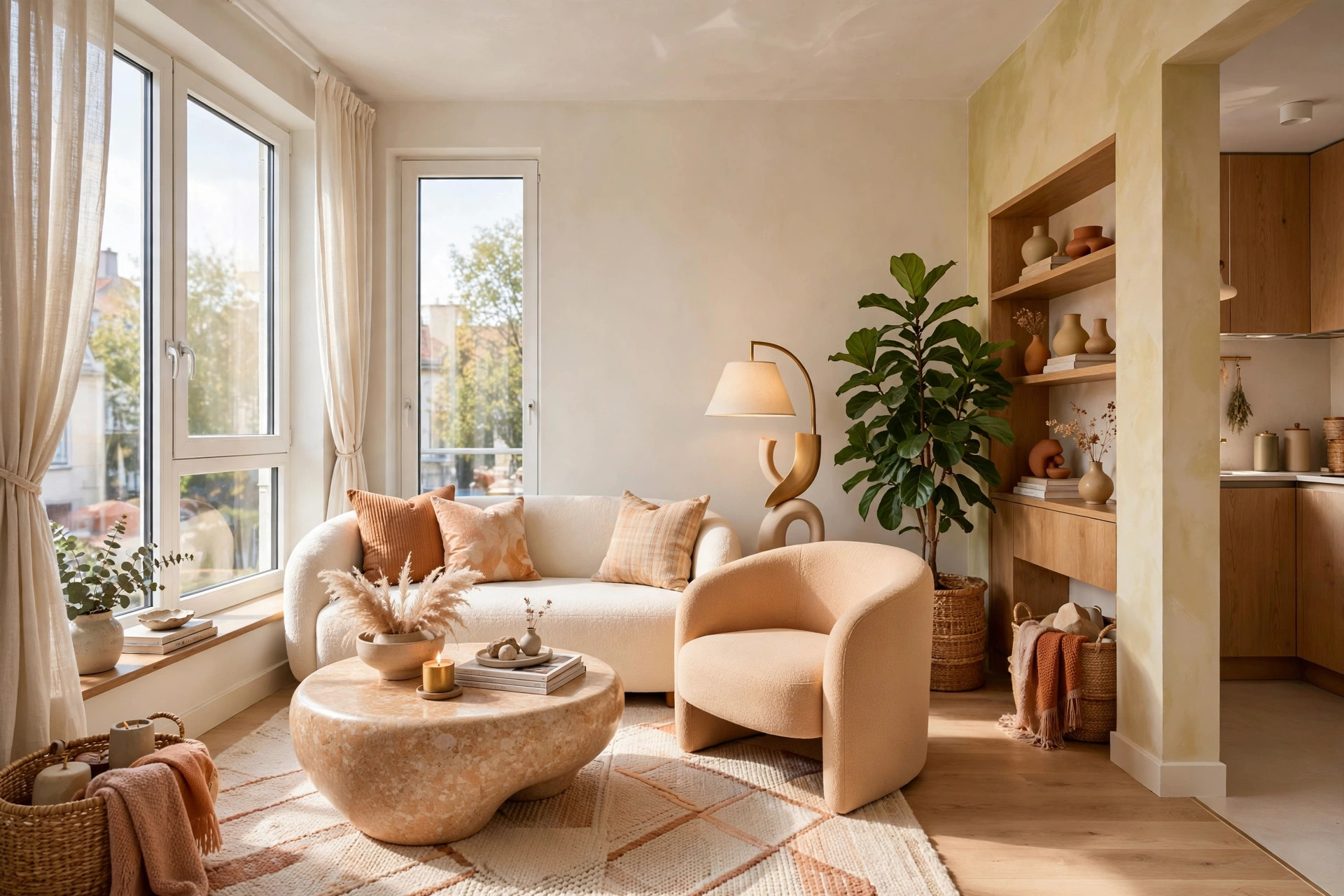
Small apartment decor trends for 2026 are shifting in a clear direction: cozy beats cold, flexible beats fixed, and personality beats perfection. After years of gray-on-gray rental apartments and matchy-matchy starter sets, the new year is about small spaces that feel warm, layered, and unmistakably yours — without adding clutter or chaos.
The good news is that most of what’s coming doesn’t require a renovation or a big budget. Renters and small-space owners can lean into nearly every 2026 trend with paint, textiles, lighting, and smart swaps. What you need is a clear map of what’s actually worth trying — and which tired looks are finally on their way out.
This guide breaks down 15 small apartment decor trends for 2026: eight that are firmly in, and seven that are officially out. For each one, you’ll get honest advice on how it works in real, compact homes, what it costs, and the small-space caveats no one tells you. Pick the two or three that fit your home, and 2026 can be the year your apartment finally feels finished.
1. In: Warm Minimalism Over Cold Gray
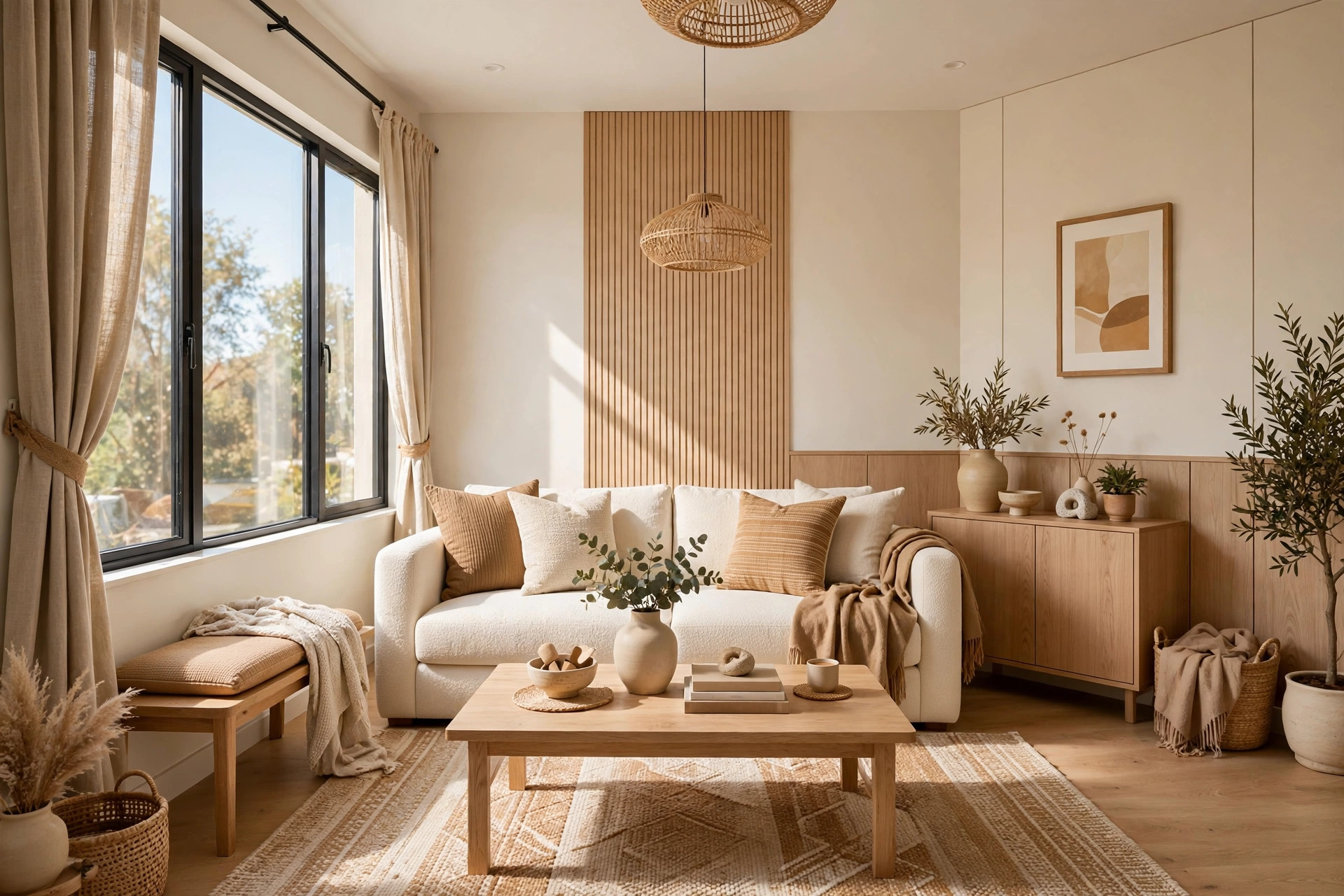
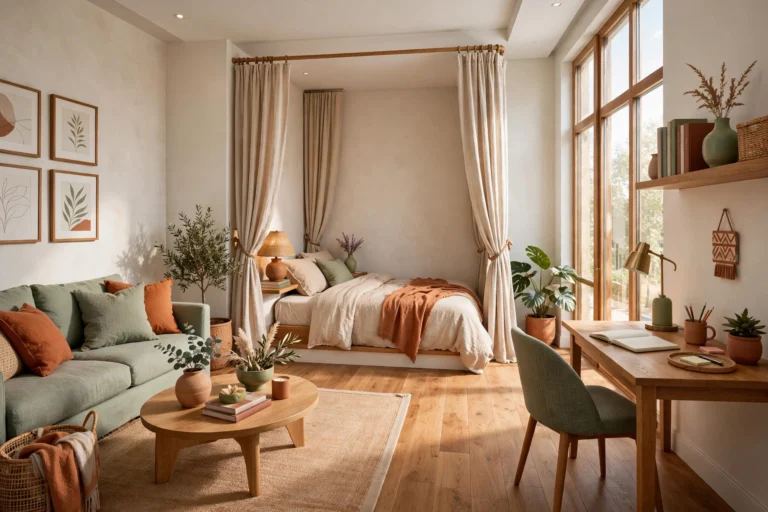
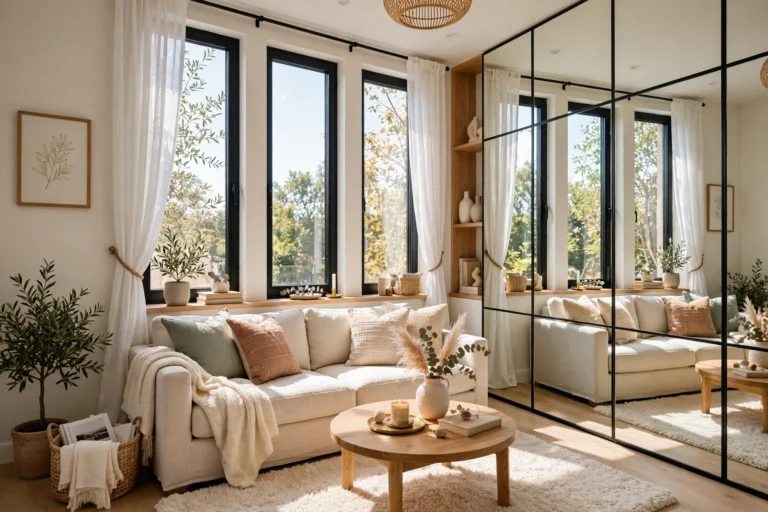
Minimalism isn’t dying — it’s warming up. The stark white-and-chrome minimalism that dominated small apartments for a decade is giving way to warm minimalism: clean lines and open surfaces, but in creamy whites, oatmeal, camel, greige, and soft clay tones. The room still breathes, but now it also feels like someone lives in it.
This shift matters more in small spaces than anywhere else. Cool grays and harsh whites can make a compact room feel sterile and flat, while warm neutrals add depth without adding visual noise. Try it first in the space where you spend the most time: swap cool-white bedding for warm ivory, trade a gray throw for a camel one, and see how the room instantly feels richer. The goal is calm, not clinical.
2. In: Curved Furniture and Soft Silhouettes
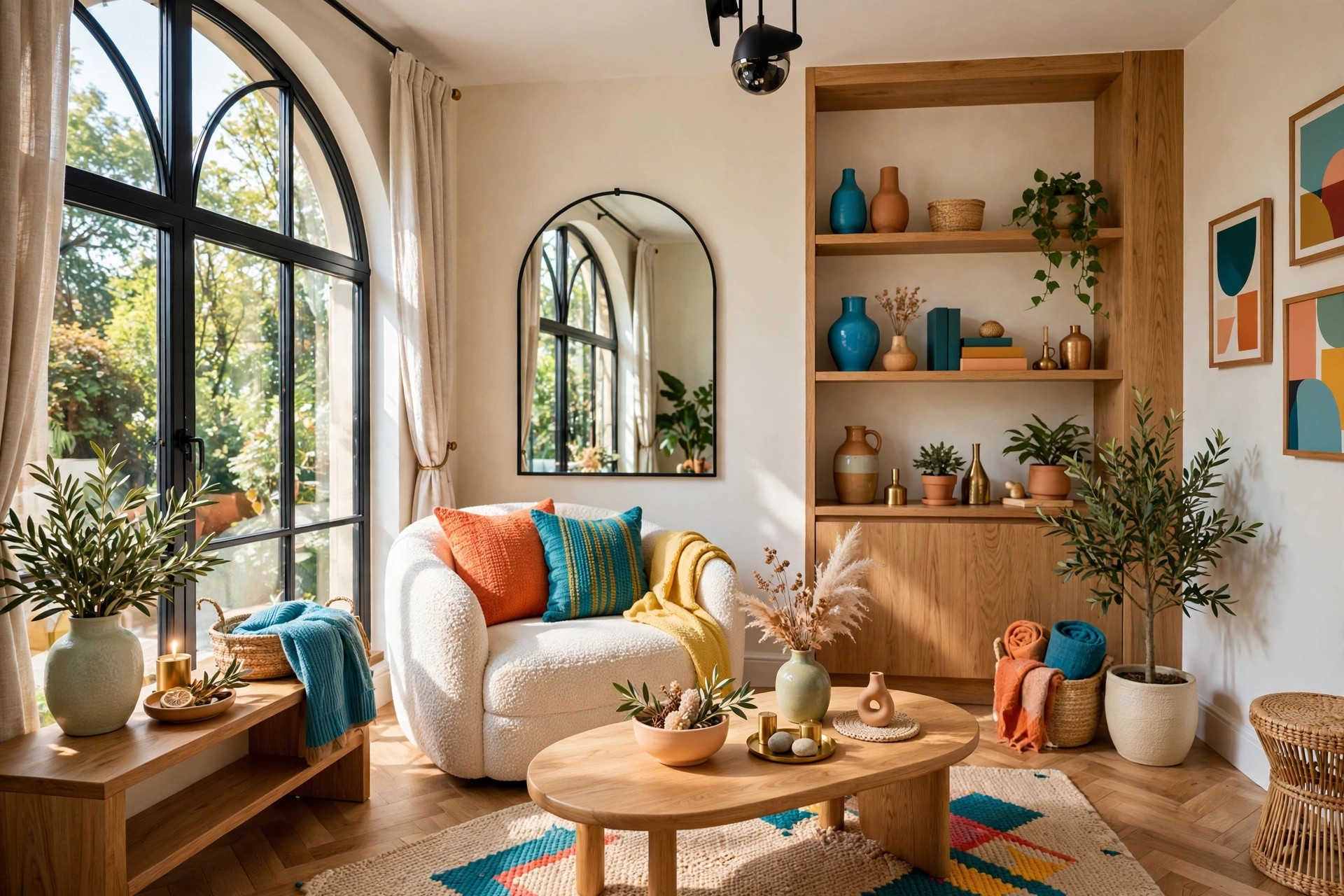
Hard rectangles defined the 2010s small apartment — boxy loveseats, square coffee tables, sharp-cornered everything. In 2026, curves are taking over: round swivel chairs, oval coffee tables, arched bookcases, and sofas with soft, pillowy edges. Designers love curves for small rooms because rounded shapes create flow and make tight layouts feel less congested.
You don’t need to replace every piece. One curved statement — a round accent chair, a curved-edge coffee table, or an arched mirror — softens a whole room. Curves also earn their keep practically: no sharp corners to bruise shins in a narrow walkway, and round tables seat more people in small dining nooks than square ones.
3. In: Multi-Functional Furniture as the Default
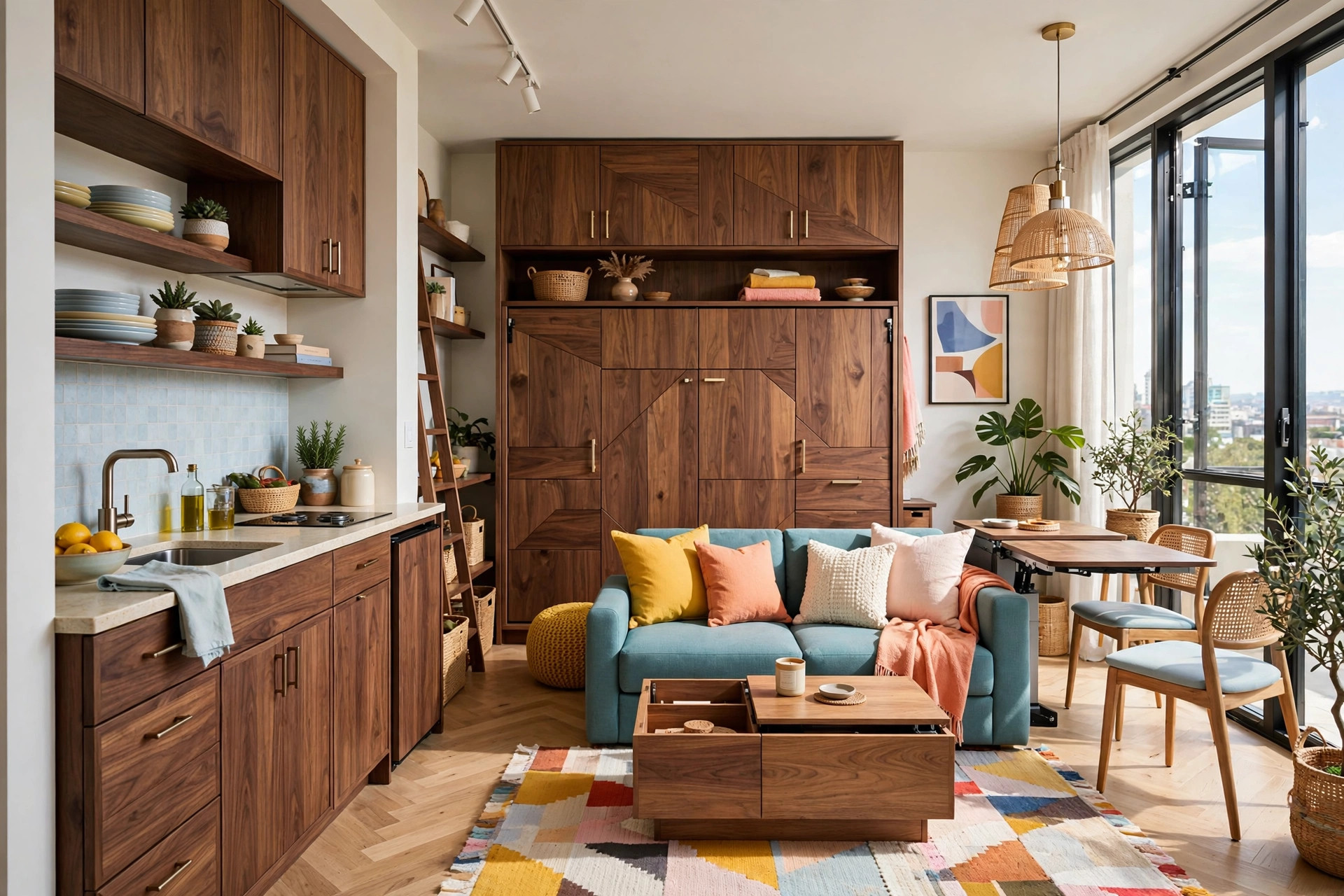
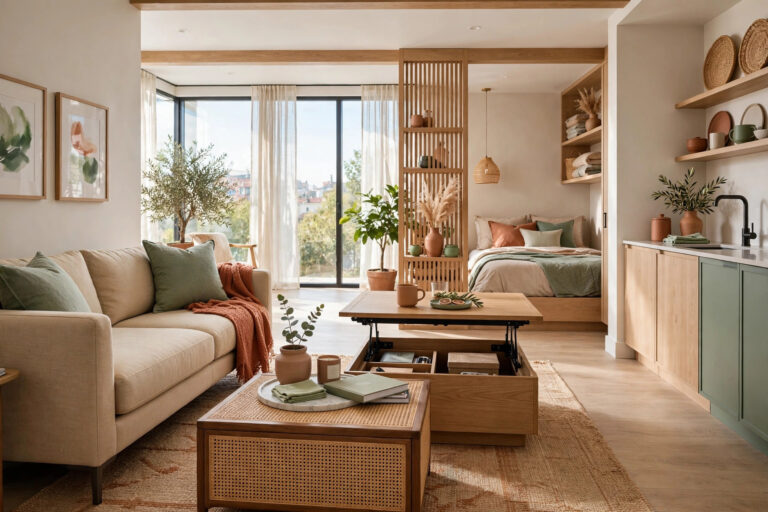
Multi-functional furniture used to be a niche small-space hack; in 2026 it’s simply the default assumption. Murphy beds that fold into cabinets, storage ottomans, nesting side tables, drop-leaf dining tables, and sleeper sofas that are actually comfortable are showing up in mainstream catalogs at every price point.
The trend to watch is that these pieces are finally looking like real furniture instead of dorm-room compromises. Manufacturers have caught up with the small-apartment generation, so a wall bed can now look like a walnut library wall and a storage bench can read as a genuine accent piece. If you buy one hero piece this year, make it one that does two jobs — that single upgrade can effectively add a room to your apartment.
📌 Important: Before you buy multi-functional furniture, measure your room twice and your doorways once. Wall beds, sleeper sofas, and folding tables need clearance to unfold, and the number one regret in small apartments is a piece that works beautifully in theory but blocks a walkway in practice.
4. In: Bigger, Bolder Houseplants
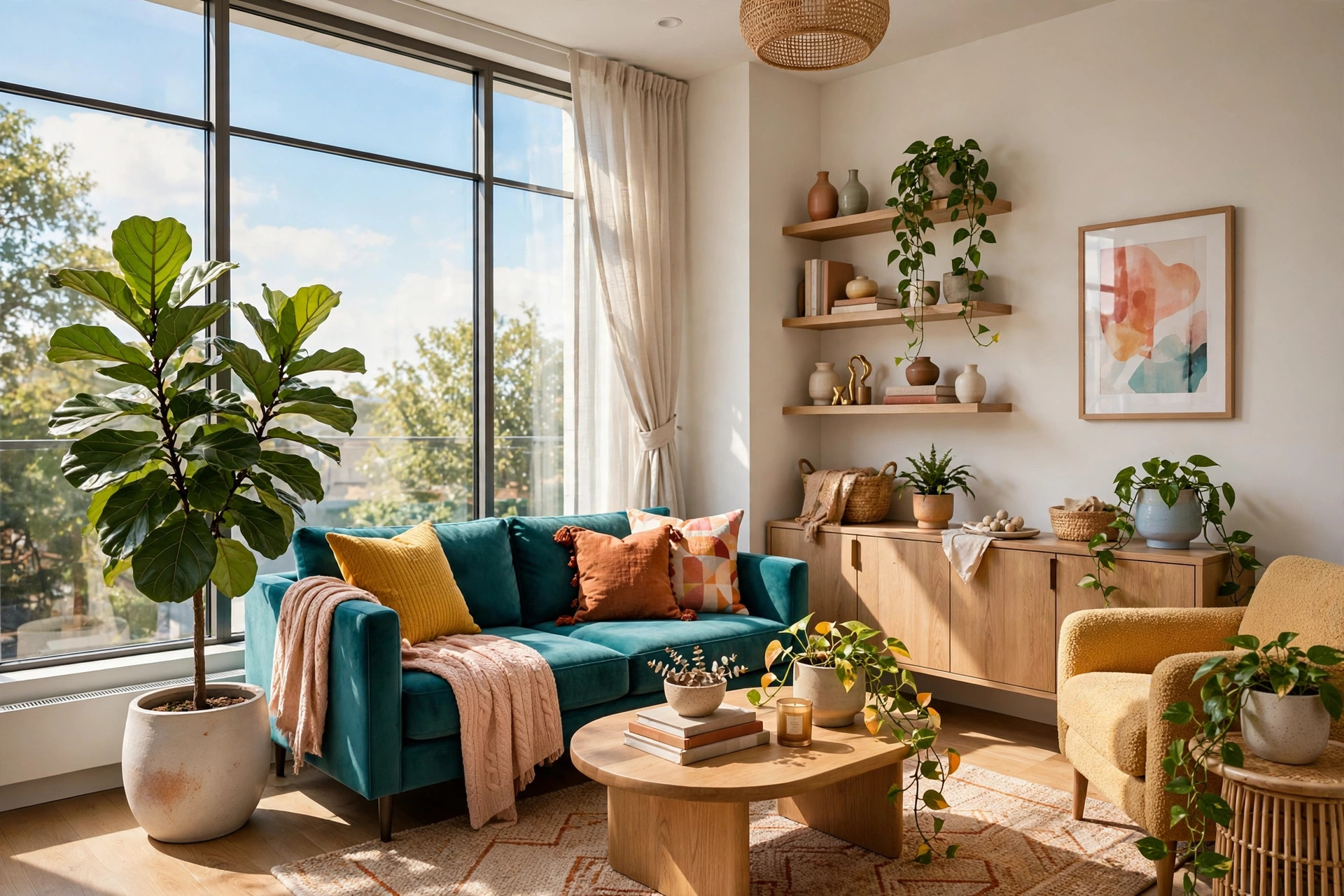
The tiny succulent era is over. Small apartment decor trends for 2026 favor fewer, larger plants over many tiny ones: a statement fiddle-leaf fig, an olive tree in the corner, a big trailing pothos on a high shelf. One generous plant reads as intentional design; a dozen tiny pots on a windowsill reads as clutter — and clutter is the enemy of small spaces.
Big plants also earn their keep functionally. A tall plant softens an awkward corner, a trailing vine draws the eye upward (making ceilings feel higher), and a large planter can anchor an otherwise empty zone between rooms. Keep the count low and the scale generous: one plant per zone, in a pot that suits your decor, beats a jungle of mismatched containers every time.
5. In: Vintage and Thrifted Pieces Mixed In
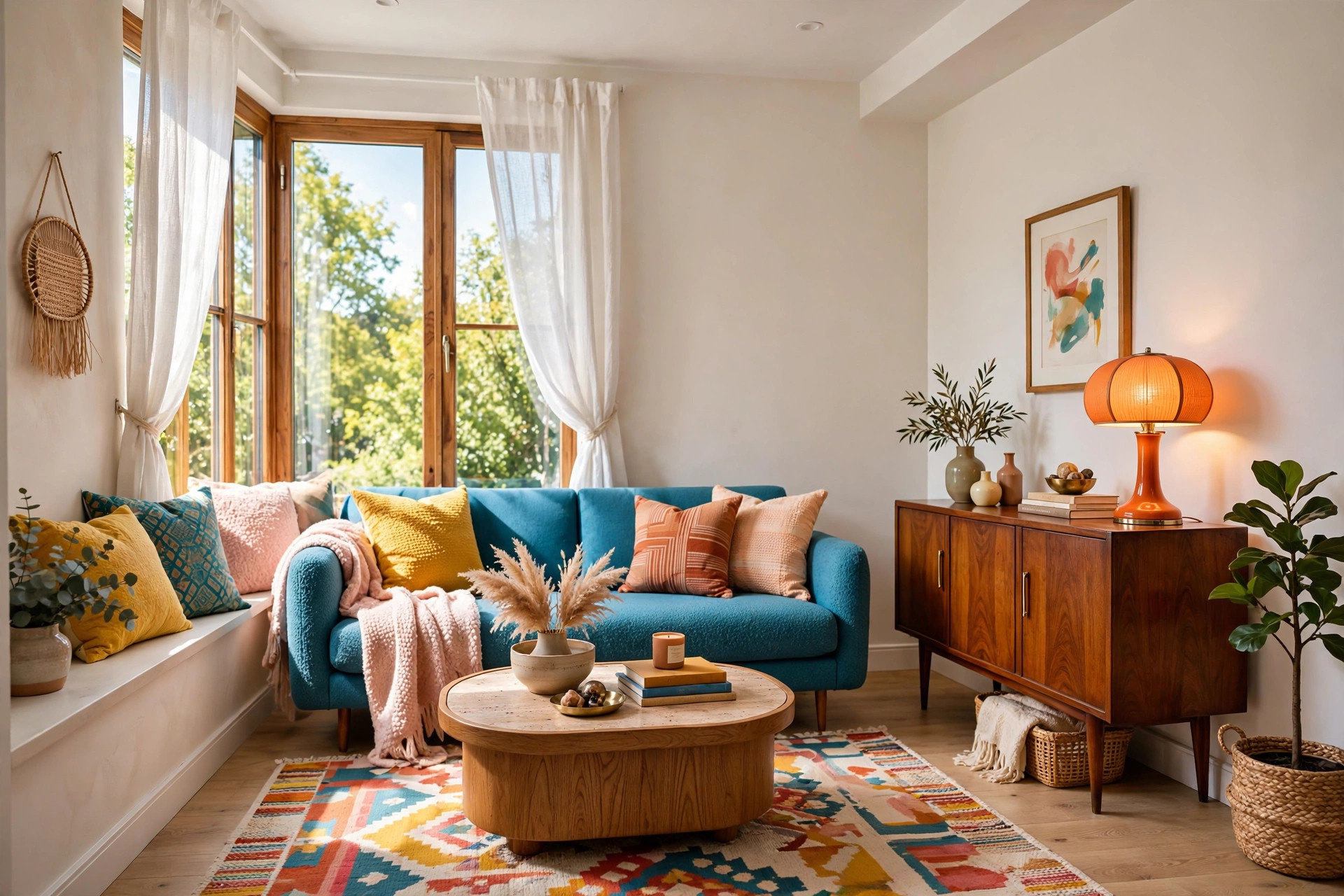
Fast-furniture apartment sets are one of the big “outs” of 2026, and the flip side is in: mixing in one or two vintage or thrifted pieces. A 1970s lamp, a mid-century sideboard, a worn wooden stool — these pieces add the character and patina that brand-new sets can’t fake, and they cost a fraction of retail.
The trick is restraint, which suits small apartments perfectly. One vintage piece per room is plenty; let it be the accent against your modern basics. And learn the small-space vintage rules: check measurements before you fall in love (vintage pieces run large), inspect for damage that can’t be fixed in an afternoon, and skip anything upholstered unless you can clean it properly.
6. In: Sculptural Lighting That Replaces Overhead Fixtures
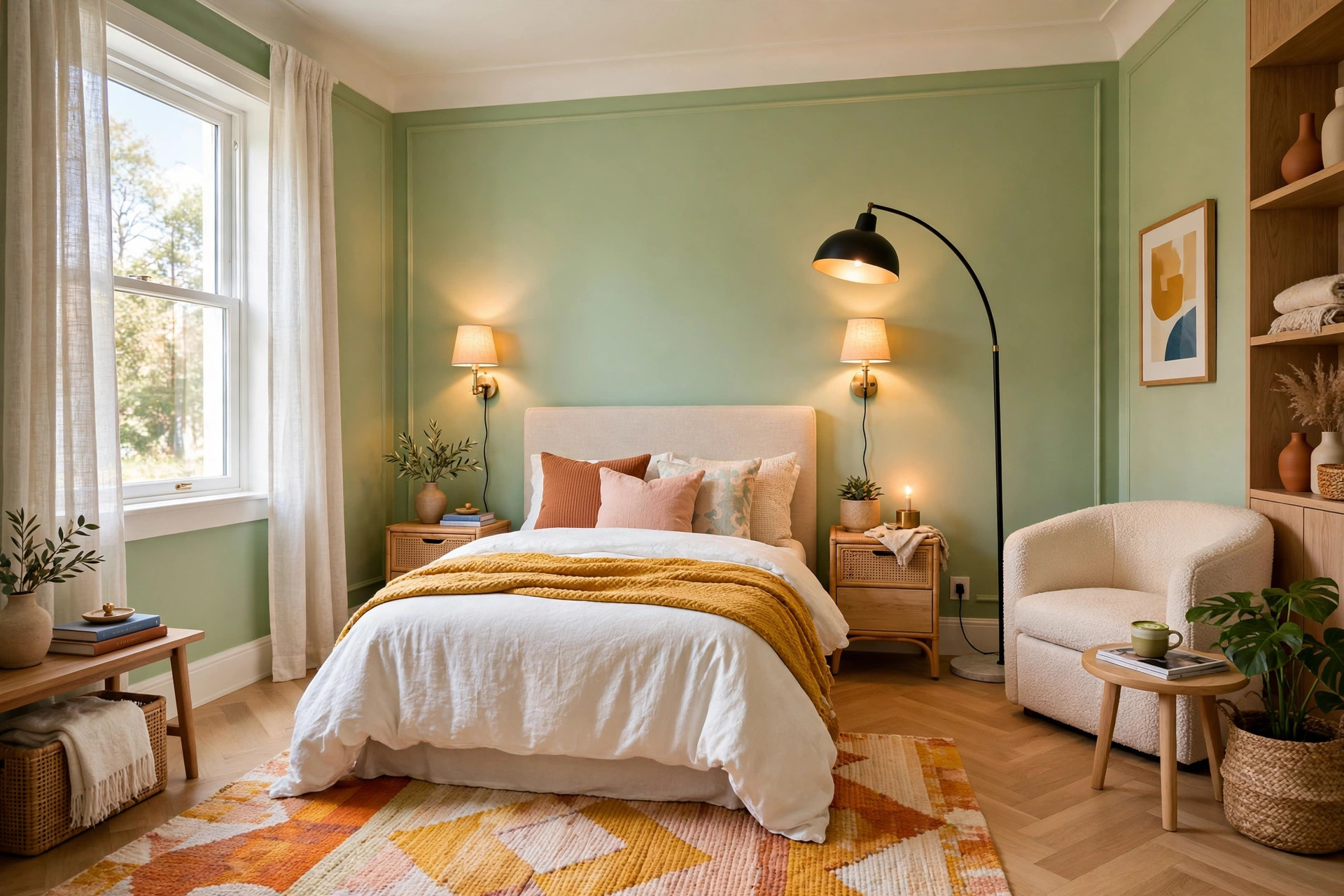
One harsh ceiling light is officially the laziest way to light a small apartment, and 2026 is the year people finally fix it. Sculptural pendant lights, arc floor lamps, plug-in wall sconces, and statement table lamps are doing double duty as decor and light sources — and in a compact room, one great fixture has more visual impact than in a large one.
Layering is the technique: ambient light from a floor lamp, task light at the desk, and warm accent light from a sconce or table lamp. This is especially powerful in rentals, where plug-in sconces and battery-operated picture lights need zero drilling. Dimmer bulbs (warm 2700K) throughout will do more for your apartment’s atmosphere than any new piece of furniture.
💡 Pro Tip: Renters can fake hardwired sconces with plug-in wall sconces and a cord cover painted to match the wall. Hang one on each side of the bed and you’ve added the kind of layered bedroom lighting that makes a small space feel designed rather than decorated.
7. In: Color Drenching and Bold Accent Moments
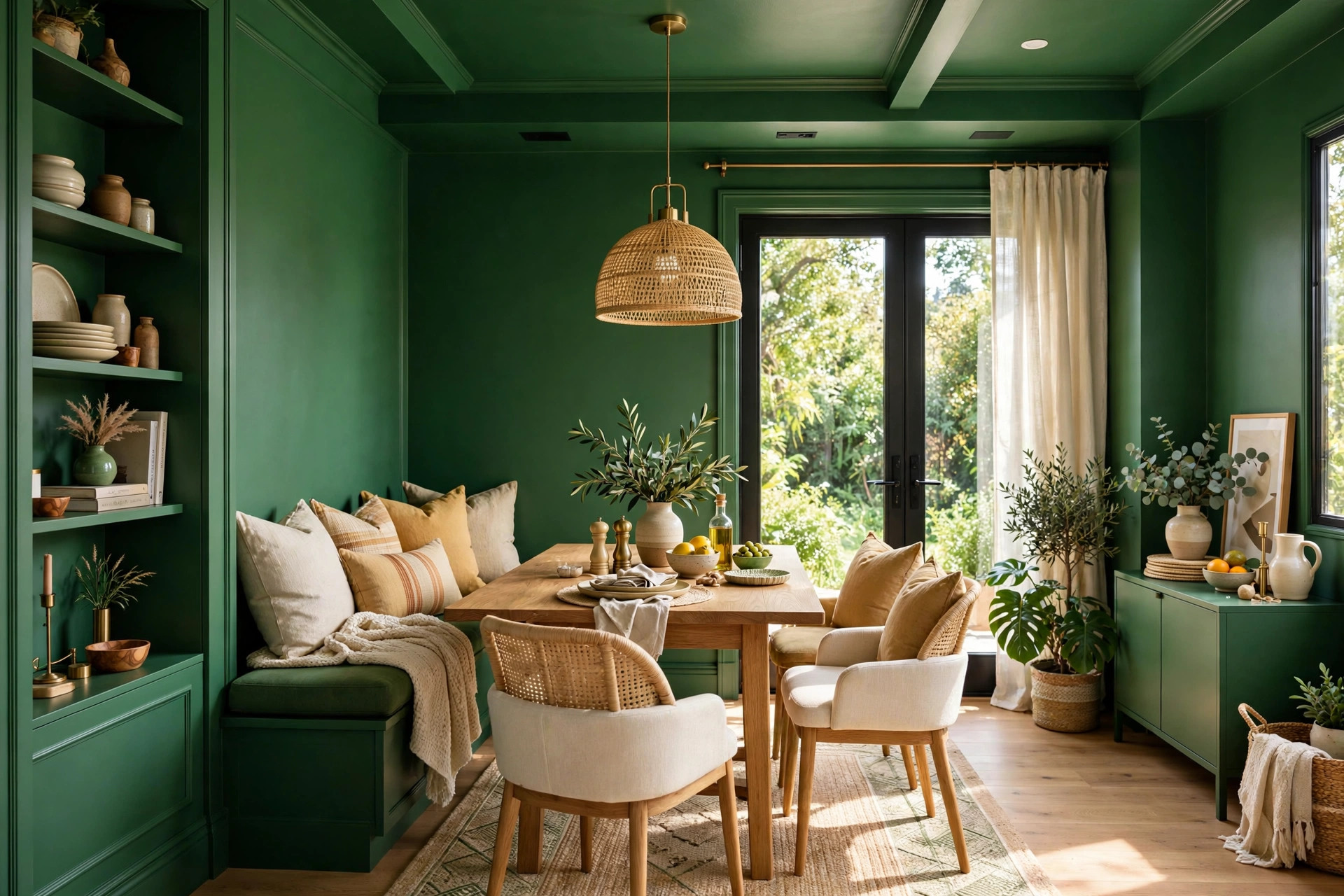
Neutrals are warming, but 2026 isn’t afraid of color — it’s just using it with intention. Color drenching (painting walls, trim, and even the ceiling in one rich tone) has jumped from designer feeds into real apartments, and in a small room it can actually work better than in a big one: a single saturated color blurs the room’s boundaries and makes it feel enveloping rather than small.
You don’t have to commit to a whole room. A bold entryway wall, a deep green bathroom, or a navy reading nook wall gives you the drama without the commitment. And color drenching has a secret small-space advantage: painting everything one color — including baseboards and ceiling — erases the visual breaks that make a room feel chopped up.
⚠️ Warning: Always test a bold color with a large sample board (at least 2×2 feet) and look at it in morning, afternoon, and evening light before you paint. Deep colors look dramatically different under warm and cool light, and repainting a drenched room is the most expensive lesson in small apartment decorating.
8. In: Hidden Storage That Disappears
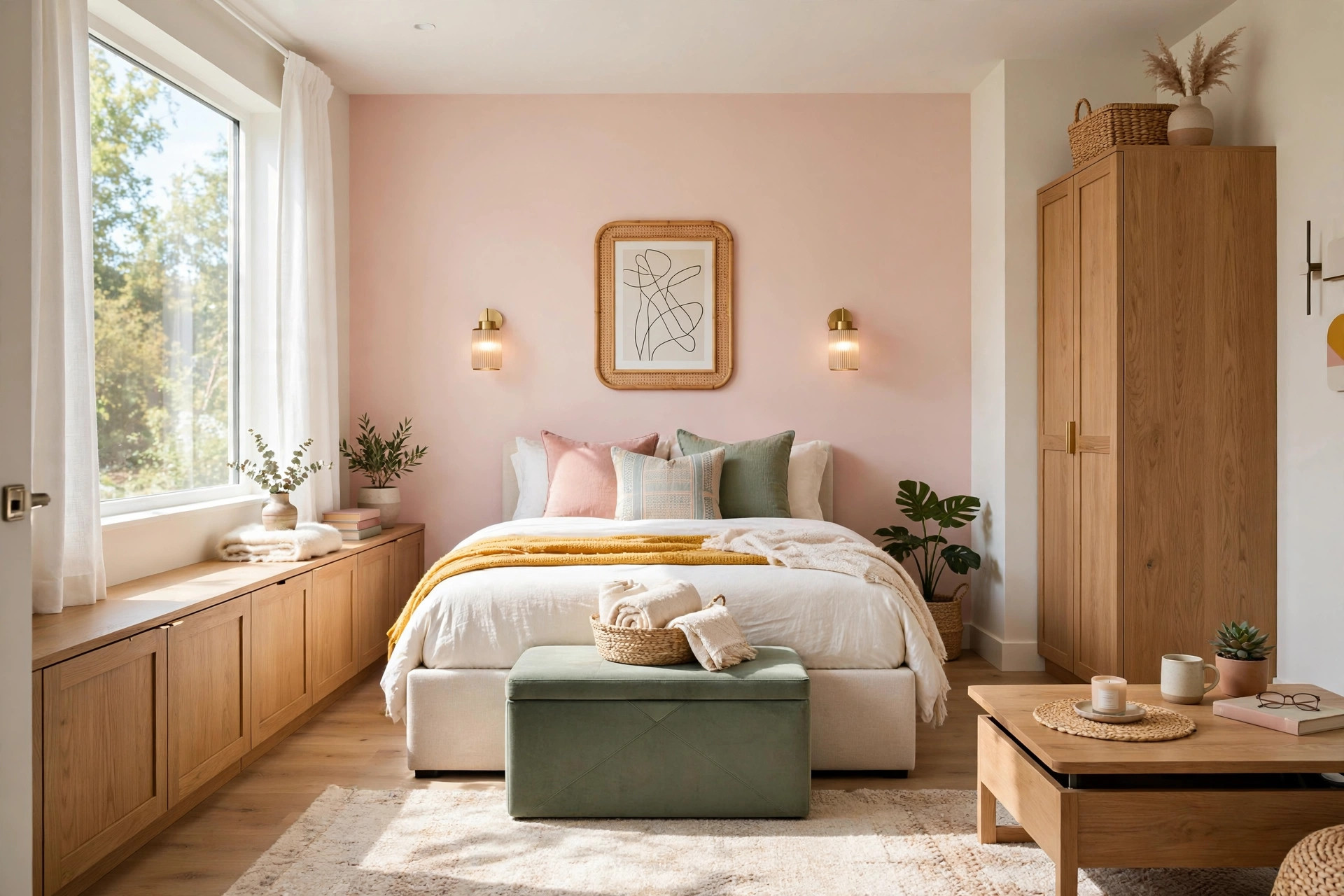
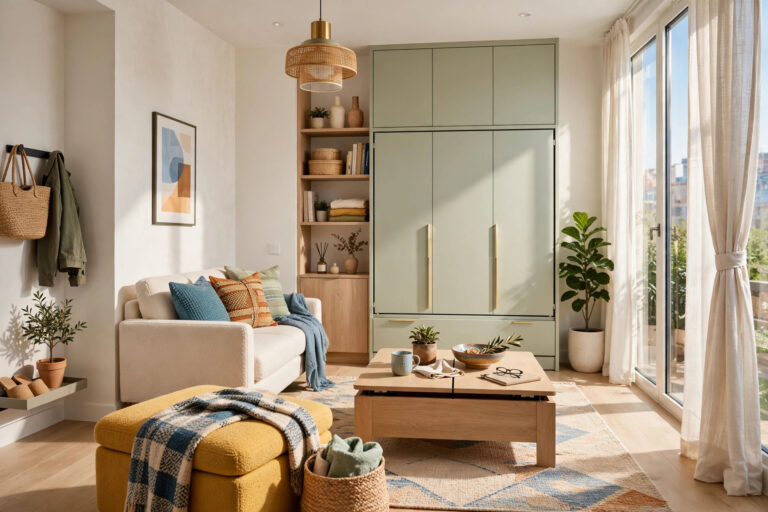
Storage ottomans, under-bed drawers, lift-top coffee tables, and beds with built-in drawers aren’t new — but in 2026, hidden storage is being designed to be invisible rather than apologetic. The new pieces don’t look like storage at all: they’re benches, tables, and beds first, with storage as a secret.
This matters because visible storage units were quietly eating the visual space in small apartments. A wall of plastic bins or an industrial shelving unit full of stuff makes a room feel like a stockroom, no matter how organized. The 2026 move is containment: every category of clutter gets a closed home, surfaces stay clear, and the room reads calm. It’s less about buying new furniture and more about making the storage you have stop looking like storage.
9. Out: All-Gray Everything
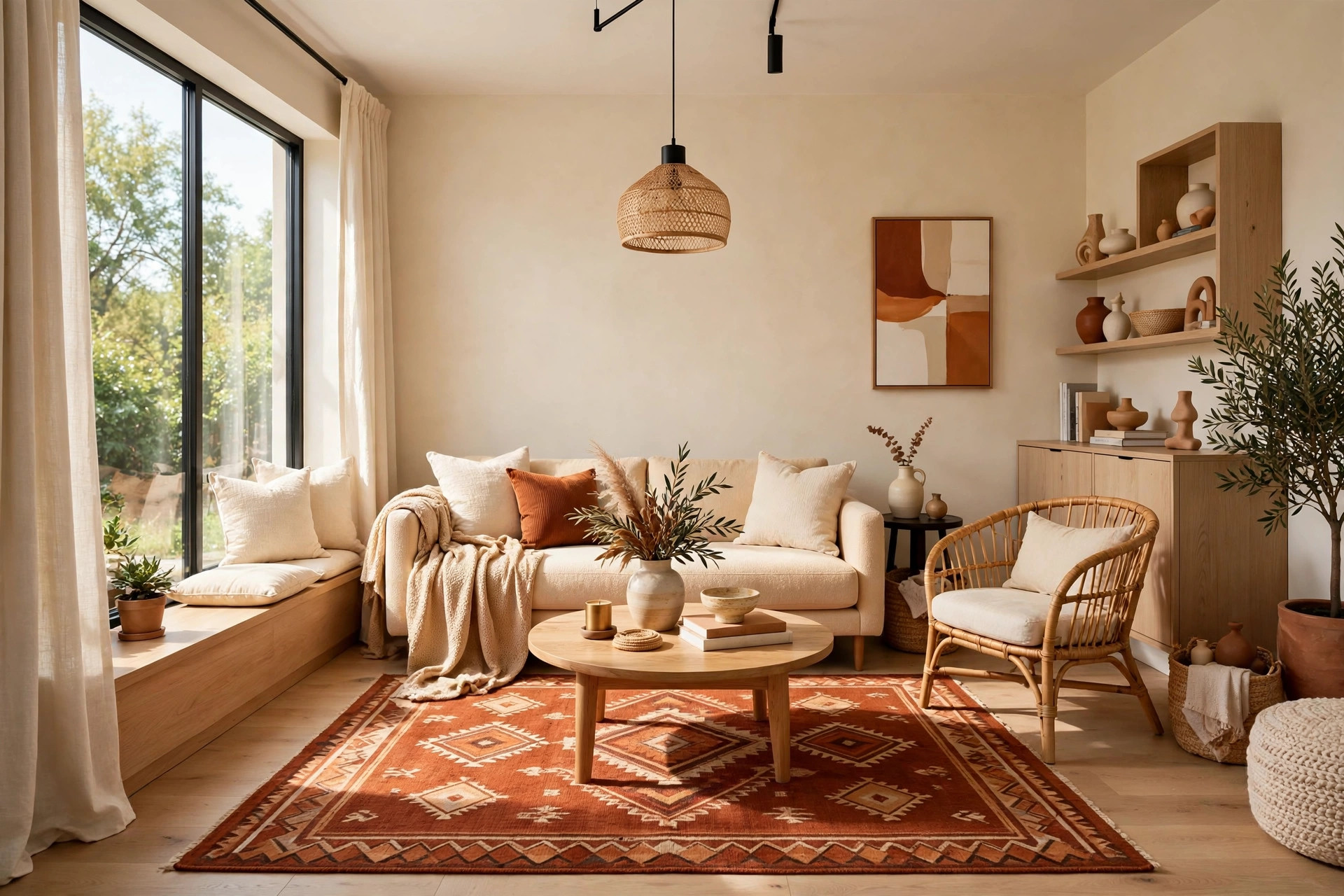
The gray-walls-gray-sofa-gray-bedding apartment was the defining look of the late 2010s, and it’s officially expired. Gray reads flat and cold in small rooms, and — here’s the practical problem — grays are notoriously hard to coordinate; mismatched gray undertones (blue-gray vs. green-gray vs. warm gray) make a room look accidentally messy instead of intentionally calm.
The 2026 replacement isn’t beige-versus-gray drama; it’s warmth in any form. Swap one gray textile for a warm-toned one — a camel throw, cream pillows, a rust rug — and watch the room wake up. If your walls are gray and you can’t repaint, warm lighting and warm wood tones will do more to fix the feel than any new decor purchase.
10. Out: Matchy-Matchy Furniture Sets
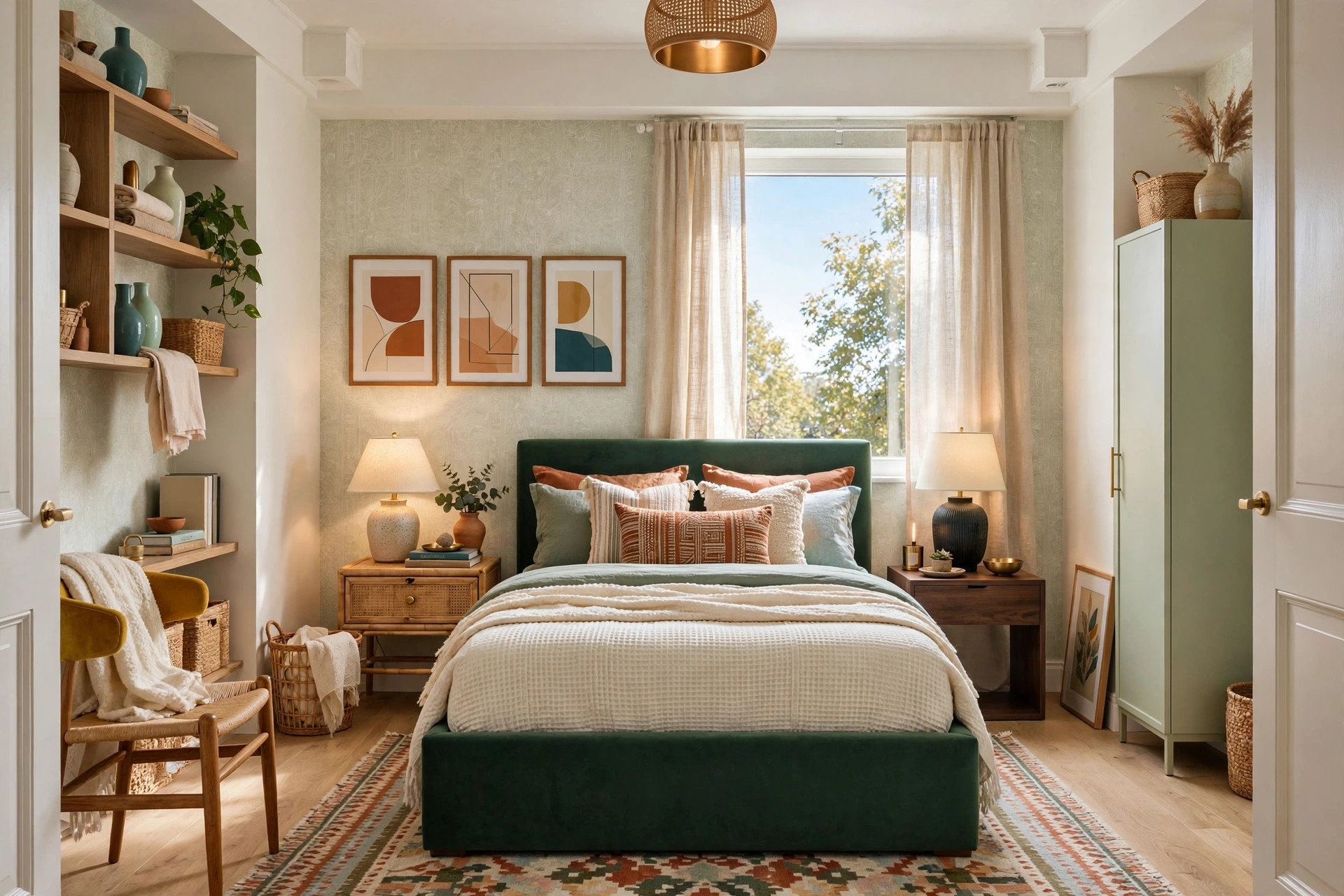
Buying the whole bedroom set or the entire matching living room suite is the fastest way to make an apartment feel generic — and in 2026, it’s officially out. Identical finishes on every piece flatten a room’s personality, and in a small space that flatness reads as “temporary” rather than “cohesive.”
The in-move is curated mixing: pieces that share a color family or vibe but aren’t twins. Pair a mid-century style sofa with a vintage wood coffee table; mix your bed frame and nightstands instead of matching them. The room will look more expensive, more personal, and — counterintuitively — more cohesive, because it looks chosen instead of ordered from a catalog page.
11. Out: Empty, Sterile Minimalism
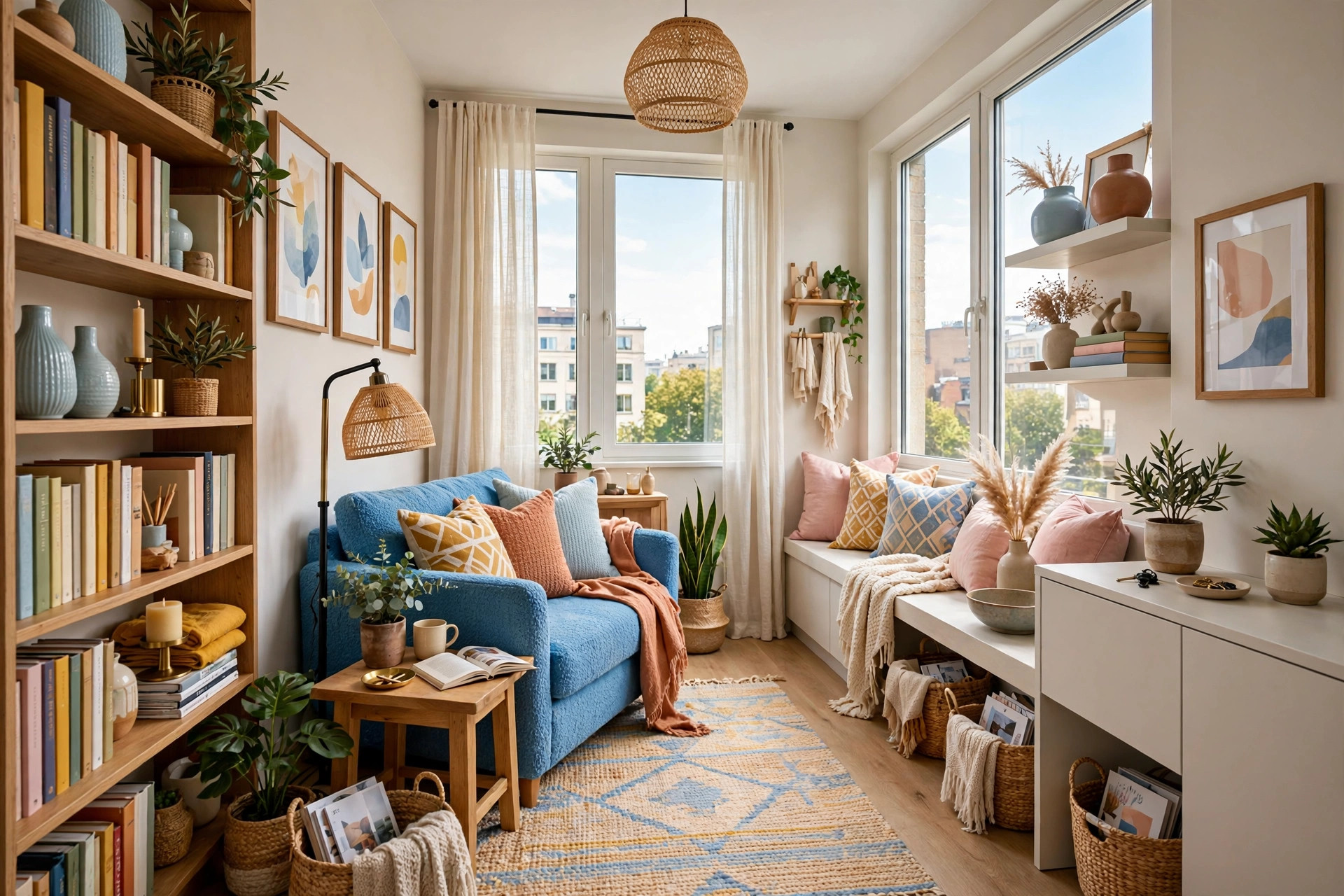
There’s minimalism, and then there’s the empty-apartment aesthetic: bare walls, one sofa, a floor lamp, and nothing else. In 2026, this ultra-sparse look is out, partly because it photographs well but lives badly — a room with nothing personal in it doesn’t feel calm, it feels unfinished.
Small apartments actually need *more* personal touches than big houses, not fewer, because every square foot is living space. Art on the walls, books on a shelf, a throw that means something to you — these aren’t clutter, they’re the difference between a showroom and a home. Keep the edit, lose the emptiness: curated and warm beats bare and sterile every time.
12. Out: The Single Overhead “Boob Light”
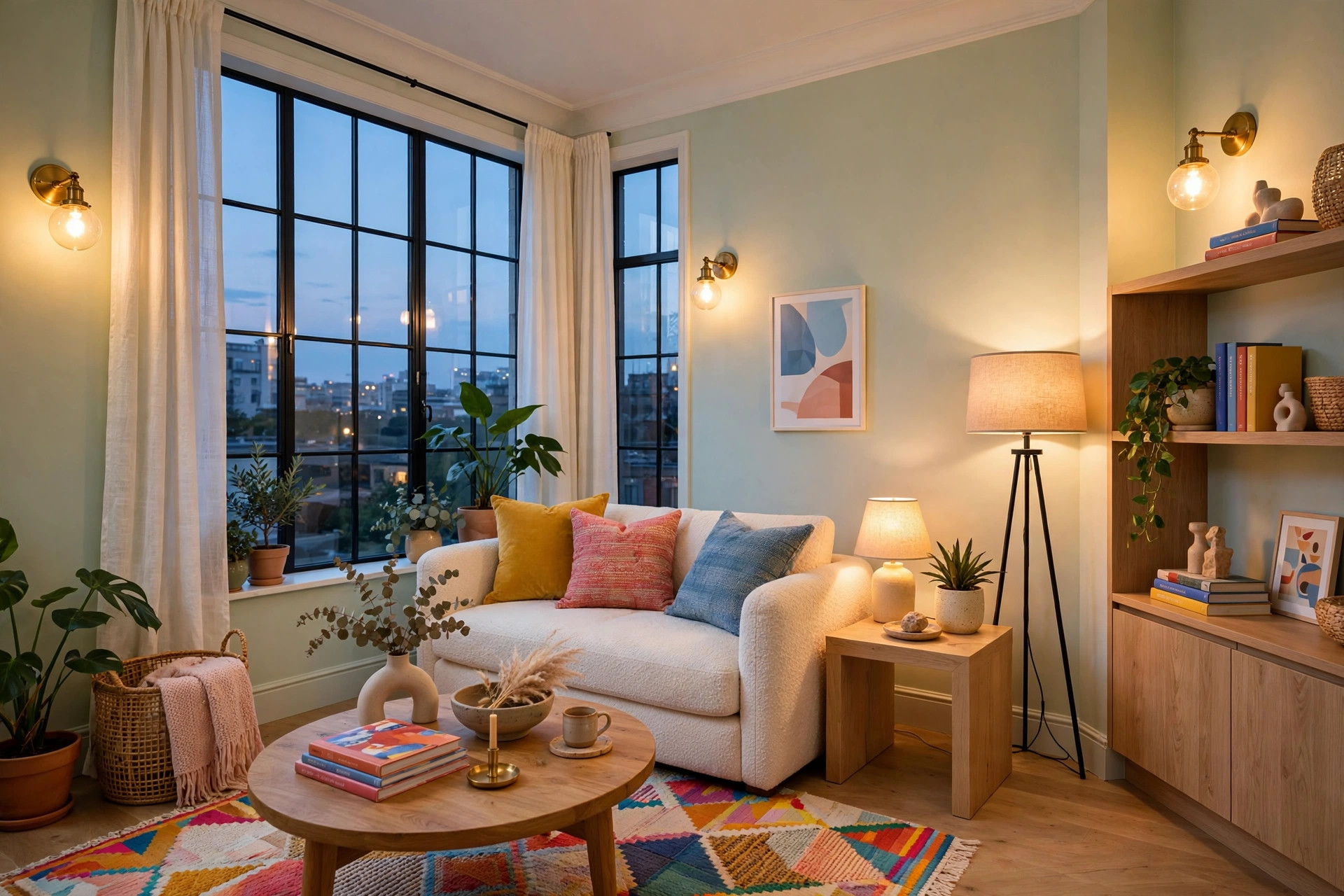
If your apartment has one central flush-mount fixture casting harsh white light over everything, you have the lighting equivalent of the gray sofa — and it’s just as out in 2026. Single overhead lighting creates unflattering shadows, makes small rooms feel smaller, and wastes the single biggest atmosphere lever in your home.
Replace the blast of overhead light with the layered approach from trend #6: floor lamps, sconces, and table lamps on warm bulbs. If you can’t replace the fixture, at least swap the bulb for a warm dimmable LED and put it on a dimmer or smart plug. The difference between 5000K and 2700K light in a small apartment is the difference between an interrogation room and a home.
13. Out: Visible Plastic Storage Chaos
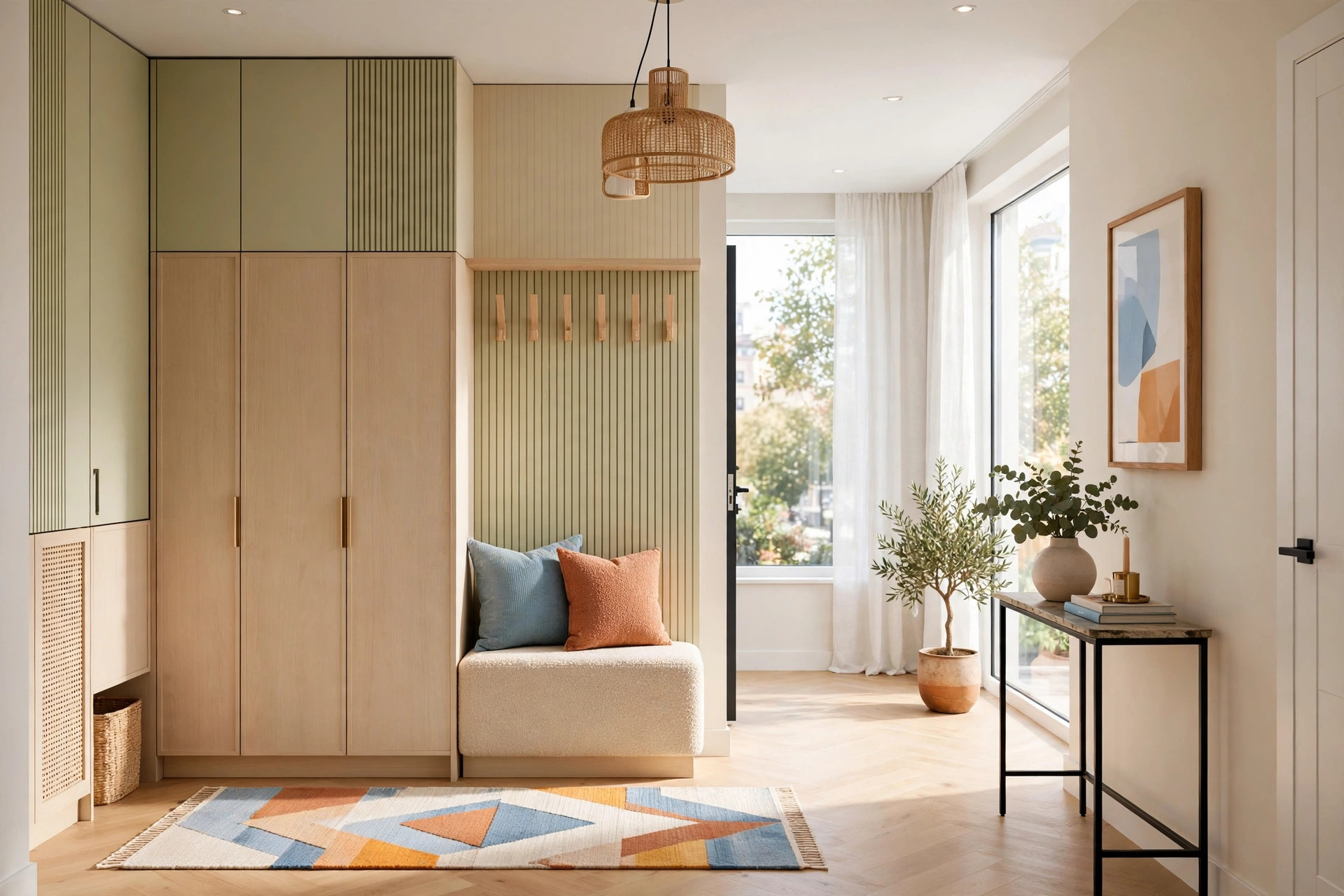
Clear plastic bins stacked in plain sight, laundry baskets overflowing in the corner, the “everything drawer” that became the “everything shelf” — visible storage chaos is out in 2026. It’s not that people stopped needing storage; it’s that the trend has shifted to closed, beautiful containment (see trend #8).
The fix is simpler than a full reorganization: consolidate. One good closed storage piece — an ottoman, a cabinet with doors, a lidded basket per zone — hides what three open bins broadcast. And decant ruthlessly: if you haven’t touched it in a year, the prettiest bin in the world won’t make it belong in a 500-square-foot apartment.
14. Out: Harsh Cool-White LEDs Everywhere
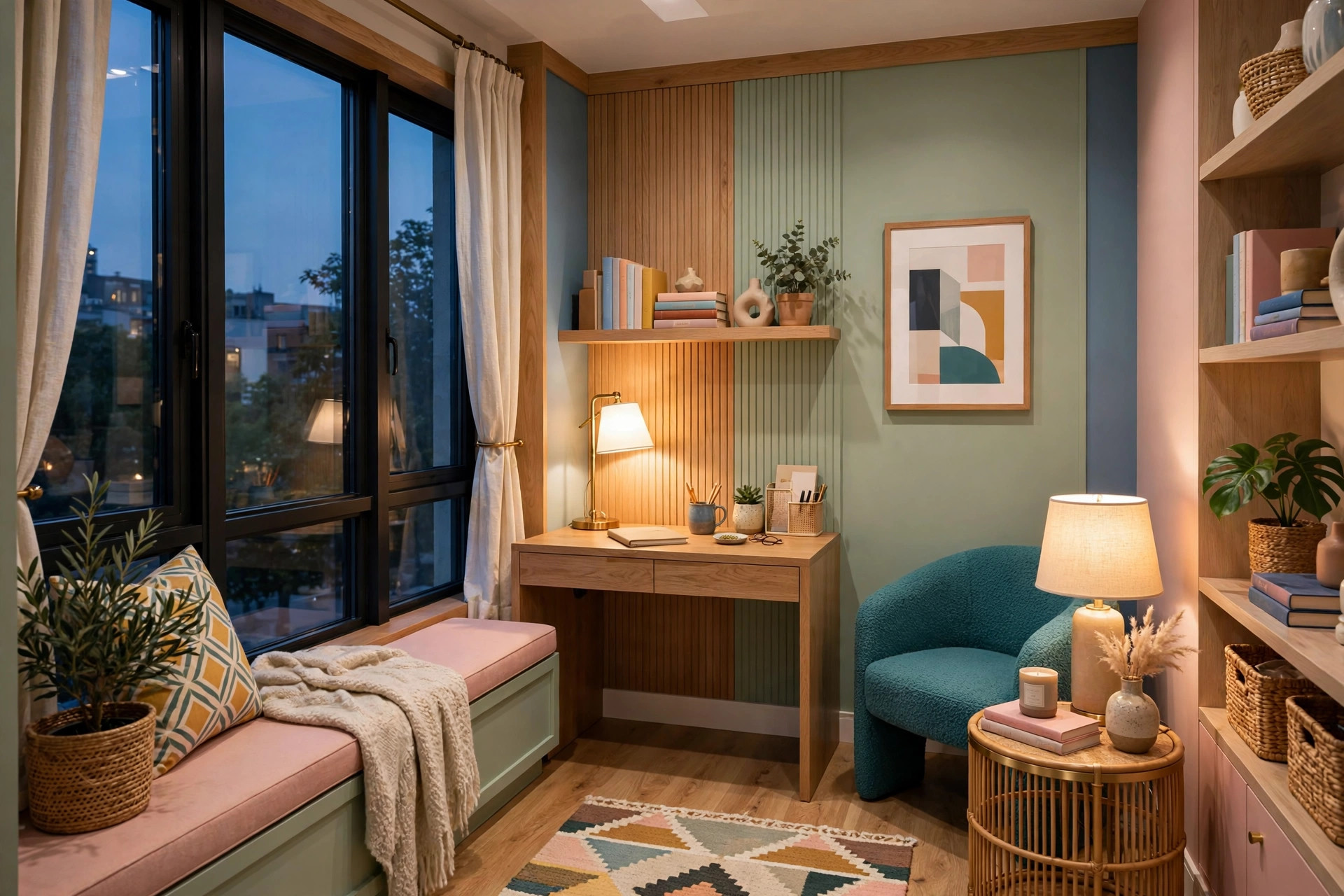
Cool-white (5000K+) LEDs had their moment as “daylight” lighting, but in homes they make skin look gray, food look unappetizing, and walls look clinical. By 2026, warm light has decisively won the home debate — designers, and honestly anyone who’s tried it, prefer 2700K warm white for living spaces.
Audit your bulbs: the kitchen and bathroom can stay slightly brighter, but living rooms and bedrooms should be warm across the board. Mixed color temperatures in one sightline (a warm lamp next to a cool ceiling light) is one of those subtle things that makes a room feel “off” without anyone knowing why. Make them all match, and the room instantly calms down.
15. Out: One Strict Style, Room to Room
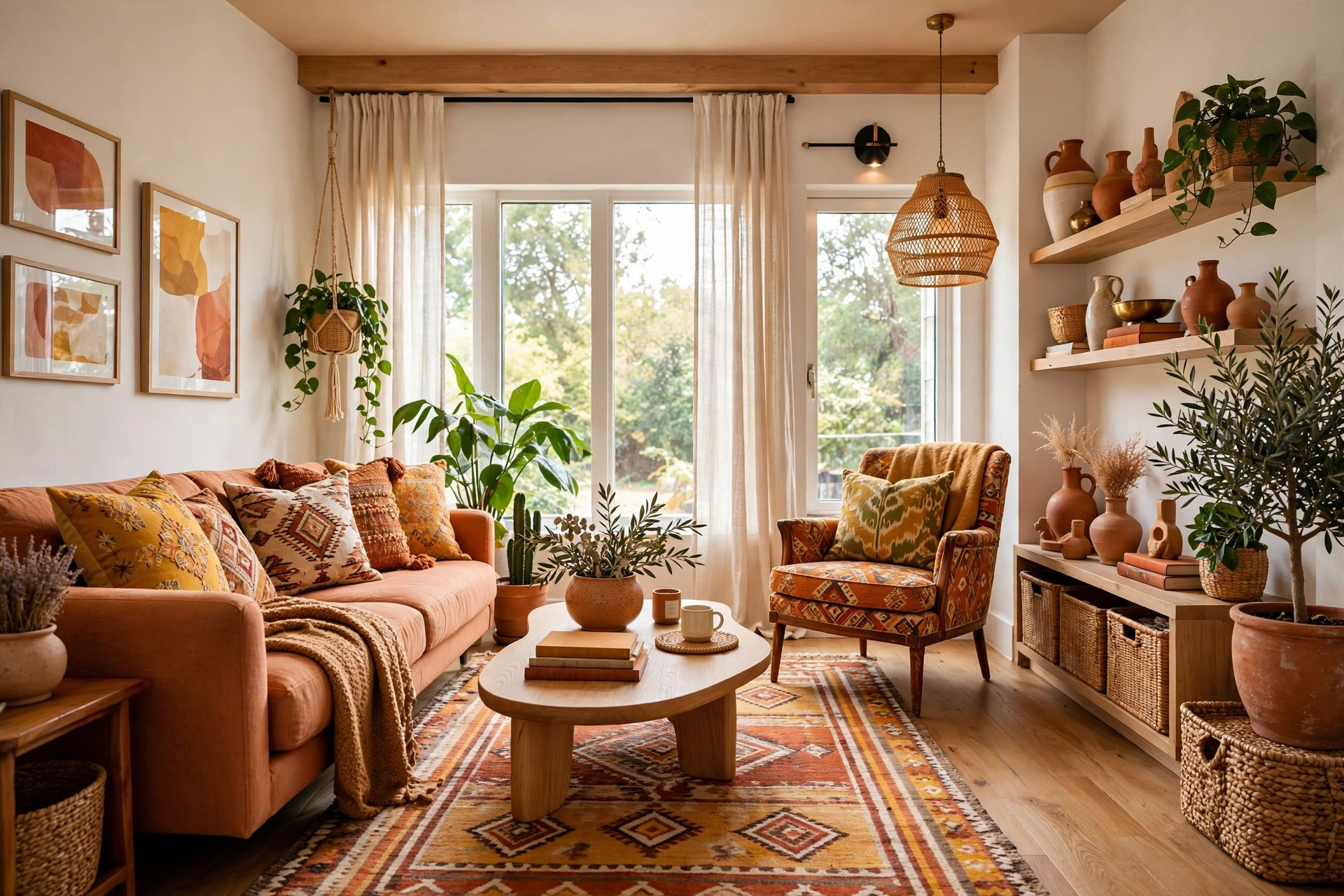
Full farmhouse. Full industrial. Full boho. The single-theme apartment where every piece obeys one Pinterest board is out in 2026. These rooms age badly — when the trend cycle turns, the whole apartment looks dated at once — and they feel more like sets than homes.
The 2026 approach is a personal mix: 70% your base style, 30% pieces from other worlds that you actually love. That vintage lamp, the modern sofa, the global-textile pillow — together they make a room that couldn’t belong to anyone but you. Mixed styles also survive trend changes better: when one micro-trend fades, the rest of your room doesn’t go with it.
Quick Comparison: 2026 Small Apartment Trends by Cost and Effort
Small Apartment Trends 2026 Quick-Start Checklist
- ✅ Audit your light bulbs and switch living spaces to warm 2700K
- ✅ Swap one gray textile for a warm-toned one (throw, pillow, or rug)
- ✅ Replace your single overhead reliance with at least two layered light sources
- ✅ Hide one category of visible clutter behind closed storage
- ✅ Add one curved piece or round mirror to soften boxy layouts
- ✅ Hang art or photos — bare walls are out, personality is in
- ✅ Walk through with fresh eyes: remove anything that matches too perfectly
Common Trend Mistakes
Mistake 1: Chasing Every Trend at Once
The fastest way to ruin a small apartment is to try all fifteen trends in one month. The result is a room that looks like a trend showroom — expensive, chaotic, and already dated. Pick two or three trends that solve your actual problems, implement them fully, and live with the result before adding more.
Mistake 2: Confusing “Warm” With “Beige Everything”
Warm minimalism doesn’t mean painting your apartment tan and calling it done. The warmth comes from layering — warm neutrals plus wood, texture, plants, and varied light. A flat all-beige room is just the gray room in a new coat; texture and contrast are what make warmth feel rich instead of bland.
Mistake 3: Buying Trendy Pieces You Don’t Love
A curved boucle chair is a 2026 darling — but if you’d never have chosen it before the trend, you’ll hate it in eighteen months. Trends should filter your existing taste, not replace it. The pieces that survive trend cycles are the ones you picked because you loved them, which is exactly why the mixed, personal approach (trend #15) outlasts the matchy-set approach.
Mistake 4: Forgetting Scale in a Small Room
A statement plant or sculptural pendant only works if it’s scaled to the room. An oversized arc lamp in a 10×10 living room dominates instead of accents; a giant fiddle-leaf fig in a dark corner dies instead of thrives. Measure, check your light levels, and remember that in small apartments, one correctly scaled hero piece beats three impressive-but-wrong ones.
Mistake 5: Skipping the Lighting Foundation
People buy the furniture first and wonder why the room still feels off — because lighting is the foundation, not the finishing touch. No decor trend, warm or curved or vintage, can survive under a single harsh cool-white ceiling light. Fix the light first (it’s the cheapest upgrade on this list), then layer in the rest.
Frequently Asked Questions
1. What are the biggest small apartment decor trends for 2026?
The defining small apartment decor trends for 2026 are warm minimalism replacing cold gray, curved furniture silhouettes, multi-functional furniture as the default, statement houseplants, sculptural layered lighting, color drenching, and hidden storage that disappears. On the way out: all-gray schemes, matching furniture sets, single overhead lighting, and visible storage chaos.
2. Are gray apartments really out of style in 2026?
Gray isn’t banned, but the all-gray look is firmly dated. The 2026 move is warming gray up with cream, camel, wood tones, and warm lighting rather than treating gray as the whole palette. If a full redo isn’t in the cards, warm textiles and warm bulbs can rescue a gray room for under a hundred dollars.
3. How can renters follow 2026 decor trends without painting or drilling?
Most 2026 trends are renter-friendly: warm textiles, curved accent pieces, plug-in sconces, warm bulbs, statement plants, thrifted accents, and closed storage upgrades all need zero landlord permission. Color drenching is the main exception — renters can get a similar effect with a large-scale art piece or a dramatic peel-and-stick mural instead.
4. What’s the cheapest 2026 trend to try first?
Swapping your bulbs to warm 2700K LEDs costs almost nothing and changes everything. Second cheapest: replace one gray throw pillow or blanket with a warm-toned one. Both take under an hour and immediately move a room from “dated gray apartment” toward the warm 2026 look.
5. Do these trends work in studios and micro-apartments?
They work even better there, because every change has more impact in a smaller footprint. Multi-functional furniture, hidden storage, and curved pieces that ease traffic flow were practically invented for studios. Just be stricter about scale and edit — in under 400 square feet, one trend done well beats five done halfway.
6. Is minimalism dead in 2026?
No — it’s warmed up. The empty, sterile version is out, but warm minimalism (clean lines in cozy neutrals with texture, plants, and personal touches) is one of the year’s biggest trends. Think calm and inviting, not cold and empty.
7. How do I mix styles without my apartment looking messy?
Keep a consistent color palette across your pieces even when the styles differ, repeat materials (two or three wood tones max, one metal finish), and give the room a 70/30 split — 70% your dominant style, 30% contrasting pieces. Consistency in color and repetition in materials is what makes a mix look intentional.
Conclusion
Small apartment decor trends for 2026 aren’t really about buying more — they’re about choosing better. Warmth over coldness, flexibility over fixed, personality over perfection. The apartments that will look best this year aren’t the ones with the most new purchases; they’re the ones where every piece earns its place and the lighting finally got fixed.
Start where the impact is highest: warm your bulbs, layer your lighting, and hide the visual clutter. Then add one or two of the bigger moves — a curved accent, a statement plant, a bold color moment — and let the room come together around them. Your apartment doesn’t need to be bigger in 2026. It just needs to feel more like you.